Plásticos técnicos para altas temperaturas: comparación completa entre PEEK, PEI, PPS y LCP

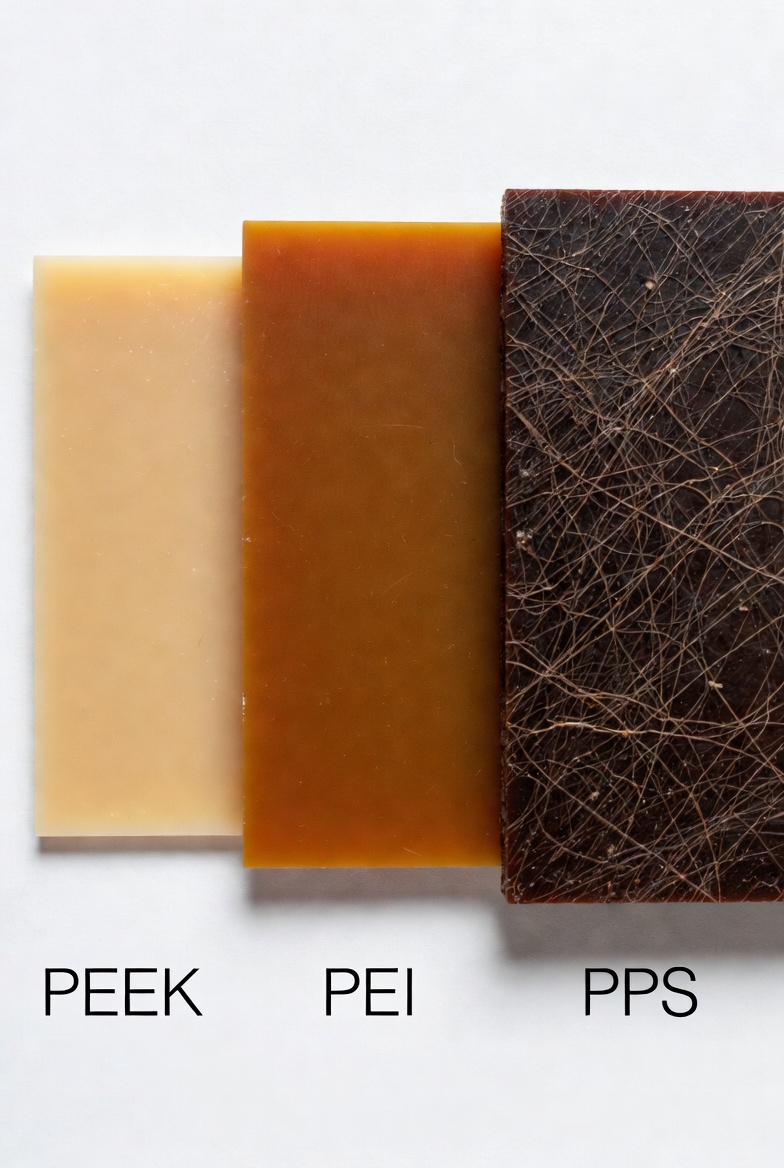
High-temperature engineering plastics PEEK PEI PPS LCP comparison test samples

Understanding High-Temperature Engineering Plastics

High-temperature engineering plastics are used when standard resins cannot meet thermal, mechanical, or chemical performance targets.

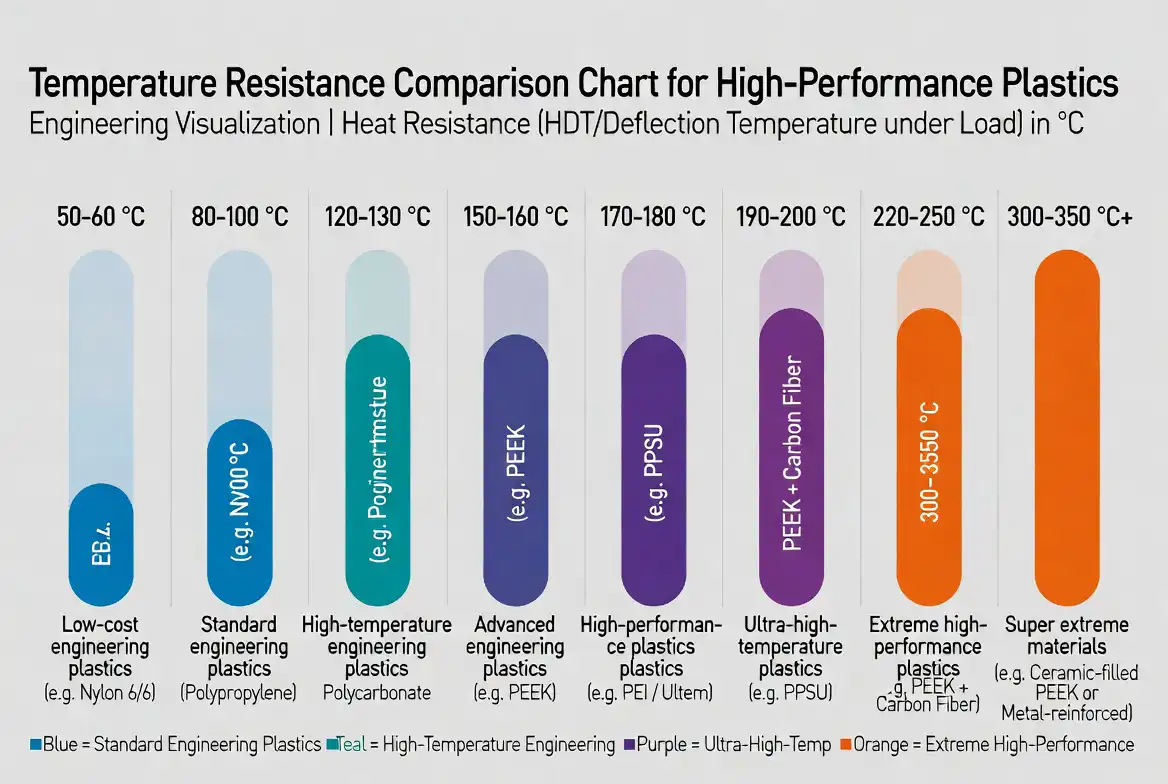
When application temperatures exceed 150 degrees Celsius, standard engineering plastics like nylon and POM reach their practical limits. At these elevated temperatures, four polymer families dominate: PEEK, PEI, PPS, and LCP. Each offers a distinct balance of thermal capability, mechanical strength, chemical resistance, processability, and cost. Selecting the wrong material for a high-temperature application leads to premature failure, warranty claims, and expensive redesign. This comparison provides the data engineers need to make informed material decisions.

High-temperature engineering plastics are used when standard resins cannot meet thermal, mechanical, or chemical performance targets.

High-temperature thermoplastics are defined by their ability to retain useful mechanical properties at temperatures where commodity and standard engineering plastics soften, degrade, or lose dimensional stability. The key metrics are Heat Deflection Temperature, which measures stiffness retention under load at elevated temperature, and Continuous Use Temperature, which represents the temperature at which the material can operate for extended periods without significant property degradation. Secondary considerations include short-term thermal excursions, thermal aging behavior, chemical resistance at elevated temperature, and creep resistance under sustained load at high temperature.

Material-by-Material Deep Dive

High-temperature engineering plastics are used when standard resins cannot meet thermal, mechanical, or chemical performance targets.

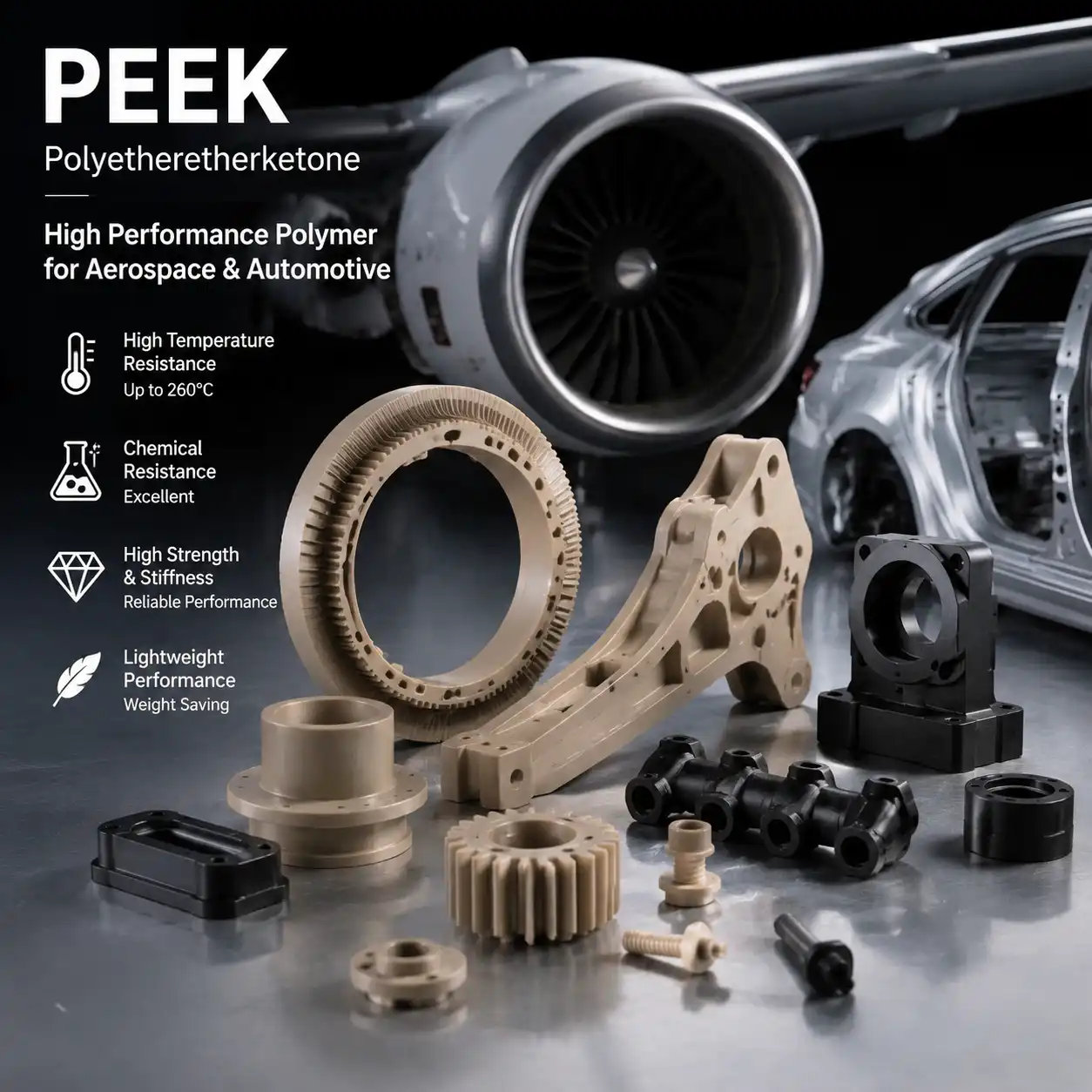
PEEK, polyetheretherketone, is the highest-performance thermoplastic in widespread commercial use. Its continuous use temperature of 260 degrees Celsius, combined with exceptional chemical resistance to virtually all organic solvents, acids, and bases except concentrated sulfuric acid, makes it the default choice for the most demanding oil and gas, aerospace, and medical implant applications. Unfilled PEEK offers tensile strength of approximately 100 MPa and flexural modulus around 4 GPa. Carbon-fiber-reinforced grades push flexural modulus above 20 GPa, surpassing many aluminum alloys in specific stiffness. PEEK is inherently flame retardant with a V-0 rating at thin sections without halogenated additives. The primary limitation of PEEK is cost. At roughly $80 to $120 per kilogram for standard grades, it is 8 to 12 times more expensive than PA66. Processing requires mold temperatures of 160 to 200 degrees Celsius and melt temperatures of 360 to 400 degrees Celsius, demanding specialized tooling and machine capability.

High-temperature engineering plastics are used when standard resins cannot meet thermal, mechanical, or chemical performance targets.

PEI, polyetherimide, best known by the trade name Ultem, bridges the gap between standard engineering plastics and PEEK in both performance and cost. With a glass transition temperature of 217 degrees Celsius and a heat deflection temperature of 200 degrees Celsius at 1.8 MPa, PEI handles most applications where PEEK is over-specified. Its inherent flame retardancy achieves V-0 at 0.75 mm without additives. PEI offers excellent dielectric properties that remain stable across a wide frequency and temperature range, making it the dominant material for high-temperature electrical connectors, coil bobbins, and semiconductor process components. Chemical resistance is good for aliphatic hydrocarbons, alcohols, and aqueous solutions but limited for ketones, chlorinated solvents, and strong bases. PEI is amorphous and transparent in natural grade with an amber tint, unlike the opaque semi-crystalline PEEK and PPS. At approximately $15 to $25 per kilogram, PEI costs significantly less than PEEK while providing sufficient performance for most non-extreme high-temperature applications.

Thermal mechanical properties testing of high-temperature engineering thermoplastic samples

High-temperature engineering plastics are used when standard resins cannot meet thermal, mechanical, or chemical performance targets.

PPS, polyphenylene sulfide, is a semi-crystalline engineering thermoplastic with a melting point of 280 degrees Celsius and continuous use temperature ratings from 200 to 240 degrees Celsius depending on the grade. PPS is notable for its broad chemical resistance, surpassing even PEEK in resistance to strong acids and many solvents at elevated temperature. It is the material of choice for chemical process equipment components, automotive under-hood fuel system parts, and pump housings handling aggressive chemicals. Glass-fiber-reinforced PPS grades offer tensile strength from 150 to 190 MPa and flexural modulus from 12 to 16 GPa, providing excellent structural performance. PPS has inherently low moisture absorption of approximately 0.02 percent, providing exceptional dimensional stability in humid environments without the property changes that affect nylons. The primary limitation of PPS is brittleness in unreinforced grades, which necessitates glass or mineral reinforcement for most structural applications. Processing requires mold temperatures of 130 to 150 degrees Celsius and melt temperatures of 300 to 340 degrees Celsius. PPS pricing typically ranges from $10 to $20 per kilogram for standard grades.

High-temperature engineering plastics are used when standard resins cannot meet thermal, mechanical, or chemical performance targets.

LCP, liquid crystal polymer, represents a fundamentally different class of materials. LCP molecules form highly ordered rod-like structures in both the melt and solid states, giving LCP exceptional flow characteristics that enable molding of extremely thin walls below 0.3 mm, high stiffness with flexural modulus up to 20 GPa in highly filled grades, and near-zero mold shrinkage in the flow direction. The heat deflection temperature of LCP ranges from 180 to 350 degrees Celsius depending on the grade, with the highest values achieved in highly filled grades. LCP is inherently flame retardant with V-0 at very thin sections. It absorbs virtually no moisture, providing excellent dimensional stability. LCP is dominant in fine-pitch electrical connectors, micro-molded electronic components, and thin-wall medical device components where its unique combination of high-temperature capability and exceptional flow cannot be matched by any other thermoplastic. Limitations include anisotropic mechanical properties, where strength and shrinkage differ significantly between the flow and transverse directions, and weld line strength that can be as low as 30 percent of the bulk material strength, requiring careful gate placement in mold design. LCP pricing ranges from $15 to $40 per kilogram depending on the grade.

Complete Property Comparison

Propiedad PEEK (sin relleno) PEI (Ultem 1000) PPS (GF40) LCP (GF30) PPA (GF33) PTFE
Resistencia a la tracción (MPa) 100 105 165 150 200 25
Módulo de flexión (GPa) 4.1 3.5 14 15 12 0.6
HDT at 1.8 MPa (deg C) 160 200 260 280 270 55
Continuous Use Temp (deg C) 260 170 220 240 180 260
Melting Point (deg C) 343 Amorfo 280 320 310 327
Densidad (g/cm³) 1.30 1.27 1.65 1.60 1.44 2.15
Absorción de humedad (%) 0.5 1.25 0.02 0.03 0.7 0.01
Clasificación de llama (UL94) V-0 at 1.5 mm V-0 at 0.75 mm V-0 at 0.8 mm V-0 at 0.3 mm HB V-0
Relative Cost Index 100 20 15 25 12 30
Process Method IM, CNC IM, CNC IM IM IM Compression, CNC

Chemical Resistance Comparison

High-temperature engineering plastics are used when standard resins cannot meet thermal, mechanical, or chemical performance targets.

Chemical resistance at elevated temperature is often the deciding factor between these materials. PEEK offers outstanding resistance to virtually all chemicals except concentrated sulfuric acid, nitric acid, and some halogenated compounds at temperatures above 200 degrees Celsius. It withstands steam sterilization at 134 degrees Celsius for thousands of cycles without significant property degradation, making it the gold standard for reusable medical devices. PPS offers superior acid resistance compared to PEEK, surviving prolonged exposure to concentrated hydrochloric and sulfuric acids at temperatures that attack most other polymers. It is the preferred material for chemical process equipment exposed to strong mineral acids. PEI offers good resistance to aliphatic hydrocarbons, alcohols, and dilute acids but is attacked by ketones including acetone and MEK, chlorinated solvents including methylene chloride, and strong bases including sodium hydroxide at elevated temperature. LCP offers excellent resistance to virtually all organic solvents, acids, and bases at temperatures up to its heat deflection temperature, and its extremely low moisture absorption eliminates hydrolysis concerns. PPA offers good resistance to automotive fluids including gasoline, diesel, motor oil, and transmission fluid at the elevated temperatures found in under-hood applications, but is susceptible to hydrolysis in hot water and steam above 120 degrees Celsius. PTFE offers near-universal chemical resistance, surviving exposure to chemicals that attack all other thermoplastics, but it cannot be processed by conventional injection molding and has very low mechanical strength, limiting it to seals, gaskets, and lined components rather than structural parts.

PEEK PPS LCP injection molded high-temperature plastic components application examples

Processing Methods and Design Considerations

Material Injection Molding Feasibility CNC Machining Feasibility Mold Temp Required (deg C) Melt Temp Range (deg C) Key Processing Challenge
PEEK Excelente Excelente 160-200 360-400 High mold temperature requires oil heating; expensive tool steel required
PEI Bien Excelente 135-165 340-400 Requires thorough drying at 150 deg C for 4+ hours; moisture sensitive
PPS Bien Feria 130-150 300-340 Brittle flash can form; gassing may require vented barrels
LCP Excelente Pobre 80-120 320-380 Anisotropic shrinkage; weak weld lines; mold design critical
PPA Excelente Feria 80-120 320-340 Moisture sensitive; requires drying; long cooling time for thick sections
PTFE Not Possible Feria N/A N/A Cannot be melt-processed; compression molding or machining from stock

Application Scenario Selection Guide

High-temperature engineering plastics are used when standard resins cannot meet thermal, mechanical, or chemical performance targets.

For aerospace structural components requiring the highest combination of strength, temperature resistance, and chemical inertness with weight as a critical design parameter, PEEK carbon-fiber-reinforced grades are the default choice. The material is specified extensively in Airbus and Boeing aircraft for brackets, clamps, and interior components, replacing aluminum and titanium with weight savings of 40% to 60%. For medical devices requiring repeated steam sterilization, PEEK offers the unique combination of autoclave resistance and mechanical durability that no other thermoplastic matches.

High-temperature engineering plastics are used when standard resins cannot meet thermal, mechanical, or chemical performance targets.

For automotive under-hood applications with continuous exposure to 150 to 180 degrees Celsius in the presence of engine oil, coolant, and fuel, PPA GF33 provides the optimal cost-performance balance. Its use in thermostat housings, water pump impellers, and charge air cooler end caps has grown significantly as engine bay temperatures increase with turbocharging and emissions control systems. For extreme under-hood temperatures above 200 degrees Celsius, PPS GF40 becomes necessary, seen in exhaust gas recirculation components and turbocharger actuator parts.

High-temperature engineering plastics are used when standard resins cannot meet thermal, mechanical, or chemical performance targets.

For electronics and electrical applications, the selection splits by temperature requirement. PEI dominates connectors, sockets, and insulators operating up to 170 degrees Celsius because its dielectric stability, inherent flame retardancy, and lower cost make it the practical choice. LCP captures applications requiring ultra-fine pitch below 0.5 mm and reflow soldering temperatures up to 260 degrees Celsius, where no other thermoplastic provides the necessary flow and thermal capability combination.

High-temperature engineering plastics are used when standard resins cannot meet thermal, mechanical, or chemical performance targets.

For chemical processing equipment, PPS GF40 is the workhorse for pump housings, valve bodies, and fittings handling aggressive chemicals at up to 200 degrees Celsius. When PPS reaches its chemical resistance limit, PEEK provides the next step up. When PEEK is attacked by the process fluid, which is rare but possible with concentrated oxidizing acids and certain halogenated compounds, PTFE provides the ultimate chemical barrier, typically as a lining in a metal or FRP structural housing due to its low mechanical strength.

Cost Ranking and Value Analysis

High-temperature engineering plastics are used when standard resins cannot meet thermal, mechanical, or chemical performance targets.

Material cost alone is an incomplete basis for selection. The total cost of a high-temperature plastic part includes not just pellet price but also processing cost, which varies significantly between materials, tooling cost, which increases with mold temperature requirements, scrap rate, which reflects processing difficulty, and quality cost, which includes inspection and certification requirements for regulated industries. PPA offers the lowest total cost among high-temperature thermoplastics for applications at or below 180 degrees Celsius, making it the value leader for automotive and general industrial applications. PPS delivers the best chemical resistance per dollar for applications requiring broad chemical compatibility at 200 to 220 degrees Celsius. PEI provides the best combination of temperature capability and processability for electrical and electronic applications, where its amorphous nature and wide processing window reduce reject rates. LCP is the only viable choice for extreme thin-wall and micro-molding applications, so its higher material cost is accepted as the price of feasibility. PEEK commands the highest price because it is the only material that simultaneously delivers 260 degrees Celsius continuous use capability, outstanding chemical resistance, and structural mechanical properties.

High-temperature plastic part manufacturing CNC machining PEEK component

PA46 and PTFE: Specialized Players

High-temperature engineering plastics are used when standard resins cannot meet thermal, mechanical, or chemical performance targets.

PA46, polyamide 46, is a specialized high-temperature nylon with a melting point of 295 degrees Celsius, significantly above PA66 at 260 degrees Celsius. PA46 offers a heat deflection temperature of 160 degrees Celsius unfilled and up to 290 degrees Celsius with glass fiber reinforcement, placing it between standard nylons and PPA. Its key advantage is excellent fatigue resistance and wear properties at elevated temperature, making it the material of choice for automotive timing chain tensioners, bearing cages, and gear applications where the combination of temperature, fatigue, and wear requirements exceeds PA66 capability but does not justify PEEK cost. PA46 is hygroscopic and requires drying before processing, with moisture absorption affecting both dimensions and properties.

High-temperature engineering plastics are used when standard resins cannot meet thermal, mechanical, or chemical performance targets.

PTFE, polytetrafluoroethylene, occupies a unique position as the most chemically resistant and lowest-friction thermoplastic. Its continuous use temperature of 260 degrees Celsius matches PEEK. Its coefficient of friction of 0.05 to 0.10 is the lowest of any solid material. Its chemical resistance is effectively universal, with only molten alkali metals and elemental fluorine attacking it. These properties make PTFE irreplaceable for seals, gaskets, bearings, and linings in chemical processing, food processing, and semiconductor manufacturing. However, PTFE cannot be injection molded. It must be compression molded and sintered, or machined from extruded or molded stock. Its mechanical strength is low, with tensile strength of only 20 to 35 MPa and flexural modulus below 1 GPa. PTFE creeps significantly under sustained load, requiring spring-loaded seal designs to maintain contact force. These processing and mechanical limitations confine PTFE to applications where its surface and chemical properties are essential and structural loads are carried by other components.

pps

Preguntas frecuentes

¿Cuál es el plástico técnico que soporta temperaturas más altas?

High-temperature engineering plastics are used when standard resins cannot meet thermal, mechanical, or chemical performance targets.

El PEEK ofrece la mejor combinación de resistencia a altas temperaturas y resistencia mecánica, con un uso continuo a 260 grados Celsius. El PAI (poliamida-imida), comercializado como Torlon, puede soportar 275 grados Celsius de forma continua con una resistencia superior a la del PEEK, pero es más caro y más difícil de procesar. En cuanto a la temperatura máxima absoluta, la poliimida puede soportar un uso continuo de entre 300 y 350 grados Celsius, pero no es procesable por fusión y debe mecanizarse a partir de material sinterizado, lo que la hace poco práctica para la mayoría de las aplicaciones de producción.

¿Se pueden moldear por inyección los plásticos de alta temperatura en máquinas estándar?

High-temperature engineering plastics are used when standard resins cannot meet thermal, mechanical, or chemical performance targets.

El PPS y el LCP pueden procesarse en máquinas de moldeo por inyección estándar con temperaturas del cilindro de hasta 350 grados Celsius. El PEI requiere máquinas capaces de alcanzar temperaturas del cilindro de entre 380 y 420 grados Celsius y un control de la temperatura del molde de hasta 150 grados Celsius. El PEEK requiere máquinas con una capacidad mínima de 400 grados Celsius, moldes calentados por aceite a una temperatura de entre 160 y 200 grados Celsius, y husillos y cilindros resistentes al desgaste debido al efecto abrasivo del procesamiento a alta temperatura. Las máquinas estándar deben evaluarse en función de estos requisitos; no todas son adecuadas.

¿Cómo puedo decidir entre el PEEK y el PPS para una aplicación de procesamiento químico?

High-temperature engineering plastics are used when standard resins cannot meet thermal, mechanical, or chemical performance targets.

Si la temperatura de aplicación es inferior a 200 grados Celsius y el entorno químico incluye ácidos minerales fuertes, el PPS GF40 suele ser la mejor opción debido a su mayor resistencia a los ácidos y a su menor coste. Si la temperatura supera los 220 grados Celsius o el entorno químico incluye disolventes orgánicos y mezclas químicas complejas, el PEEK se convierte en la mejor opción, ya que las propiedades mecánicas del PPS se deterioran más rápidamente por encima de los 200 grados Celsius y el PEEK ofrece una mayor resistencia a los disolventes orgánicos.

¿Por qué el LCP presenta líneas de soldadura débiles y cómo puedo evitarlo en el diseño?

High-temperature engineering plastics are used when standard resins cannot meet thermal, mechanical, or chemical performance targets.

Las moléculas de LCP son varillas rígidas que no se entrelazan a lo largo de la interfaz de la línea de soldadura como lo hacen las cadenas poliméricas flexibles. Cuando dos frentes de flujo se encuentran, las moléculas de LCP se orientan en paralelo a la línea de soldadura en lugar de cruzarla, creando un plano de debilidad. Las medidas de mitigación en el diseño incluyen colocar las entradas de material de forma que las líneas de soldadura se formen en zonas de baja tensión, utilizar múltiples entradas o entradas de válvula para controlar los puntos de encuentro de los frentes de flujo, y evitar las líneas de soldadura en secciones delgadas que sufran cargas de tracción o flexión durante el uso. El análisis de flujo en el molde es esencial para predecir y optimizar la ubicación de las líneas de soldadura en las piezas de LCP.

¿Es el mecanizado CNC una alternativa viable al moldeo por inyección para los plásticos de alta temperatura?

High-temperature engineering plastics are used when standard resins cannot meet thermal, mechanical, or chemical performance targets.

Yes, and it is often the preferred method for low volumes below 500 to 2,000 parts per year, for prototyping before committing to injection molding tooling, and for PEEK parts that require extremely tight tolerances. CNC machining from extruded or compression-molded stock eliminates mold cost and lead time, making it ideal for proof-of-concept and low-rate production. However, material cost is higher because stock shapes are more expensive than pellets, and machining generates waste that cannot be directly re-melted in most high-temperature thermoplastics. For production volumes above 2,000 to 5,000 parts annually, injection molding typically becomes more economical despite the tooling investment.

Lecturas relacionadas


High-temperature engineering plastics are used when standard resins cannot meet thermal, mechanical, or chemical performance targets.

High-temperature engineering plastics are used when standard resins cannot meet thermal, mechanical, or chemical performance targets.

High-temperature engineering plastics are used when standard resins cannot meet thermal, mechanical, or chemical performance targets.

High-temperature engineering plastics are used when standard resins cannot meet thermal, mechanical, or chemical performance targets.


Se ha producido un error al intentar enviar el formulario. Por favor, inténtelo de nuevo.

Creemos su solución a medida

Este campo es obligatorio.

Este campo es obligatorio.

Este campo es obligatorio.


Este campo es obligatorio.

Este campo es obligatorio.

High-temperature engineering plastics are used when standard resins cannot meet thermal, mechanical, or chemical performance targets.

High-temperature engineering plastics are used when standard resins cannot meet thermal, mechanical, or chemical performance targets.

High-temperature engineering plastics are used when standard resins cannot meet thermal, mechanical, or chemical performance targets.

High-temperature engineering plastics are used when standard resins cannot meet thermal, mechanical, or chemical performance targets.


Se ha producido un error al intentar enviar el formulario. Por favor, inténtelo de nuevo.

Ir arriba