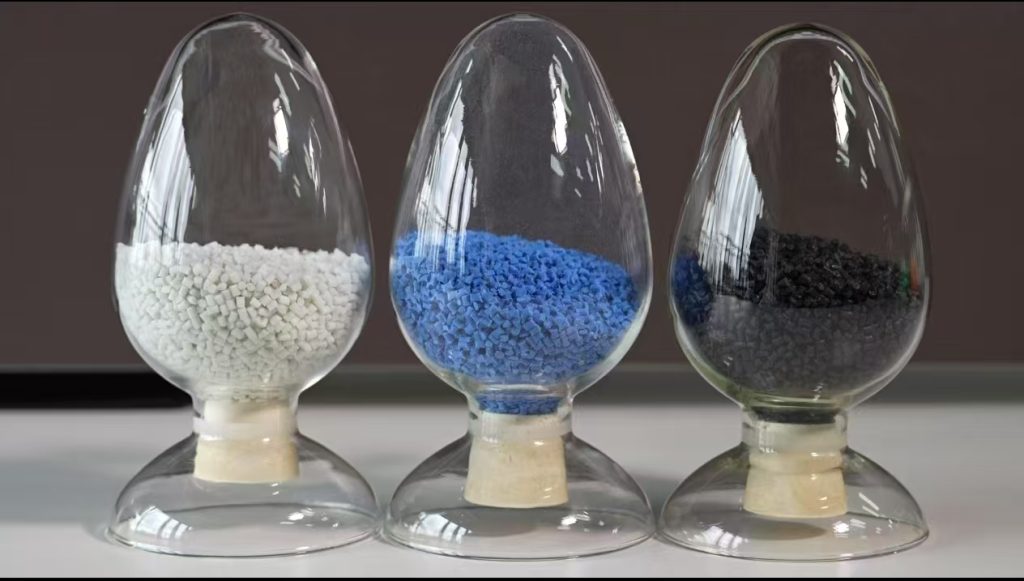
Nylon annealing can relieve molded or machined stress and improve dimensional stability, but it is not a universal cure for nylon movement. The correct cycle depends on PA6, PA66 or PA12 grade, moisture state, section thickness, geometry, fixture support, process route and the dimensions that must remain stable after treatment.

Annealing, Drying and Conditioning Are Different
| Proceso | Main purpose | What must be verified |
|---|---|---|
| Secado | Remove moisture before melting, printing or some machining operations. | Moisture level, dryer temperature, time, dew point and transfer time. |
| Annealing | Relieve stress and change the thermal history of the part or stock. | Grade, cycle, support, pre/post dimensions and property effect. |
| Conditioning | Allow nylon to absorb controlled moisture after production. | Humidity, duration, mass or dimension change and acceptance state. |
| Stabilization hold | Allow temperature or machining stress to equalize before finishing or inspection. | Time, temperature, support condition and measurement repeatability. |
Confusing these processes can create a false acceptance result. A dry nylon part may change after conditioning, while an annealed part may shift dimensions because crystallinity and residual stress changed. The drawing should state the required material condition at inspection and at assembly.
Why PA6, PA66 and PA12 Respond Differently
PA6 and PA66 are semi-crystalline nylons whose stiffness, moisture response and dimensional behavior depend strongly on grade and conditioning. PA12 generally absorbs less moisture than PA6 or PA66, but it still needs grade-specific validation. Glass or carbon fiber changes thermal expansion, stiffness, anisotropy and the way stress is distributed through a molded or machined part.
A resin supplier’s technical data and processing guidance should be the starting point. Do not publish one temperature and time as a guaranteed cycle for every nylon component. The same nominal grade can behave differently in a thin printed wall, an injection molded ribbed housing, a thick machined plate or a fiber-reinforced block.
When Annealing Is Worth Reviewing
- Large cross sections or asymmetric geometry retain machining stress.
- Deep pockets, thin walls or long unsupported features move after release.
- A tight bore, flatness requirement or positional relationship changes after finishing.
- The part will operate at elevated temperature and the initial thermal history is important.
- A molded component shows warpage or post-mold dimensional drift that cannot be corrected by process adjustment alone.
- A printed or machined prototype must be compared with a later production material condition.
Annealing should be evaluated alongside toolpath direction, molding process, moisture conditioning and inspection temperature. It should not be used to conceal an unsuitable datum strategy or excessive tolerance on a flexible feature.
Cycle Selection by Part and Process
| Part route | Typical reason for review | Validation focus |
|---|---|---|
| Injection molded PA6/PA66 | Reduce post-mold stress or stabilize a critical assembly dimension. | Pre/post dimensions, warpage, conditioning state, gate orientation and cycle repeatability. |
| CNC machined nylon | Stabilize stock or release stress after heavy material removal. | Stock condition, balanced roughing, support, finishing sequence and free-state measurement. |
| FDM or printed nylon | Change thermal history or improve a functional test condition. | Orientation, layer bonding, shrinkage, support and whether printed material represents production resin. |
| Fiber-reinforced nylon | Manage anisotropy, stress or dimensional movement in thick sections. | Fiber direction, section thickness, mechanical properties and critical datum change. |
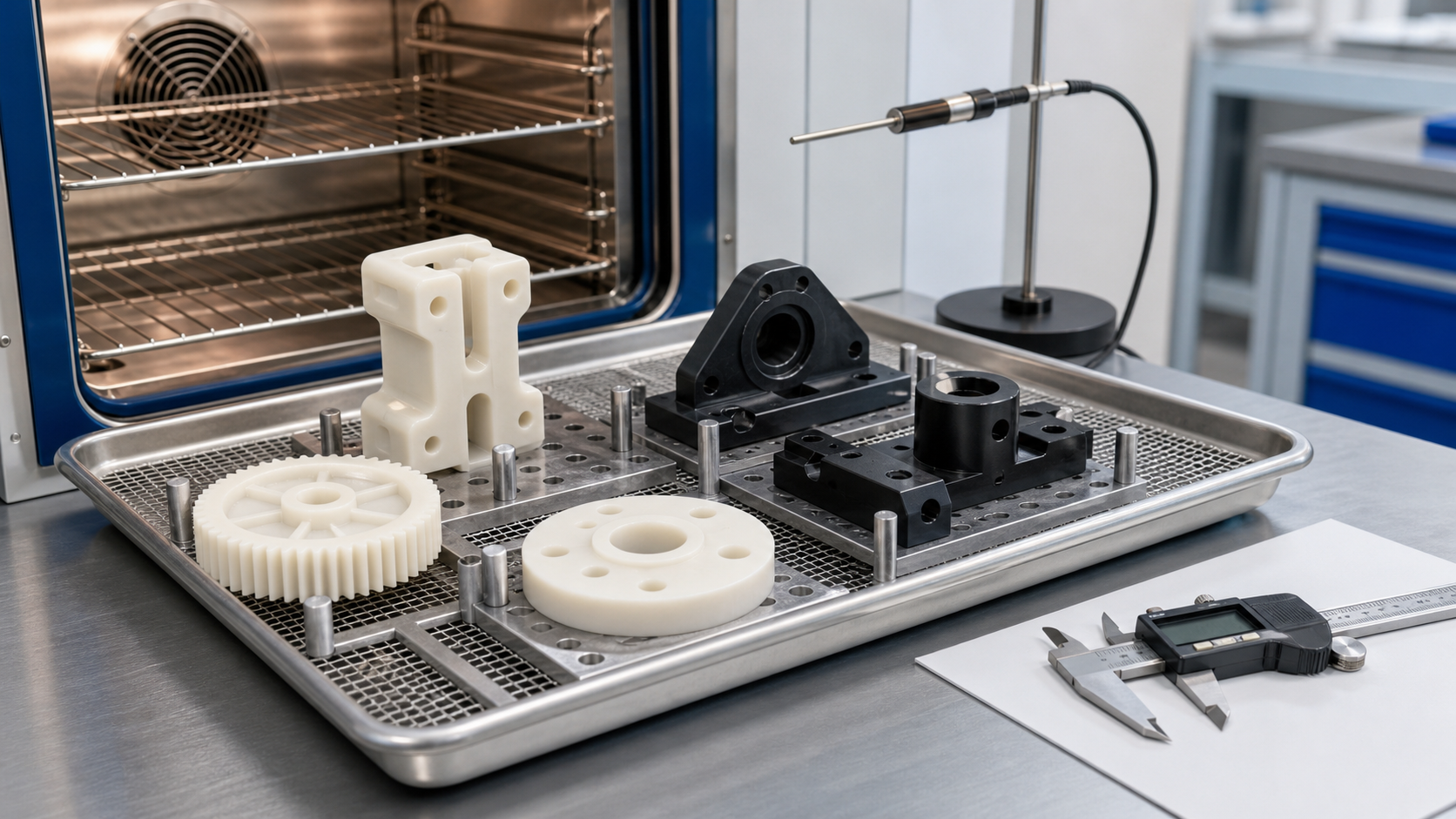
Heating and cooling should be controlled rather than abrupt. Parts with thin walls, threads or sealing faces may need a support fixture that prevents sagging while allowing the intended thermal movement. The support design becomes part of the process record.
Measurement Plan Before and After Annealing
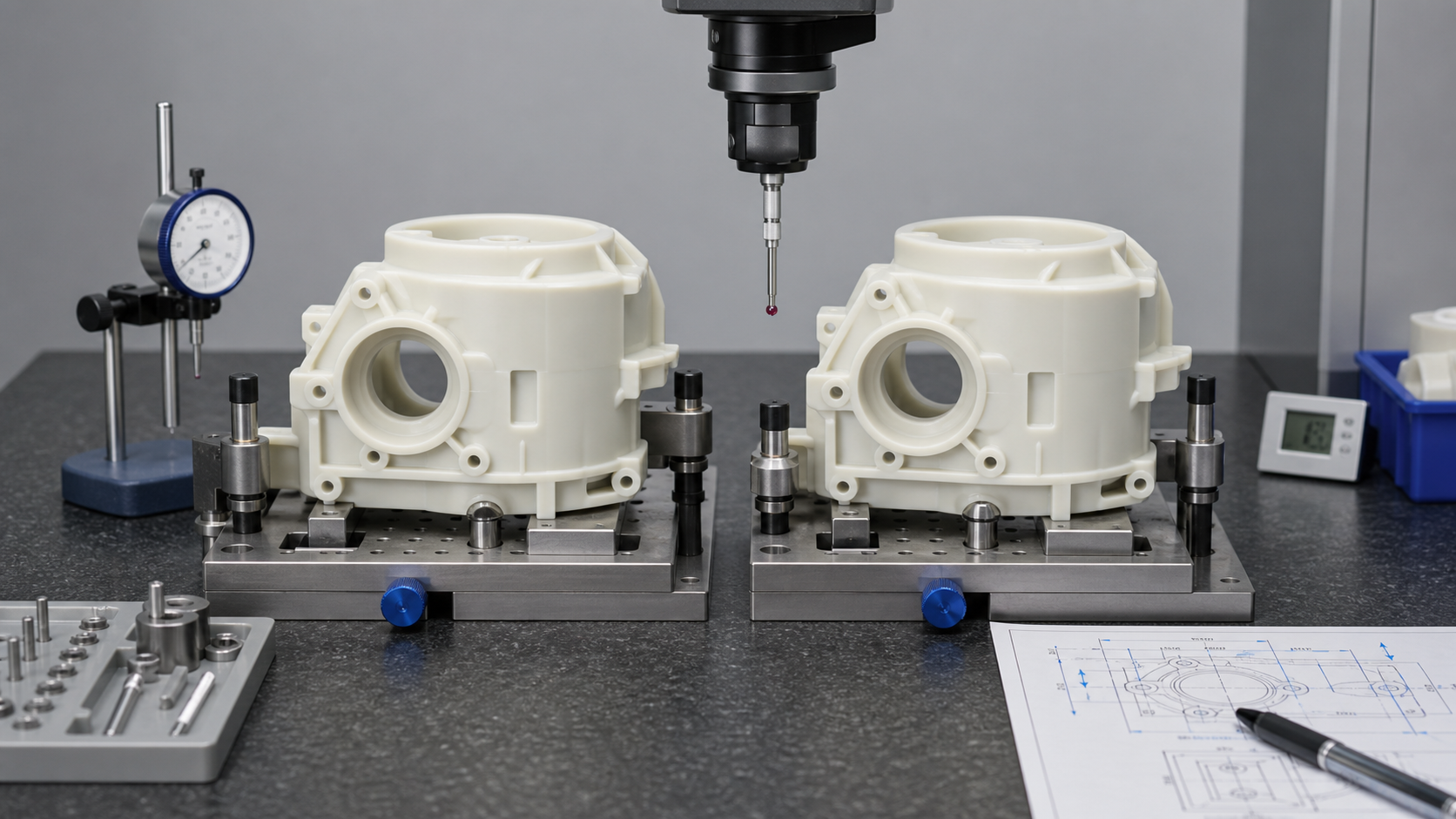
Measure the features that determine function, not only the easiest envelope dimensions. Record the part condition, temperature, humidity, fixture state and instrument. Use the same datums before and after treatment so a dimension change is not confused with a measurement setup change.
- Mark critical bores, mounting holes, flatness, parallelism and sealing faces.
- Record mass or moisture condition when it affects the acceptance state.
- Measure immediately after equalization and again after a defined hold if drift is expected.
- Check assembly fit with the mating component when clearance or interference is critical.
- Separate permanent geometry change from reversible moisture-related change.
- Keep the annealing batch, grade, fixture and cycle record with the inspection report.
Nylon Annealing RFQ and Process Checklist
For a quote or process review, provide the exact resin grade, filler, part route, section thickness, critical datums, starting moisture condition, required service environment and reason for annealing. Ask the supplier to state the proposed cycle, support method, pre/post inspection plan, conditioning assumption and any expected dimensional change.
Include the mating parts and assembly sequence when fit is important. A nylon housing can meet its standalone drawing dimensions but move enough relative to a metal insert, bearing or cover to change clamp load. Check hole position, flatness, snap-fit engagement, thread torque and sealing surfaces together. For parts exposed to heat or humidity, repeat the dimensional check after representative exposure so the approved condition reflects actual use.
Buyer Risks When Annealing Is Added Too Late
- The cycle is specified without the exact PA grade, moisture state, or stabilizer package.
- Parts are annealed without fixtures or pre/post dimensional records.
- Annealing is used to hide poor stock conditioning, molding stress, or machining strategy.
- The drawing does not state whether final inspection occurs before or after conditioning.
Cómo contribuye el plástico de nailon a la revisión
Nylon Plastic has worked across material modification and finished plastic-part manufacturing since 2005. This allows buyers to connect the resin decision with material conditioning, molded or machined stress, fixturing, and final inspection rather than approving a grade from a family name or one dry data-sheet value.
- Compare unfilled PA, PA-GF20, and PA-CF30 against the actual failure mode.
- Review custom compounding when a standard grade misses stiffness, impact, color, wear, heat, or compliance requirements.
- Define TDS, COA, moisture, sample approval, traceability, and lot-release requirements before volume ordering.
Lecturas relacionadas
- Absorción de humedad del nailon
- Servicios de mecanizado CNC de nailon
- Servicios de moldeo por inyección de nailon
Preguntas frecuentes
Comparar PA66 properties and PA6 vs PA66 comparison including strength, heat, cost and application recommendations.
Does every nylon part need annealing?
No. It is most relevant for thick, asymmetric, heavily machined, or tightly controlled parts where stress relief and dimensional stabilization justify the added cycle.
Is annealing the same as drying or conditioning?
No. Drying removes moisture before processing, annealing changes thermal history and stress, and conditioning deliberately establishes a moisture state.
Can annealing change dimensions?
Yes. Measure critical features before and after treatment, use suitable support, and define the final inspection condition.
What information is needed to specify an annealing cycle?
Provide the exact grade, process history, section thickness, geometry, initial moisture state, critical dimensions, service temperature, fixtures, and validation plan.
Request a Nylon Annealing Review
Send the grade, drawing, process history, dimensional issue, and inspection condition before adding annealing to the production route.