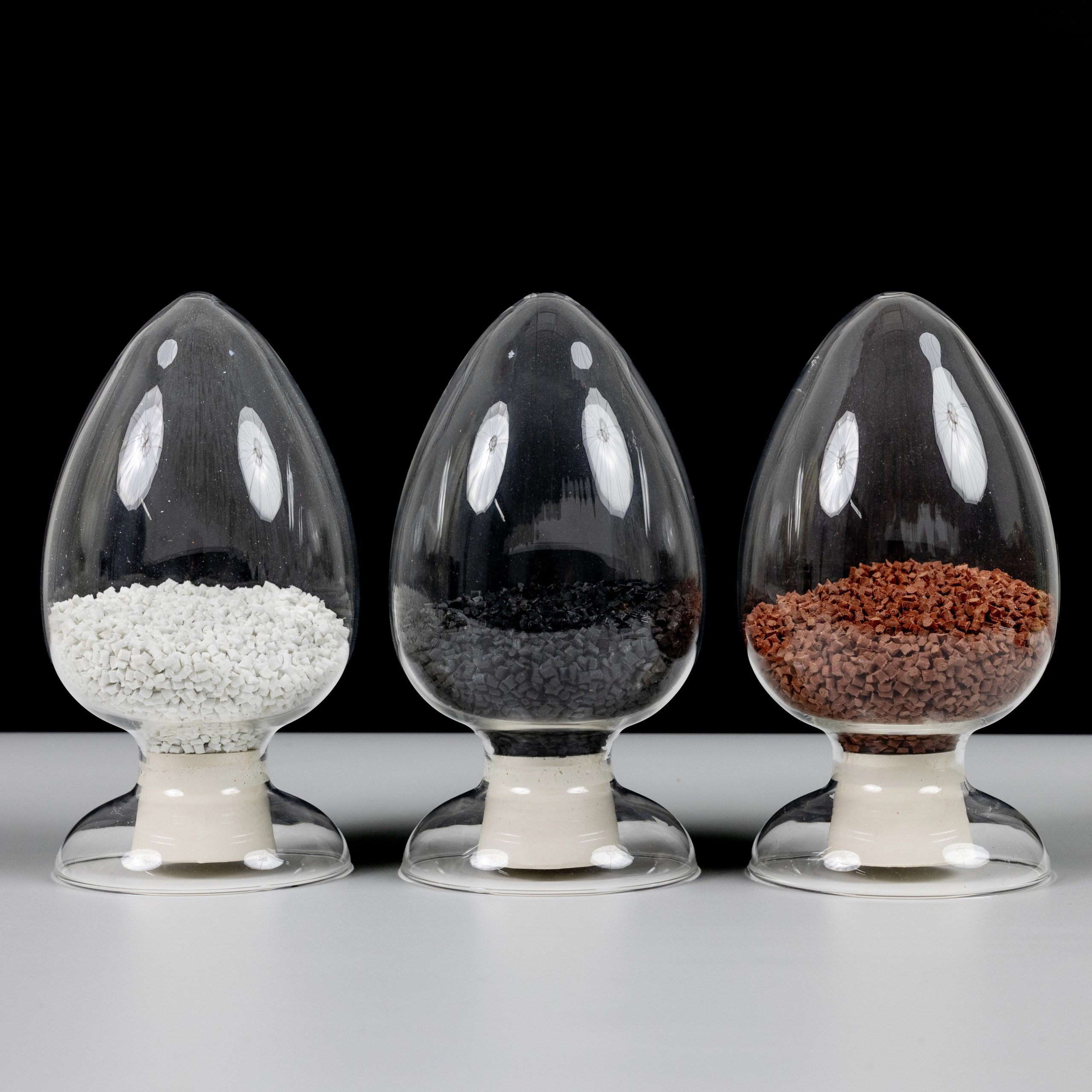

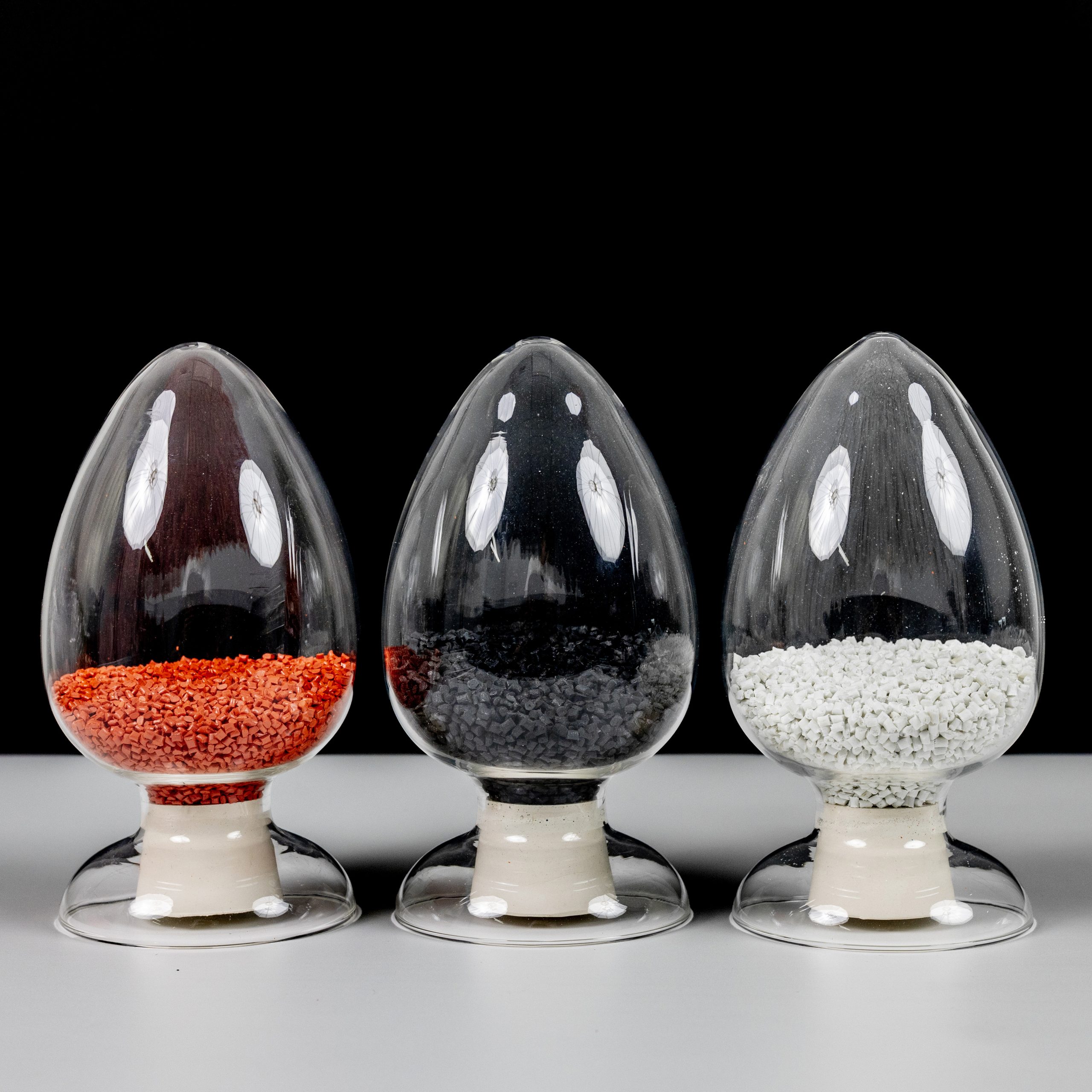
PA6 GF30 Series Property Ranges
These ranges are illustrative across formulations and test conditions; they are not the grade-specific values of PA6 WHG30A. Use the matching datasheet and molded-part tests for approval.
| Propiedad | Valor | Norma de ensayo |
|---|---|---|
| Contenido en fibra de vidrio | 30% | ISO 1172 |
| Resistencia a la tracción | 125-175 MPa | ISO 527 |
| Módulo de flexión | 5,218-8,500 MPa | ISO 178 |
| Resistencia al impacto | 12-17 kJ/m² | ISO 180 |
| Temperatura de deflexión térmica | 165-190°C @1.8MPa | ISO 75 |
| Punto de fusión | 215-230°C | ISO 3146 |
| Absorción de humedad | ~1.8% | ISO 62 |
Exact-Grade Datasheet Reference: PA6 WHG30A
Typical values from the WanHan “PA6 GF30.pdf” datasheet for grade WHG30A: tensile strength 165 MPa (ISO 527-2), flexural modulus 6,000 MPa (ISO 178), heat deflection temperature 175°C (ISO 75-2/B, 0.45 MPa), and density 1.36 g/cm³ (ISO 1183).
The PDF does not state specimen conditioning. Its impact row names Izod but cites ISO 179, a Charpy standard, so confirm the method before using that value. The PDF’s ISO 75-2/B HDT cannot be substituted for the 1.8 MPa figures in the series tables. These are typical material values, not finished-part guarantees. Request the current PDF and test conditions for the selected formulation.
Tabla comparativa de rendimiento de materiales de la serie PA6:
| Propiedad | PA6 GF15 | PA6 GF30 | PA6 GF40 | PA6 GF50 | PA6 GF60 |
|---|---|---|---|---|---|
| Contenido en fibra de vidrio | 15% | 30% | 40% | 50% | 60% |
| Densidad (g/cm³) | 1.21 | 1.38 | 1.46 | 1.56 | 1.67 |
| Resistencia a la tracción (MPa) | 118 | 165 | 185 | 200 | 220 |
| Alargamiento a la rotura (%) | 3.3 | 3.0 | 2.8 | 2.0 | 2.0 |
| Resistencia al impacto entallado (kJ/m²) | 10 | 12 | 13 | 14 | 14 |
| Temperatura de deflexión térmica (℃, 1,8MPa) | 160 | 175 | 215 | 216 | 220 |
Choosing PA6 GF30 for Your Part
PA6 GF30 contains 30% glass fiber by weight. It is a common starting point when an unfilled or lower-filled grade does not meet stiffness or dimensional requirements. Fiber orientation, moisture conditioning, mold design and surface finish still need review for the actual part.
For more retained toughness or a less reinforced surface, compare PA6 GF15. For a higher stiffness target, review PA6 GF40 and its processing trade-offs. See the PA6 selection page for the wider range.
Share the current grade or TDS, application, service temperature, moisture or chemical exposure, required properties, color and requested documents. A drawing is optional for a material-only inquiry, and estimated usage may be stated as “Not sure yet”.
Ventajas clave:
 Excelente relación resistencia/peso
PA6 GF30 provides metal-like strength at a fraction of the weight, enabling lightweight design without compromising performance.
High Thermal Resistance
Heat deflection depends on the exact formulation, conditioning and ISO 75 method. Compare the matching grade datasheet and test molded parts at the intended service temperature.
Estabilidad dimensional superior
Low moisture absorption and minimal thermal expansion ensure consistent performance in varying environmental conditions.
Buena resistencia química
Excellent resistance to oils, fuels, and many chemicals, making it ideal for automotive and industrial applications.
Aplicaciones industriales:

La PA6 GF30 se utiliza habitualmente en componentes de automoción, piezas interiores y otras aplicaciones que requieren un buen acabado superficial y una rigidez fundamental.
Impulsar la innovación en todos los sectores
| Industria | Aplicaciones clave |
|---|---|
| Automoción | Tapas de motor, colectores de admisión, soportes estructurales, carcasas de sensores, conectores. |
| Electricidad y electrónica | Disyuntores, interruptores, carcasas de conectores, componentes aislantes. |
| Equipamiento industrial | Engranajes, rodamientos, carcasas de máquinas, rodillos, componentes mecánicos. |

¿Cómo elegir?
En términos sencillos:
-
Para buena resistencia o rentabilidad, considera PA6 GF15.
-
Para rendimiento global equilibrado, elige PA6 GF30.
-
Para mayor rigidez, fuerza y resistencia al calor, y cuando el coste sea menos sensible, considere PA6 GF40/50/60. En general, un mayor contenido de fibra de vidrio mejora estas propiedades.
¿Por qué elegirnos?


PA6 GF30 Questions
Q: Is the 190°C figure the HDT of WHG30A?
A: No. The WHG30A PDF gives a typical HDT of 175°C under ISO 75-2/B (0.45 MPa). The 165–190°C range above is a general illustration with a different stated condition; confirm the exact grade and test load for approval.
Q: Should I use GF15 or GF40 instead?
A: Compare GF15 if lower reinforcement may satisfy the load while retaining the desired finish or toughness. Compare GF40 if the part still needs higher stiffness; check fiber orientation, warpage and molded-part results.
Samples, timing and documents: Free samples are available for qualified projects. Standard-grade production is normally 5–7 days; custom formulations normally take 2–3 weeks. Material documentation and applicable certifications can be provided for the selected grade. Confirm availability and scope with the technical team.