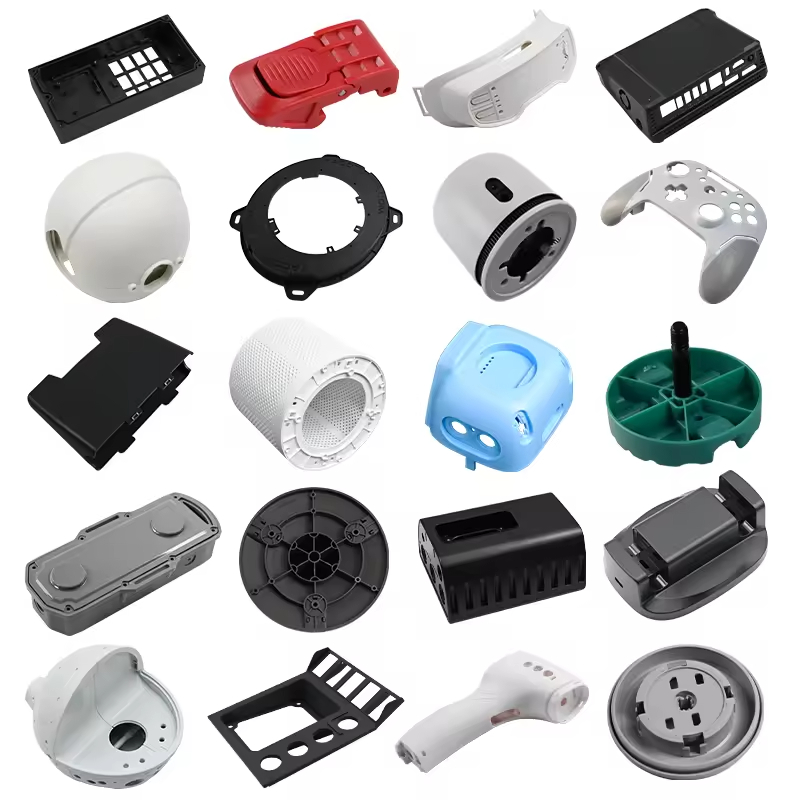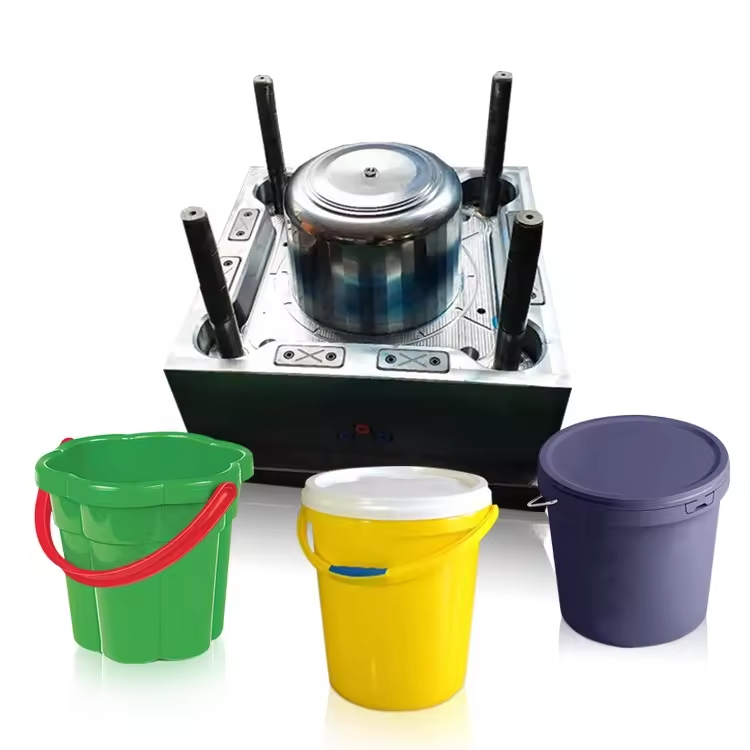
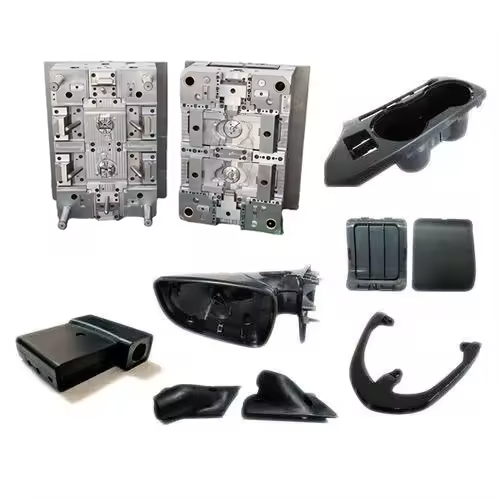
Piezas de plástico a medida elaborado mediante Moldeo por inyección para el sector de la automoción son fundamentales para el diseño de los vehículos modernos, ya que permiten la producción de componentes ligeros, duraderos y complejos que cumplen con las exigentes demandas de la industria de la automoción. Desde intrincadas piezas de acabado interior y robustos componentes del salpicadero hasta piezas exteriores funcionales como parachoques y rejillas, el moldeo por inyección ofrece la precisión, la repetibilidad y el rendimiento de los materiales necesarios tanto para aplicaciones estructurales como estéticas. Esta guía analiza las capacidades, los materiales, los estándares de calidad y los procesos implicados en la fabricación de piezas de plástico a medida para el sector de la automoción. En Nylon Plástico , combinamos más de 15 años de experiencia como fabricante de equipos originales (OEM) con nuestro completo ecosistema de fabricación para ofrecer soluciones integrales a clientes del sector de la automoción de todo el mundo.

Las ventajas del moldeo por inyección en el sector de la automoción
El moldeo por inyección es el proceso de fabricación preferido para las piezas de plástico del sector de la automoción debido a su combinación única de prestaciones.
- Eficiencia en la producción a gran escala: Una vez creado el molde, las máquinas de moldeo por inyección pueden producir miles o incluso millones de piezas idénticas a una velocidad extraordinaria. Esta eficiencia es fundamental para los fabricantes de equipos originales del sector de la automoción, que necesitan un suministro constante y a gran escala.
- Precisión y repetibilidad excepcionales: El moldeo por inyección moderno, combinado con moldes mecanizados con precisión, garantiza unas tolerancias muy ajustadas pieza tras pieza. Esto asegura que todos los componentes de una serie de producción sean idénticos, lo cual es fundamental para la eficiencia de la cadena de montaje y la calidad del vehículo.
- Flexibilidad de diseño para geometrías complejas: El moldeo por inyección permite fabricar piezas con geometrías intrincadas, características internas complejas, paredes delgadas y detalles precisos. Esta libertad de diseño permite a los ingenieros fusionar varias piezas en un único componente, lo que reduce los costes de montaje y el peso.
- Amplia selección de materiales: El proceso es compatible con una amplia gama de termoplásticos diseñados para aplicaciones en el sector de la automoción, desde materiales para el interior del vehículo con un excelente acabado superficial hasta compuestos para el compartimento del motor que requieren una elevada resistencia al calor y a los productos químicos. Nuestro centro de selección de materiales ofrece una orientación más detallada sobre cómo seleccionar los polímeros que mejor se adapten a los requisitos específicos del sector de la automoción.
- Calidad constante con trazabilidad total: Gracias a la certificación IATF 16949 y a unos rigurosos controles de calidad, el moldeo por inyección para el sector de la automoción garantiza que todas las piezas cumplan las normas del sector en materia de seguridad, rendimiento y fiabilidad.
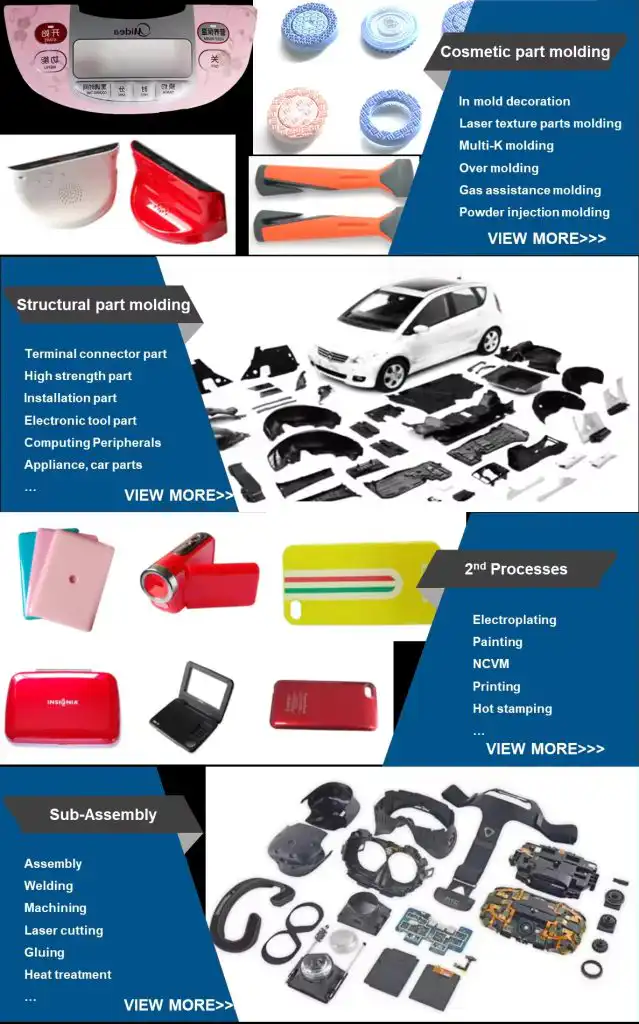
- Funcionalidad integrada: Técnicas avanzadas como el moldeo por inserción y el sobremoldeo permiten integrar componentes metálicos, empuñaduras de tacto suave o estructuras multimaterial en un único paso de fabricación.
Materiales para piezas de automoción moldeadas por inyección
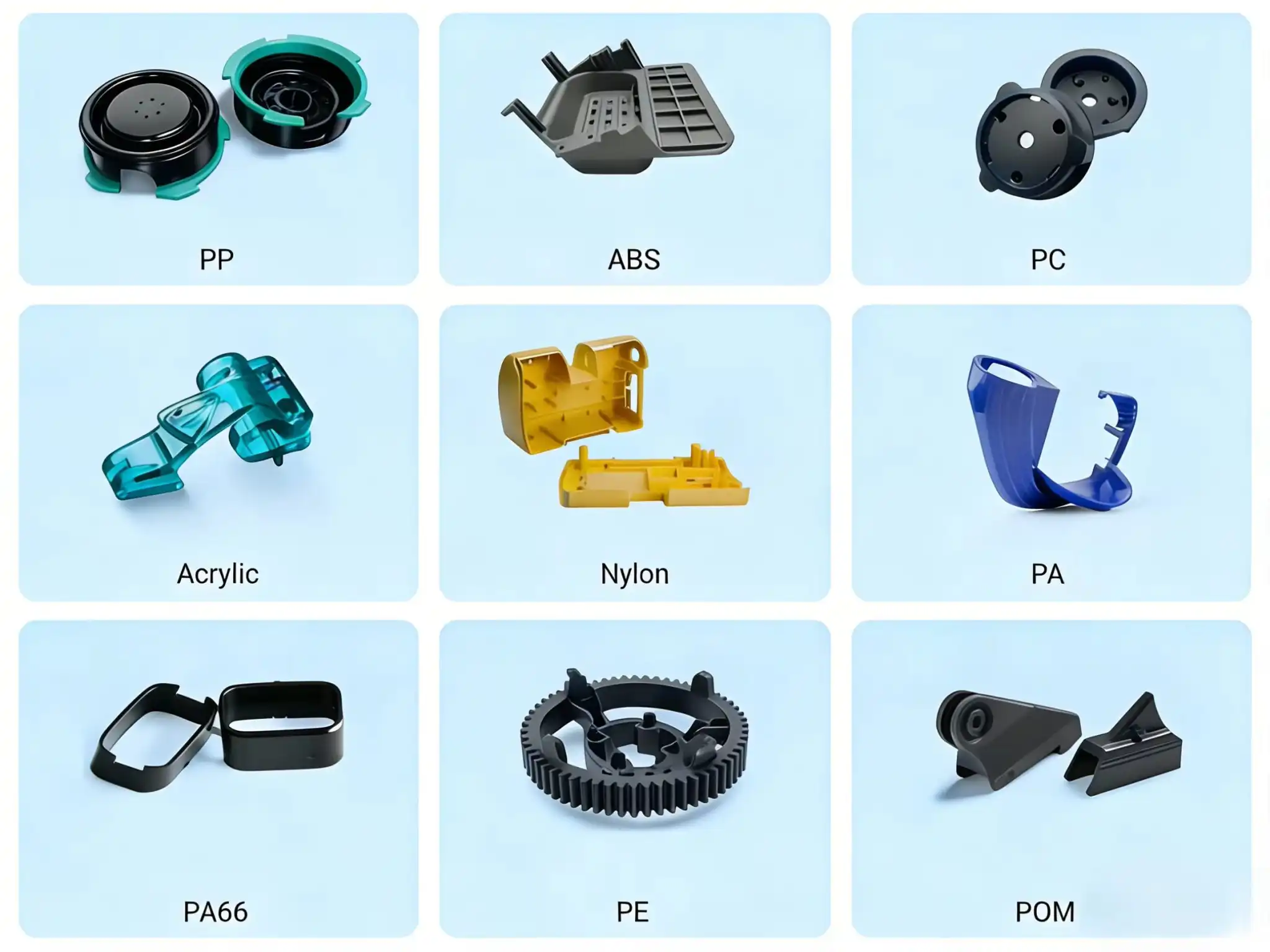
La elección del material determina el rendimiento, el aspecto y la durabilidad de la pieza. El proveedor de referencia ofrece una amplia gama de plásticos técnicos adecuados para diversas aplicaciones del sector de la automoción.
| Material | Propiedades clave | Aplicaciones típicas en el sector de la automoción |
|---|---|---|
| PP (polipropileno) | Ligero, buena resistencia química, resistencia a la fatiga (bisagras flexibles), bajo coste, disponible en grados modificados para resistir impactos. | Revestimientos interiores, paneles de las puertas, conductos de aire, carcasas de las baterías, revestimientos de los guardabarros, protectores de los bajos. |
| ABS (acrilonitrilo butadieno estireno) | Buena resistencia al impacto, rigidez, excelente acabado superficial, fácil de pintar y galvanizar. | Componentes del salpicadero, molduras interiores, rejillas, carcasas de los retrovisores y piezas de la consola central. |
| PC/ABS (mezcla de policarbonato y ABS) | Alta resistencia al impacto, resistencia al calor, buena facilidad de procesamiento y excelente acabado superficial. | Molduras interiores y exteriores, componentes del salpicadero, revestimientos de los montantes y marcos. |
| PA6 (nailon 6) | Alta resistencia, buena tenacidad, resistencia al desgaste y resistencia química. A menudo está reforzado con fibra de vidrio. | Componentes bajo el capó, cubiertas del motor, conectores, soportes y carcasas. |
| PA66 (nailon 66) | Mayor resistencia mecánica y térmica que el PA6, excelente resistencia química y buenas propiedades de resistencia al desgaste. | Componentes situados bajo el capó que requieren una mayor resistencia a la temperatura: colectores de admisión, depósitos laterales del radiador y conectores eléctricos. |
| PBT (polibutileno tereftalato) | Buenas propiedades eléctricas, resistencia química, estabilidad dimensional; a menudo reforzado con fibra de vidrio. | Conectores eléctricos, carcasas de sensores, componentes del sistema de encendido, molduras exteriores. |
Si necesitas asesoramiento especializado para elegir el material más adecuado para tu pieza de automóvil concreta, visita nuestra centro de selección de materiales .

Especificaciones de rendimiento para piezas de automóvil
Los componentes de automoción deben cumplir rigurosas normas de rendimiento. El proveedor de referencia especifica los parámetros clave de rendimiento.
| Parámetro de rendimiento | Especificaciones / Capacidades | Importancia |
|---|---|---|
| Resistencia al calor | Hasta 150 °C (302 °F) | Garantiza que las piezas mantengan su estabilidad dimensional y sus propiedades mecánicas a las temperaturas que se alcanzan bajo el capó y en climas cálidos. |
| Resistencia al impacto (Izod) | 10-15 kJ/m² | Ofrece resistencia a la rotura por impactos durante el montaje, el uso y en caso de colisión. |
| Opciones de acabado superficial | Con textura, brillante, mate, veteado | Permite combinar la estética interior, desde vetas de tacto suave hasta acabados de alto brillo. |
| Estabilidad dimensional | Se mantienen tolerancias estrictas en todas las series de producción | Garantiza un ajuste y un funcionamiento uniformes en los conjuntos, lo cual es fundamental para la seguridad y la calidad. |
| Resistencia química | Resistencia a los aceites, los combustibles, los productos de limpieza y la exposición ambiental | Es fundamental para garantizar una durabilidad a largo plazo, especialmente en el caso de los componentes exteriores y los situados bajo el capó. |

El proceso de moldeo por inyección en el sector de la automoción: del concepto al componente
La fabricación de piezas de automoción de alta calidad requiere un proceso fluido y completo, desde el diseño y la selección de materiales hasta el moldeo de precisión y el control de calidad. El proveedor de referencia hace hincapié en Más de 15 años de experiencia como fabricante de equipos originales (OEM) y Certificación IATF 16949 .
| Escenario | Tecnología y procesos básicos | Calidad y resultados |
|---|---|---|
| 1. Diseño e ingeniería de piezas | – Diseño colaborativo basado en las especificaciones, los planos o las muestras del cliente. – Análisis de DFM (diseño para la fabricabilidad) para optimizar el diseño de las piezas para el moldeo por inyección. |
Un diseño de pieza optimizado en cuanto a funcionalidad, facilidad de fabricación y coste, que cumple todos los requisitos del sector de la automoción. |
| 2. Selección de materiales | – Plástico técnico óptimo seleccionado en función de los requisitos de rendimiento (temperatura, resistencia al impacto, resistencia química y estética). – Adquisición de materiales certificados y trazables procedentes de proveedores cualificados. |
Rendimiento, uniformidad y cumplimiento garantizados de las especificaciones del sector de la automoción. |
| 3. Diseño y fabricación de moldes de precisión | – Diseño de moldes mediante software CAD avanzado, que incorpora sistemas de entrada de material, refrigeración y expulsión optimizados para la producción en serie del sector de la automoción. – Fabricado en acero para herramientas de alta calidad mediante mecanizado CNC de alta precisión. |
Una herramienta resistente y de alta precisión capaz de producir millones de piezas uniformes y de alta calidad. |
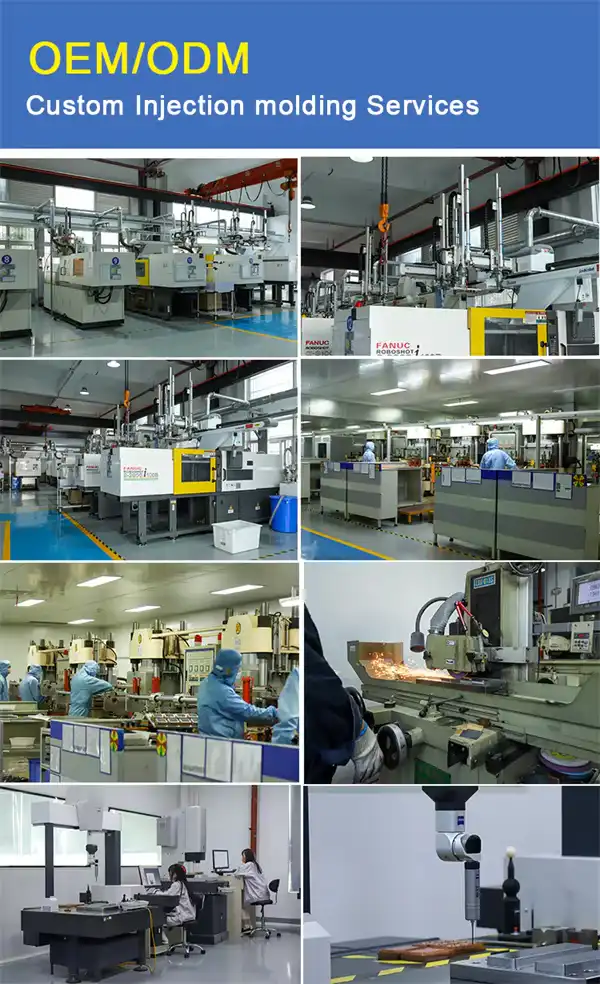
| 4. Producción mediante moldeo por inyección | – Moldes de precisión instalados en máquinas de moldeo por inyección de última generación. – Los parámetros del proceso (temperatura, presión, tiempo de enfriamiento) se supervisan y controlan rigurosamente. |
Producción constante y repetible de piezas que cumplen con estrictas especificaciones dimensionales y de rendimiento. |
| 5. Operaciones secundarias y montaje | – Operaciones posteriores al moldeo, según sea necesario: soldadura por ultrasonidos, fijación térmica, remachado en caliente. – Acabado de superficies: texturizado, pintado, galvanizado o marcado con láser. |
Componentes totalmente acabados y listos para montar, con características integradas y un aspecto específico. |
| 6. Garantía de calidad e inspección | – Inspección rigurosa mediante CMM (máquinas de medición por coordenadas), equipos de ensayo de impacto, y aparatos de ensayo de deflexión térmica. – Las inspecciones durante el proceso y finales garantizan que todas las piezas cumplan con las especificaciones. - Cumplimiento de IATF 16949 y ISO 9001 normas. |
Calidad garantizada de las piezas, trazabilidad y cumplimiento de las rigurosas normas del sector de la automoción. |
| 7. Embalaje y entrega | - Las piezas se embalan cuidadosamente para evitar daños durante el transporte. – Opciones de entrega «justo a tiempo» disponibles para las líneas de montaje de automóviles. |
Entrega segura y puntual de componentes terminados, listos para su integración en la producción de vehículos. |

Garantía de calidad: la base de la excelencia en el sector de la automoción
El proveedor de referencia hace hincapié en IATF 16949 y ISO 9001 certificaciones, junto con amplias capacidades de ensayo. Esto es lo que significa para sus piezas de plástico a medida.
| Calidad | Nuestro compromiso | Su beneficio |
|---|---|---|
| Certificación IATF 16949 | Sistema de gestión de la calidad específico para la producción de automóviles. | Cumple con los requisitos de los proveedores automovilísticos a nivel mundial; garantiza una calidad constante y una mejora continua. |
| Certificación ISO 9001 | Certificación del sistema de gestión de la calidad básico. | Procesos fiables, procedimientos documentados, orientación al cliente. |
| Inspección con máquina de medición por coordenadas (CMM) | Verificación dimensional de precisión de piezas con respecto a modelos CAD. | Precisión dimensional garantizada para un ajuste perfecto en los ensamblajes. |
| Ensayos de impacto | Verificación de la resistencia al impacto (Izod: 10-15 kJ/m²) para garantizar la durabilidad. | Las piezas resisten los impactos que se producen en condiciones reales durante el uso y el montaje del vehículo. |
| Ensayo de deflexión térmica | Verificación de la resistencia al calor hasta 150 °C. | Las piezas conservan sus propiedades a las temperaturas que se alcanzan bajo el capó y en climas cálidos. |
| Inspección del primer artículo (FAI) | Informe exhaustivo en el que se comprueban todas las dimensiones y propiedades con respecto a las especificaciones. | Seguridad de que los procesos de producción son correctos antes de iniciar la fabricación en serie. |
| Certificaciones de materiales | Certificaciones trazables de todos los materiales utilizados. | Garantía de las propiedades de los materiales y del cumplimiento de los requisitos del sector de la automoción. |
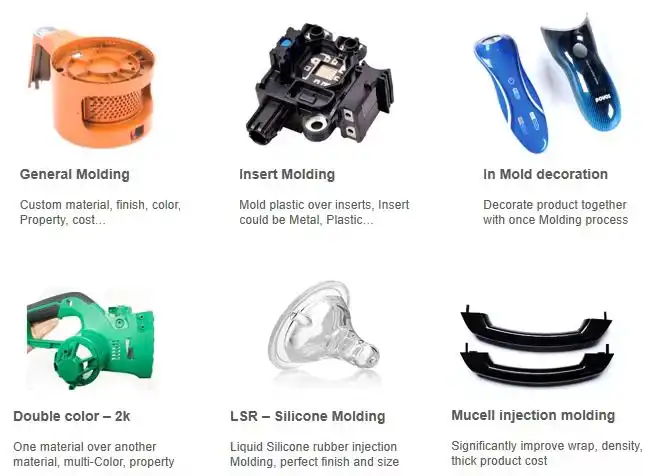
Aplicaciones industriales: piezas de plástico a medida para todos los sistemas de los vehículos
Las piezas de plástico moldeadas por inyección se utilizan en prácticamente todos los sistemas de los vehículos modernos.
| Sistema del vehículo | Piezas de plástico a medida habituales | Requisitos clave de materiales y prestaciones |
|---|---|---|
| Acabados interiores | Componentes del salpicadero, paneles de las puertas, consolas centrales, revestimientos de los montantes, guanteras y molduras decorativas. | Acabado estético de la superficie (texturizado, brillante, veteado), coincidencia de colores, estabilidad frente a los rayos UV, resistencia a los impactos. |
| Componentes exteriores | Rejillas, carcasas de luces, carcasas de retrovisores, componentes del parachoques, molduras y emblemas. | Resistencia a la intemperie, estabilidad frente a los rayos UV, resistencia al impacto a bajas temperaturas, acabado superficial de clase A. |
| Bajo el capó y tren de potencia | Cubiertas del motor, colectores de admisión, depósitos laterales del radiador, ventiladores de refrigeración, depósitos de líquidos, carcasas. | Alta resistencia al calor (hasta 150 °C), resistencia química (aceites, líquidos refrigerantes), estabilidad dimensional, resistencia a la fluencia. |
| Sistemas eléctricos y electrónicos | Conectores, carcasas de sensores, cajas de fusibles, abrazaderas para mazos de cables, carcasas de la ECU, cajas de relés. | Excelente aislamiento eléctrico, resistencia al fuego, tolerancias de precisión y resistencia a los ciclos térmicos. |
| Sistemas de climatización | Carcasas de ventilación, conductos de aire, ruedas de ventilador, paneles de control de temperatura, componentes de distribución de aire. | Estabilidad dimensional, resistencia a la temperatura, bajo nivel de ruido, compatibilidad con el flujo de aire. |
| Iluminación | Marcos de faros, carcasas de reflectores, componentes de luces traseras, soportes para lentes, soportes de montaje. | Resistencia al calor (para componentes LED), transparencia óptica de las lentes, estabilidad dimensional y resistencia a la intemperie. |
| Elementos de fijación y clips | Clips a presión, retenedores, clips para mazos de cables, fijaciones para paneles, clips para embellecedores. | Flexibilidad, capacidad de sujeción, resistencia a las vibraciones, facilidad de montaje. Para más información sobre esta categoría, consulta nuestra guía sobre sujetadores de plástico para coches . |

Opciones de personalización
El proveedor de referencia ofrece amplias posibilidades de personalización para satisfacer los requisitos específicos de los proyectos del sector de la automoción.
| Tipo de personalización | Opciones disponibles | Cantidad mínima de pedido |
|---|---|---|
| Diseño a medida | Podemos trabajar a partir de tus bocetos, archivos CAD o muestras ya existentes. Nuestro diseño de productos puede ayudarle a optimizar el diseño. | 1 juego |
| Selección de materiales | Amplia gama de materiales aptos para el sector de la automoción: PP, ABS, PC/ABS, PA6, PA66, PBT y muchos más. | 1 juego |
| Acabado superficial | Acabados texturizados, brillantes, mates y granulados que se adaptan a las especificaciones de interiores o exteriores. | 1 juego |
| Personalización del color | Colores personalizados que cumplen con las especificaciones del sector de la automoción. Nuestros personalización del color Estos servicios garantizan una correspondencia precisa de los colores. | 1 juego |
| Marcado del logotipo | Grabado con láser, estampado en caliente o etiquetado en molde de logotipos y números de referencia. | 1 juego |
| Servicios de montaje | Soldadura por ultrasonidos, fijación por calor, remachado en caliente, y el montaje de componentes. | 1 juego |
| Envases a medida | Embalaje diseñado para proteger las piezas durante el transporte y cumplir con los requisitos de entrega «justo a tiempo» del sector de la automoción. | 1 juego |

Integración con capacidades de fabricación más amplias
El moldeo por inyección alcanza su máximo potencial cuando se integra con otros procesos de fabricación. En Nylon Plastic, combinamos el moldeo de precisión con nuestra amplia gama de servicios.
| Servicio integrado | Cómo mejora esto el moldeo por inyección | Ventajas para usted |
|---|---|---|
| Soluciones de montaje completas | Componentes moldeados combinados con Mecanizado CNC inserciones metálicas o soportes para conjuntos completos. | Responsabilidad de un único proveedor para todos los subsistemas del vehículo. |
| Fabricación multiproceso | Piezas de plástico moldeadas por inyección combinadas con impreso en 3D en metal prototipos o Torneado CNC componentes para conjuntos híbridos. | Selección del proceso óptimo para cada componente de un conjunto. |
| Del prototipo a la producción | Impreso en 3D prototipos para la validación del diseño, para luego pasar al moldeo por inyección para la producción en serie. | Plazos de comercialización más cortos con diseños validados antes de comprometerse con la fabricación de herramientas. |
| Moldeo por inserción y sobremoldeo | Integración de insertos metálicos, componentes roscados o materiales de tacto suave en piezas moldeadas. | Menos pasos de montaje, mejor rendimiento de las piezas y mayor funcionalidad. |
| Soluciones para productos acabados | Moldeo por inyección combinado con el montaje, personalización del color , y embalajes personalizados para una entrega completa del producto. | Cadena de suministro simplificada, calidad garantizada en todos los procesos. |
Preguntas frecuentes: Piezas de plástico a medida para el moldeo por inyección en el sector de la automoción
P1: ¿Qué certificaciones del sector de la automoción tienes?
A: Somos IATF 16949 y Certificación ISO 9001, cumpliendo con los estrictos requisitos de gestión de la calidad de la industria automovilística mundial. Esta certificación garantiza la uniformidad de los procesos, la mejora continua y la fiabilidad de los resultados para todos los componentes de automoción.
Pregunta 2: ¿Qué materiales se utilizan para las piezas moldeadas por inyección destinadas al sector de la automoción?
A: Ofrecemos una amplia gama de plásticos técnicos para el sector de la automoción, entre los que se incluyen PP, ABS, PC/ABS, PA6, PA66, PBT, entre otros. Los materiales pueden seleccionarse en función de requisitos específicos de resistencia al calor (hasta 150 °C), resistencia al impacto (10-15 kJ/m²), resistencia química y acabado superficial.
Pregunta 3: ¿Podéis fabricar piezas de automóvil tanto para el interior como para el exterior?
R: Por supuesto. Nos especializamos en componentes tanto para el interior como para el exterior, desde los embellecedores del salpicadero y los paneles de las puertas hasta las rejillas, las carcasas de las luces y las piezas situadas bajo el capó. Cada aplicación requiere unas propiedades de los materiales y unos estándares de calidad distintos, a los que nos adaptamos plenamente.
Pregunta 4: ¿Cuál es la cantidad mínima de pedido (MOQ)?
A: Nuestro MOQ es 1 juego para prototipos y muestras iniciales. Las cantidades mínimas de pedido (MOQ) para la producción son flexibles y dependen del tamaño, la complejidad y el material de la pieza. Ofrecemos servicios que abarcan desde tiradas piloto de bajo volumen hasta la producción en masa de gran volumen para fabricantes de equipos originales (OEM) del sector de la automoción y proveedores de primer nivel.
Pregunta 5: ¿Qué acabados superficiales se pueden conseguir?
A: Ofrecemos una amplia gama de acabados superficiales, entre los que se incluyen con textura, brillante, mate y veteado acabados. Estos pueden adaptarse a especificaciones concretas del interior y el exterior de los vehículos, desde texturas suaves al tacto hasta acabados de alto brillo.
P6: ¿Ofrecéis servicios de montaje, como la soldadura por ultrasonidos o la fijación por calor?
A: Sí. Ofrecemos servicios integrales de montaje, entre los que se incluyen: soldadura por ultrasonidos, fijación térmica y remachado en caliente. Esto nos permite suministrar componentes totalmente montados y listos para su integración en las líneas de producción de vehículos.
P7: ¿Cómo se garantiza que las piezas cumplan los requisitos de resistencia al calor hasta 150 °C?
A: Verificamos las propiedades de los materiales mediante pruebas rigurosas en las que utilizamos aparatos de ensayo de deflexión térmica. Las certificaciones de los materiales y los ensayos durante el proceso garantizan que cada lote de producción cumpla los requisitos especificados de resistencia a la temperatura para aplicaciones bajo el capó y otras aplicaciones a alta temperatura.
P8: ¿Qué formatos de archivo hay que facilitar para que nos den un presupuesto?
A: Para poder ofrecer un presupuesto preciso y comentarios sobre el diseño para la fabricación (DFM), normalmente necesitamos archivos CAD en 3D en formatos como STEP (.stp), IGES (.igs), SolidWorks (.sldprt) o AutoCAD (.dwg, .dxf) . También resultan útiles los planos en 2D con tolerancias y especificaciones críticas.
Pregunta 9: ¿Ofrecéis asistencia en el diseño para facilitar la fabricación?
A: Sí. Nuestro equipo de ingenieros ofrece Diseño para la fabricación (DFM) análisis como parte de nuestro servicio. Revisamos su diseño y le sugerimos modificaciones que puedan reducir los costes, mejorar la calidad o facilitar la fabricación, sin dejar de cumplir los requisitos funcionales. Nuestro diseño de productos El equipo también puede ayudar a optimizar el diseño.
Pregunta 10: ¿Se pueden integrar componentes metálicos en piezas de plástico (moldeado por inserción)?
A: Sí. Nos especializamos en moldeo por inserción y sobremoldeo procesos que integran componentes metálicos, insertos roscados o materiales de tacto suave directamente en las piezas moldeadas durante el proceso de moldeo por inyección, lo que reduce las operaciones de montaje secundarias.
Conclusión: Tu socio para la excelencia en el moldeo por inyección para el sector de la automoción
Piezas de plástico a medida elaborado mediante Moldeo por inyección para el sector de la automoción son esenciales para el diseño de los vehículos modernos, ya que ofrecen el equilibrio perfecto entre una construcción ligera, flexibilidad de diseño y un rendimiento fiable. Con más de 15 años de experiencia como fabricante de equipo original (OEM), la certificación IATF 16949 y unas amplias capacidades internas que abarcan desde la selección de materiales hasta el montaje, somos tu socio integral para la fabricación de componentes de automoción.
¿Estás listo para empezar tu próximo proyecto de automoción? Ponte en contacto con nuestro equipo de ingeniería hoy mismo para comentarnos tus necesidades. Desde el análisis de DFM y la selección de materiales hasta el moldeo de precisión y el montaje, ofrecemos soluciones integrales que se integran con nuestra amplia gama de diseño de productos , Mecanizado CNC , y personalización del color capacidades.
Solicitar presupuesto | Contacte con nuestro equipo de ingenieros