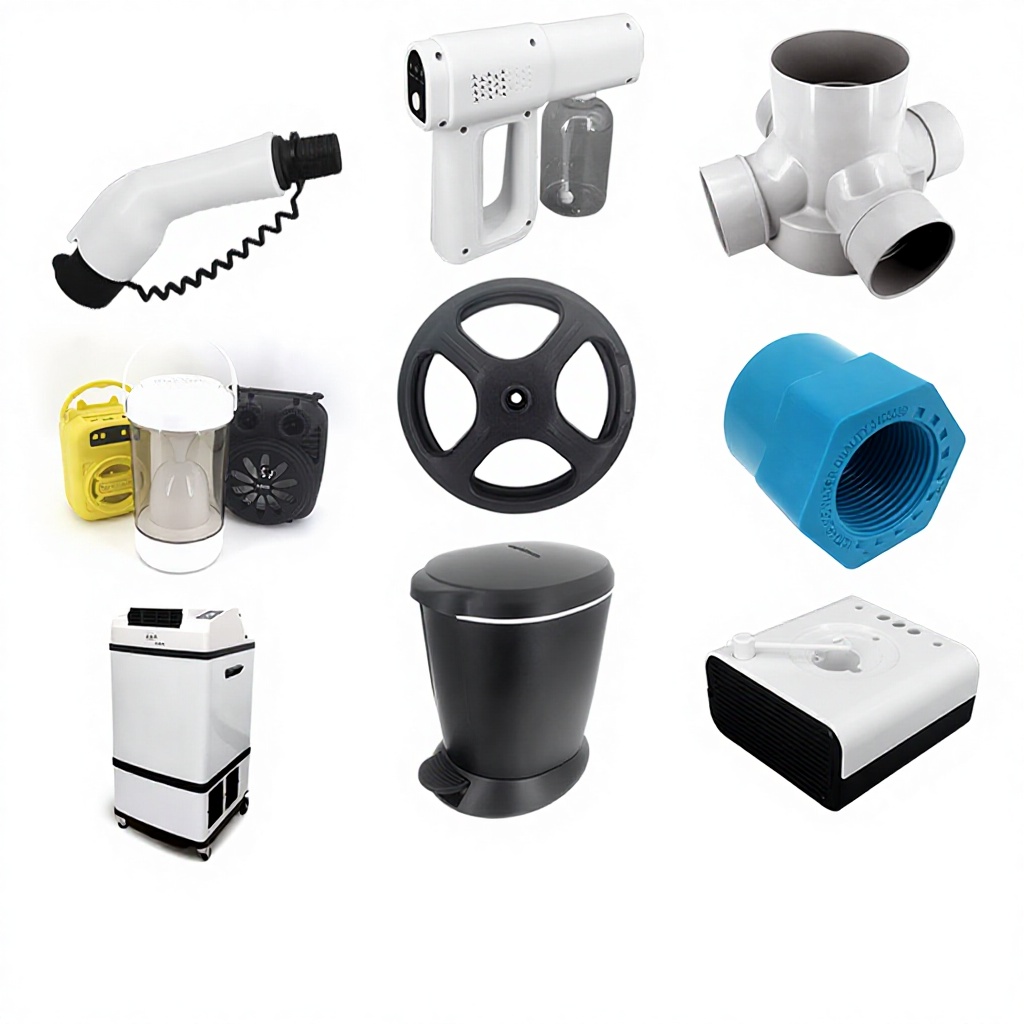
3-Axis CNC Machining remains a practical choice for plastic parts when teams need repeatable tolerances, clean surfaces, and predictable production cost.
3-Axis CNC Machining for Plastic Parts represents Complete Manufacturing Guide one of the most important materials in modern engineering and manufacturing. This comprehensive guide examines the fundamental properties, industrial applications, and manufacturing considerations for this critical material, providing engineers and procurement professionals with essential knowledge for material selection and application design.

Propiedades y características fundamentales
The material properties of 3 axis cnc plastic determine its suitability for specific engineering applications. Key characteristics include mechanical strength, thermal stability, chemical resistance, and processing behavior. Understanding these fundamental properties enables optimal material selection across diverse industrial applications.

Aplicaciones industriales
| Área de aplicación | Uso específico | Requisitos de rendimiento | Ventajas del material |
|---|---|---|---|
| Fabricación | Producción de componentes | Alta resistencia, durabilidad | Rentable y fiable |
| Construcción | Elementos estructurales | Capacidad de carga | Larga vida útil |
| Electrónica | Componentes eléctricos | Conductividad, estabilidad | Coherencia del rendimiento |
| Automoción | Componentes de vehículos | Optimización del peso | Eficacia del combustible |
| Aeroespacial | Estructuras aeronáuticas | Elevada relación resistencia-peso | Seguridad crítica |
Procesos de fabricación
3 axis cnc plastic manufacturing involves specialized processes tailored to material properties and application requirements. Common manufacturing methods include casting, forging, machining, and additive manufacturing, each offering distinct advantages for specific component geometries and performance criteria.

Selección de materiales
Selecting 3 axis cnc plastic for engineering applications requires evaluating multiple performance criteria against cost constraints and manufacturing feasibility. Key considerations include mechanical properties, environmental resistance, processing characteristics, and lifecycle costs.
Análisis de rendimiento frente a costes
Material selection balances performance requirements against economic constraints. 3 axis cnc plastic offers specific advantages in applications requiring [performance characteristic], though alternative materials may provide better cost-performance ratios for less demanding applications.
Factores medioambientales y normativos
Environmental regulations and sustainability considerations increasingly influence material selection. 3 axis cnc plastic compliance with relevant standards and regulations must be verified for specific applications and geographic markets.

Evolución y tendencias futuras
Advancements in 3 axis cnc plastic technology continue to expand application possibilities while addressing sustainability concerns. Emerging trends include improved processing efficiency, enhanced material properties through alloy development, and increased focus on recyclability and circular economy principles.
Conclusión
3 axis cnc plastic represents a critical material category with diverse industrial applications spanning manufacturing, construction, electronics, and beyond. Understanding its fundamental properties, processing characteristics, and application-specific considerations enables engineers and procurement professionals to make informed material selection decisions that balance performance, cost, and sustainability requirements.
PREGUNTAS FRECUENTES
When is 3-Axis CNC Machining for Plastic Parts: Complete Manufacturing Guide a good option?
3-Axis CNC Machining for Plastic Parts: Complete Manufacturing Guide is a good option when fast iteration, complex geometry, low tooling cost, or low-volume production is more important than molded-part unit cost.
What should be checked before choosing 3-Axis CNC Machining for Plastic Parts: Complete Manufacturing Guide?
Compruebe el tamaño de la pieza, las propiedades del material, el acabado superficial, la tolerancia dimensional, la exposición al calor, la dirección de la carga y si es necesario un tratamiento posterior.
How does 3-Axis CNC Machining for Plastic Parts: Complete Manufacturing Guide compare with CNC machining?
La impresión 3D puede crear formas complejas con rapidez, mientras que el mecanizado CNC suele ser más potente para superficies precisas, tolerancias más ajustadas y materiales de calidad de producción.
What affects the cost of 3-Axis CNC Machining for Plastic Parts: Complete Manufacturing Guide?
El coste depende del material, el volumen de fabricación, el tiempo de impresión, la altura de capa, la eliminación de soportes, el acabado, la inspección y el número de piezas de la fabricación.