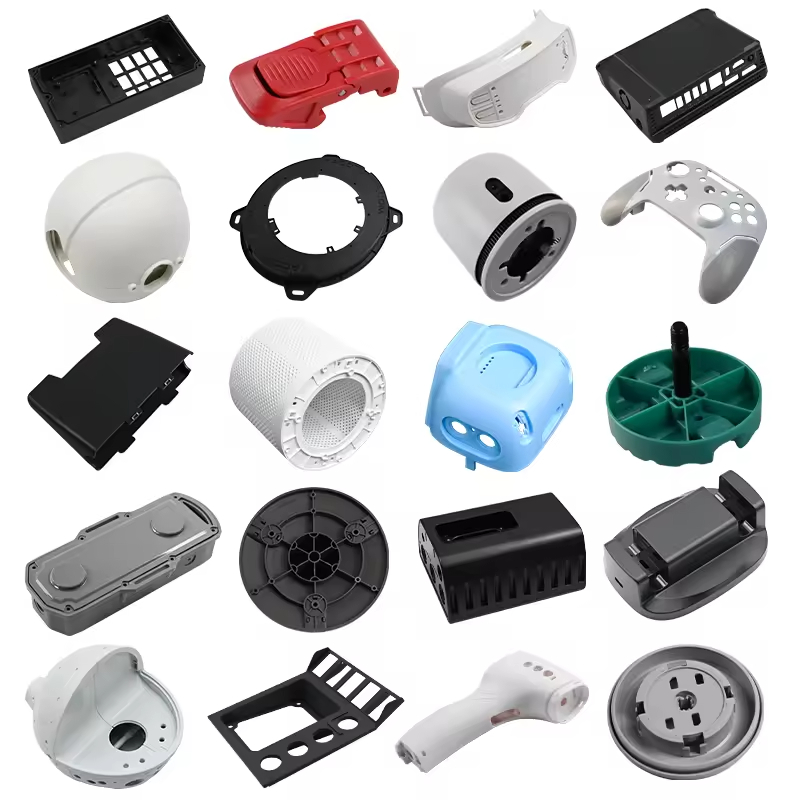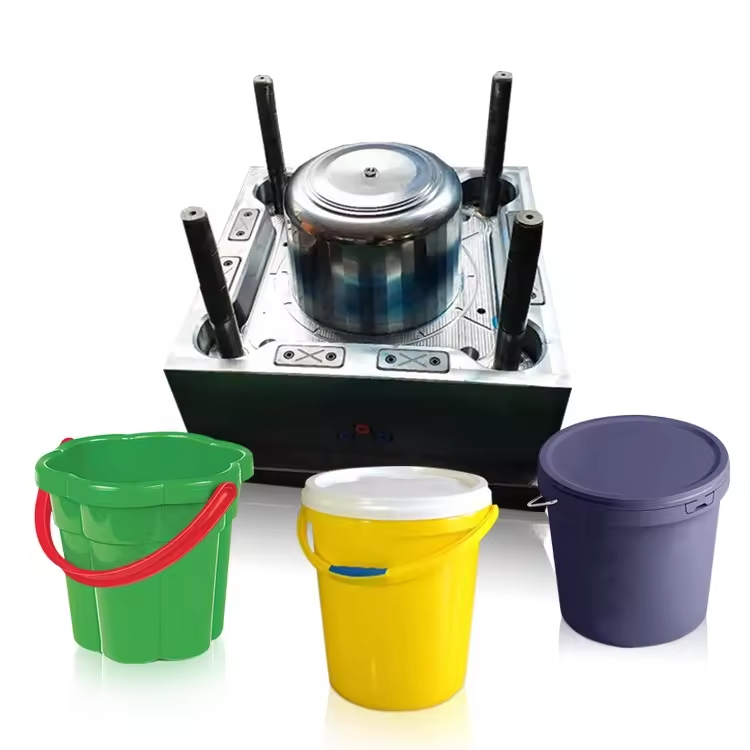
El moldeo de plásticos para la industria de la automoción requiere que la selección de materiales, el diseño para la fabricación (DFM), el diseño del molde, la validación y la inspección se coordinen entre sí. Entre los materiales más habituales se encuentran el PP, el PA6, el PA66, el PBT, el PC-ABS, el ABS, el TPE y el PPS, dependiendo de si la pieza se utiliza para revestimientos interiores, clips exteriores, soportes bajo el capó, conectores o conjuntos funcionales.
Los compradores del sector de la automoción suelen necesitar algo más que el precio de una pieza moldeada. Necesitan un proveedor que pueda evaluar la calidad del material, el volumen anual, la vida útil de las herramientas, la inspección dimensional, la documentación PPAP o similar, el embalaje y el control de cambios.
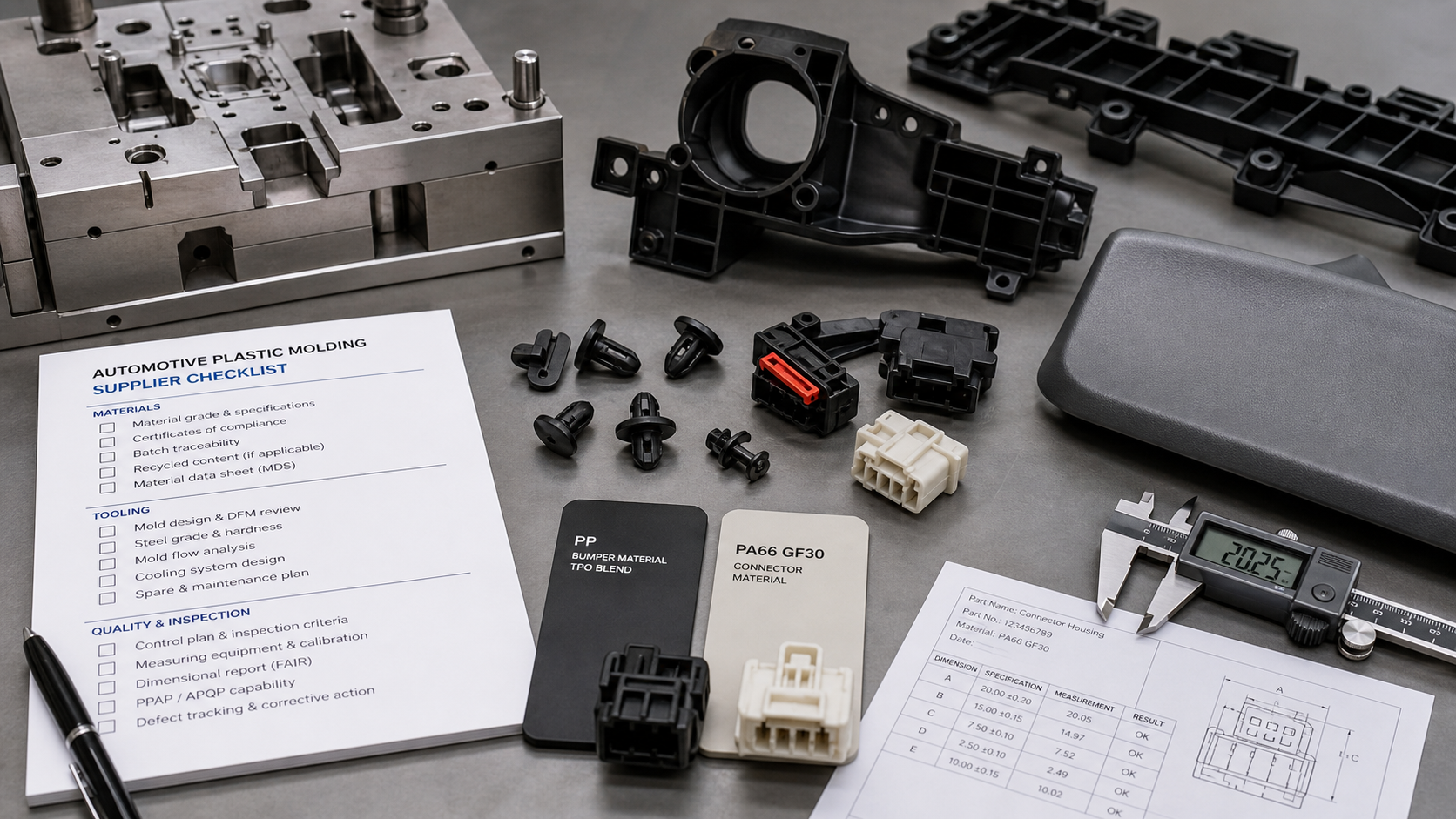
Materiales plásticos para la industria del automóvil, por zona de la pieza
Las piezas moldeadas para el sector de la automoción deben agruparse en función de la temperatura, la exposición a sustancias químicas, el aspecto, la carga de montaje y los requisitos de validación.
| Área de la pieza | Opciones habituales de materiales | Requisito principal |
|---|---|---|
| Acabados y revestimientos interiores | ABS, PC-ABS, PP | Aspecto, impacto y control dimensional. |
| Sujeciones y soportes exteriores | PP, PA6 y PA66 estabilizados frente a los rayos UV | Desgaste, fatiga y fuerza de montaje. |
| Componentes del compartimento del motor | PA66 GF, PBT, PPS | Resistencia al calor, a los productos químicos y a la fluencia. |
| Conectores eléctricos | PA66 GF, PBT, grados ignífugos | Calor, rendimiento eléctrico y precisión. |
| Juntas y empuñaduras blandas | TPE, TPU | Dureza, deformación residual por compresión y adherencia. |
Lista de verificación para proveedores del sector de la automoción
- Solicita una revisión de DFM antes de la fabricación del molde.
- Confirma el tipo de material, la ficha técnica, el color, los aditivos y el cumplimiento normativo.
- Definir el volumen anual, la vida útil de las herramientas y la estrategia de recambios de insertos.
- Establecer los requisitos de inspección: FAI, informe dimensional, plano de calibres o PPAP, si fuera necesario.
- Revisar el embalaje, la trazabilidad, los requisitos de exportación y el control de cambios.
Consideraciones sobre el utillaje y la validación
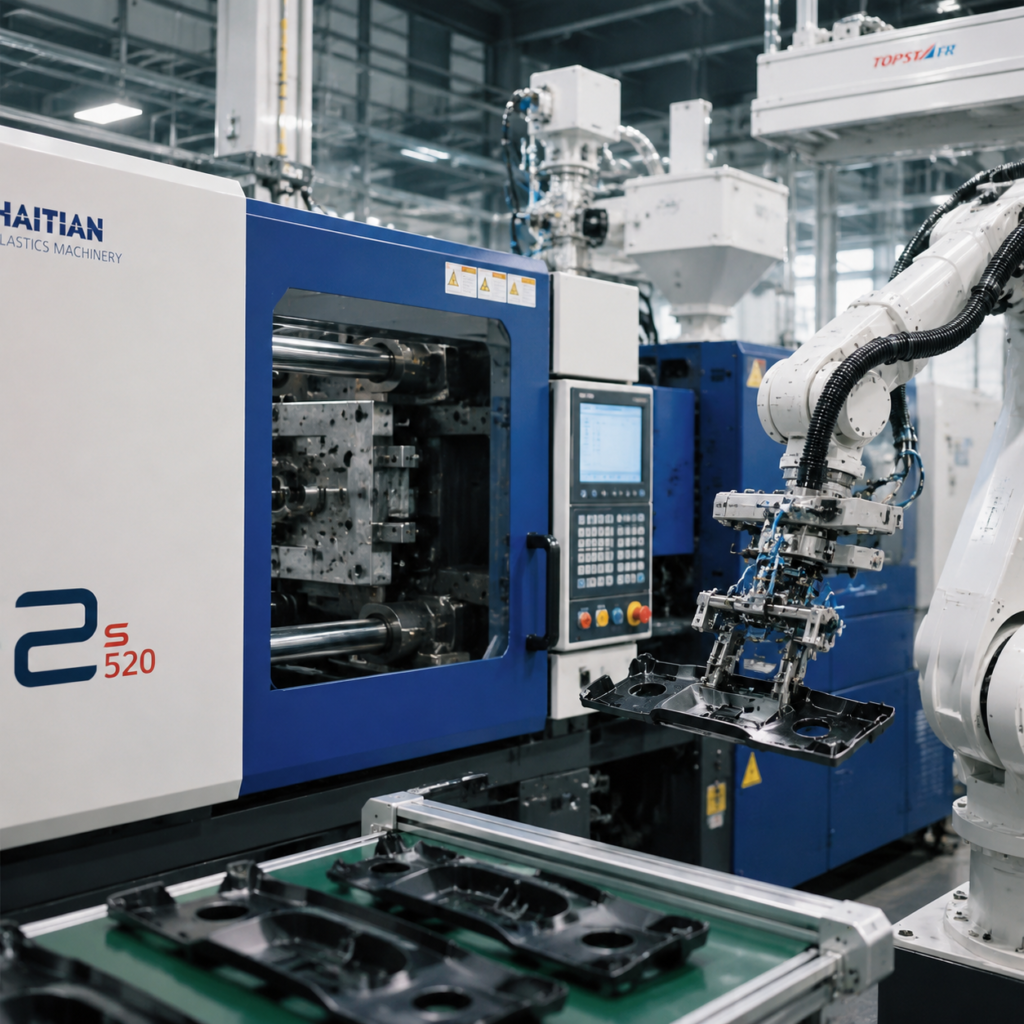
Los moldes de plástico para la industria del automóvil requieren dimensiones estables, tiempos de ciclo repetibles y un mantenimiento planificado. Las piezas fabricadas en grandes volúmenes pueden requerir acero templado, una mejor refrigeración y una disciplina de inspección más rigurosa que las herramientas de prototipado.
| Fase del proyecto | Medidas del proveedor | Producción del comprador |
|---|---|---|
| Solicitud de presupuesto | Revisar el CAD, el material, las tolerancias y el volumen | Paquete de planos y notas de aplicación claros. |
| DFM | Comprueba el espesor de las paredes, las nervaduras, los puntos de inyección y el ángulo de desmoldeo | Cambios de diseño aprobados antes de la fabricación de las herramientas. |
| Herramientas | Fabricar moldes según los requisitos de volumen y material | Plan y calendario de fabricación de utillaje. |
| Muestreo | Pruebas de moldes, margen de proceso e inspección | Muestras e informe de dimensiones. |
| Producción | Control de calidad y gestión del cambio | Piezas homogéneas y registros trazables. |
Enlaces internos para proyectos de moldeo en el sector de la automoción
El proceso de moldeo en el sector de la automoción debería integrar la selección de materiales, el diseño para la fabricación (DFM) y la cualificación de proveedores, en lugar de tratarlos como pasos independientes.
- Guía para la fabricación de piezas de plástico para el sector de la automoción
- Lista de comprobación de DFM para piezas de plástico del sector de la automoción
- Guía para el control de calidad de piezas de plástico
- Fabricante de piezas de plástico a medida
- Servicios de moldeo por inyección
Preguntas frecuentes
¿Qué materiales se utilizan en el moldeo de plásticos para la industria del automóvil?
Entre los materiales más habituales para el moldeo en el sector de la automoción se encuentran el PP, el PA6, el PA66, el PBT, el PC-ABS, el ABS, el TPE, el TPU y el PPS, en función de la resistencia al calor, a los productos químicos, del aspecto y de la carga mecánica.
¿Qué debe incluirse en una solicitud de presupuesto para el moldeado de plásticos para la industria de la automoción?
Incluya archivos CAD, planos, tipo de material, tolerancias, aplicación, volumen anual, acabado superficial, requisitos de inspección, necesidades de validación y requisitos de embalaje.
¿Se utiliza el PP para fabricar piezas moldeadas para el sector de la automoción?
Sí. El PP se utiliza habitualmente en piezas de automoción porque es ligero, económico y resistente a la fatiga, especialmente en componentes del interior, el exterior y los parachoques.
¿En qué casos se utiliza el PA66 GF30 en las piezas de automóvil?
El PA66 GF30 se utiliza a menudo para conectores, soportes y piezas situadas bajo el capó que requieren rigidez, resistencia al calor y estabilidad dimensional.