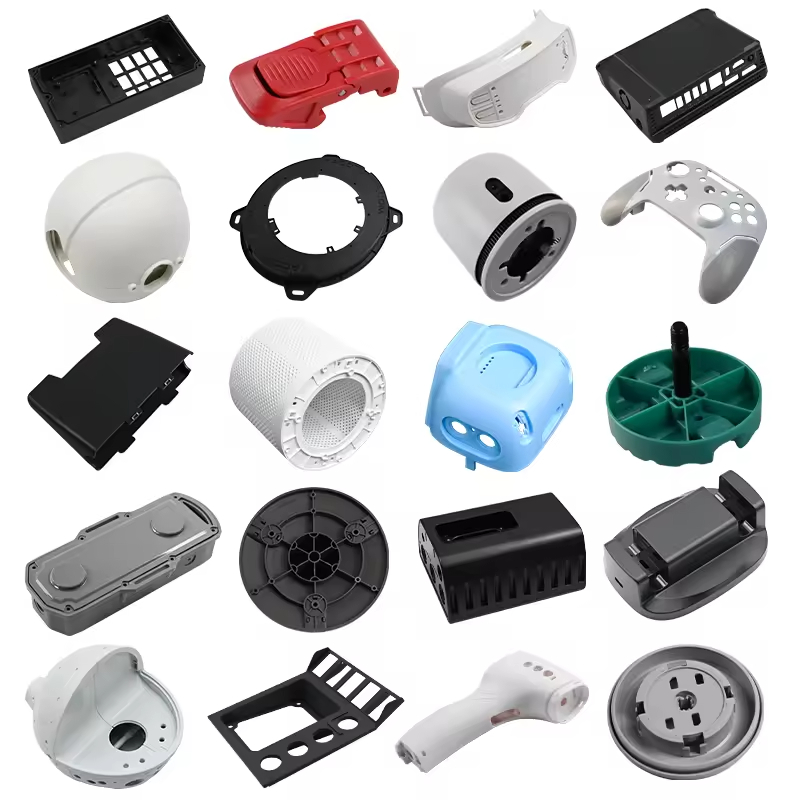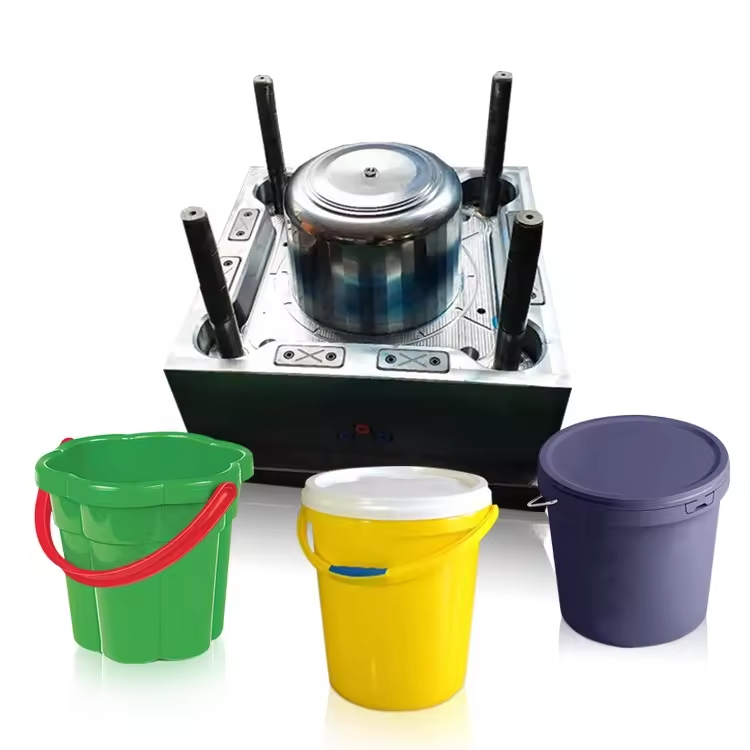
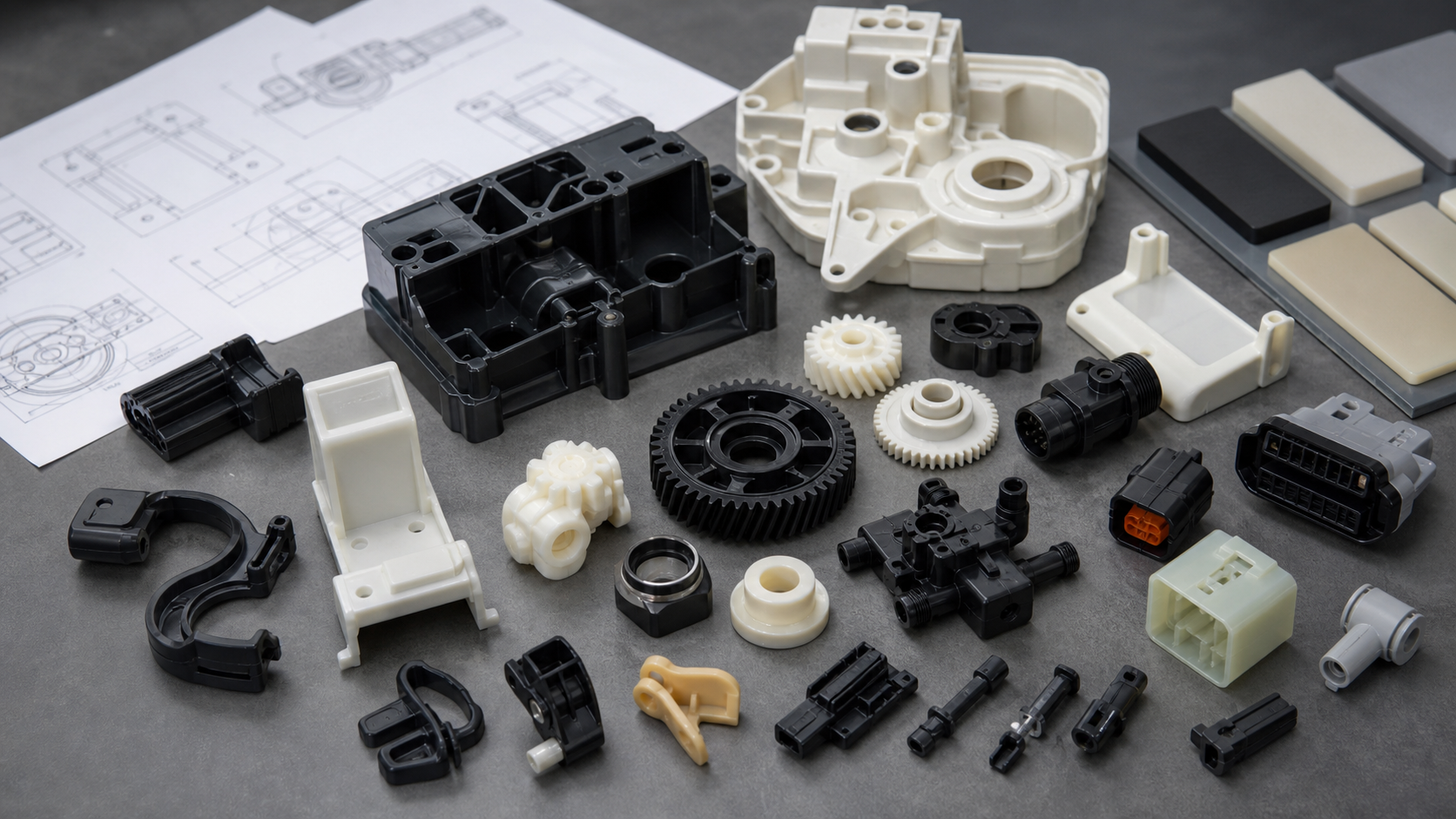
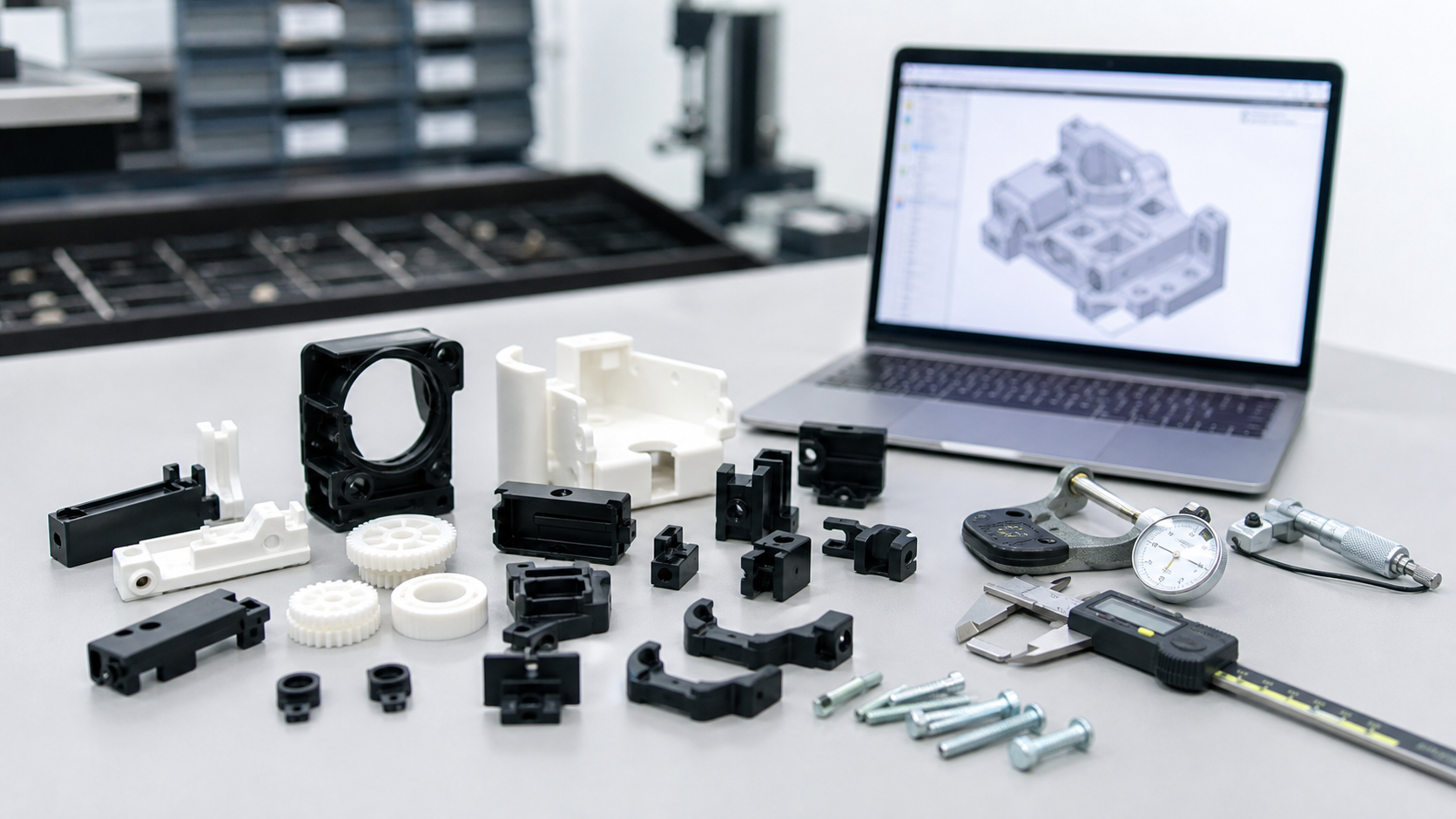
Custom plastic components should be designed around function first: load, temperature, chemical exposure, assembly method, tolerance and production volume determine the best plastic and manufacturing route.
Many buyers start with a material name, but the stronger path is to define the component’s job. A connector, gear, housing, clip, bushing and bracket may all be plastic parts, yet they need different resin families, wall sections, tooling choices and inspection methods.
Manufacturing Routes for Custom Plastic Components
The right route depends on design maturity, quantity, mechanical requirements and whether molded material behavior must be tested.
| Ruta | Uso recomendado | Nota para el comprador |
|---|---|---|
| Moldeo por inyección | Repeatable production components | Best for stable designs and scalable volume |
| Mecanizado de plástico con CNC | Low-volume functional parts | Avoids tooling cost and supports tight features |
| Impresión 3D | Early prototypes and design iteration | Useful before committing to tooling |
Common Materials for Functional Components
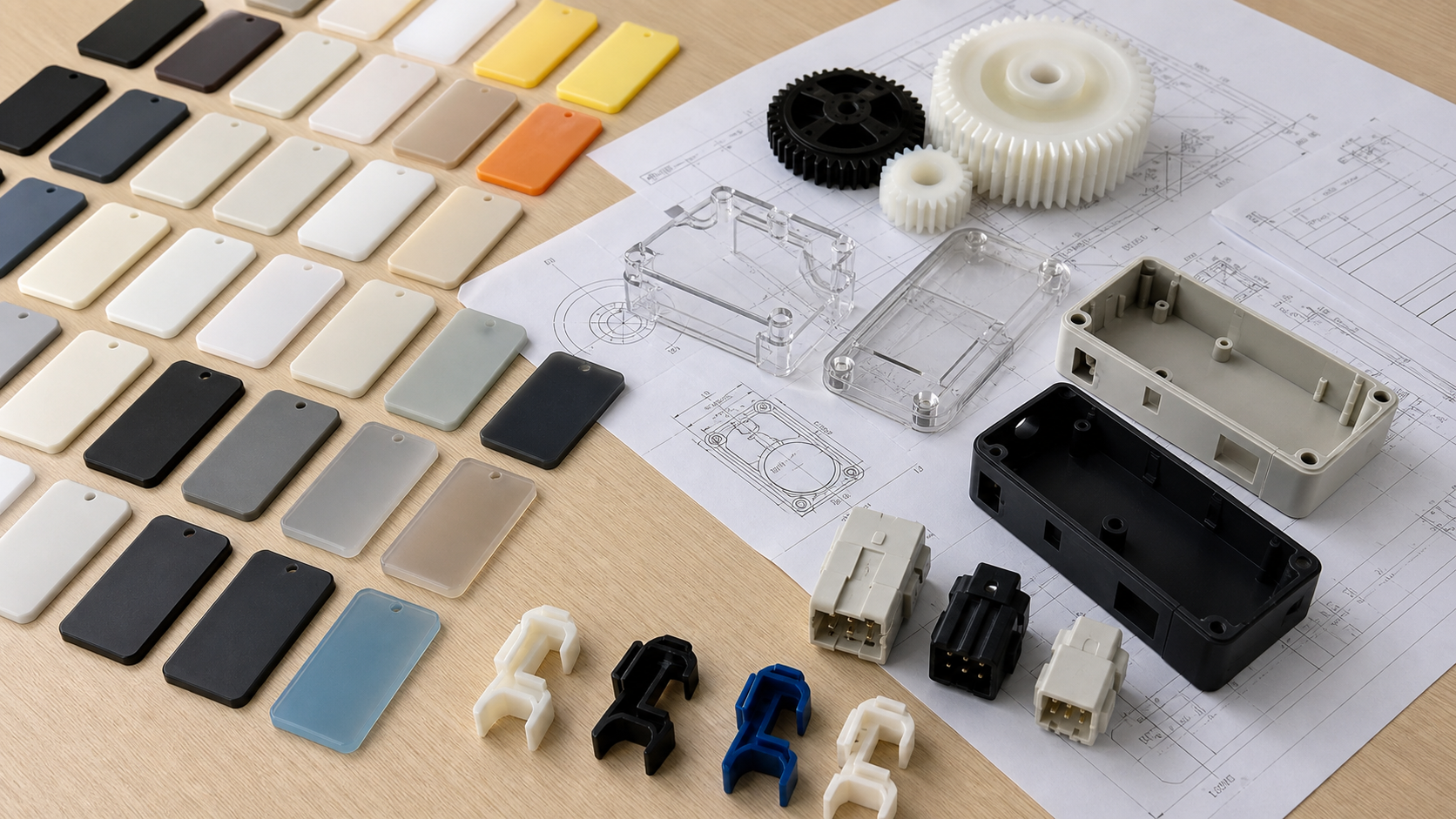
Engineering plastics should be selected by performance and manufacturability together.
| Material | Ideal para | Nota sobre la selección |
|---|---|---|
| PA6 / PA66 / GF nylon | Loaded brackets, gears and structural parts | Check moisture absorption and glass fiber orientation |
| PC / PC-ABS | Impact-resistant housings | Useful for tough covers and enclosures |
| PBT / POM | Electrical and sliding components | Good for precision or connector applications |
| PP / TPE | Lightweight, flexible or soft-touch parts | Review bonding, stiffness and chemical needs |
Component Design Checks
Good plastic component design balances strength, molding flow, assembly clearance and cost.
- Define application environment before selecting resin.
- Separate critical dimensions from general tolerances.
- Review assembly features such as clips, screws, inserts and hinges.
- Check whether the part should be machined first and molded later.
- Confirm surface finish and color requirements early.
RFQ Checklist for Custom Components
A component RFQ should explain the part’s function, not only its dimensions.
Para obtener un presupuesto detallado, envía un plano en 2D o un modelo CAD en 3D, el material deseado, la cantidad prevista, los requisitos de tolerancia, el acabado superficial, el entorno de aplicación, la demanda anual y cualquier requisito de conformidad. Nylon Plastic puede analizar la pieza en cuanto a la selección de materiales, el diseño para la fabricación (DFM), el proceso de prototipado, los riesgos relacionados con el utillaje, el plazo de entrega y el coste de producción antes de que el proyecto pase a la fase de fabricación.
Guías de ingeniería relacionadas
- Fabricante de piezas de plástico a medida – main page for custom part sourcing
- Material selection hub – supports resin selection decisions
- CNC machining vs injection molding – helps choose process route
Cómo contribuye el plástico de nailon al proyecto
Nylon Plastic helps buyers compare materials and processes for custom plastic components used in automotive, electronics, industrial equipment, robotics and consumer products.
Contactar con Nylon Plastic para revisar el plano de su pieza de plástico a medida, comparar métodos de fabricación o solicitar recomendaciones sobre materiales y utillaje.
PREGUNTAS FRECUENTES
How are custom plastic components manufactured?
Custom plastic components can be made by injection molding, CNC plastic machining, 3D printing or rapid tooling depending on design maturity, quantity, material and tolerance needs.
How do I choose a material for custom plastic components?
Start with the part’s load, heat, chemical exposure, assembly method, tolerance, surface finish and production volume, then compare suitable resin families.
Can a 3D printed prototype become an injection molded part?
Yes, but the design should be reviewed for molded wall thickness, draft, ribs, bosses, shrinkage and final production material behavior.
What makes a plastic component difficult to quote?
Missing CAD data, unclear material requirements, unrealistic tolerances, undefined cosmetic surfaces and unknown production volume can make quoting less reliable.