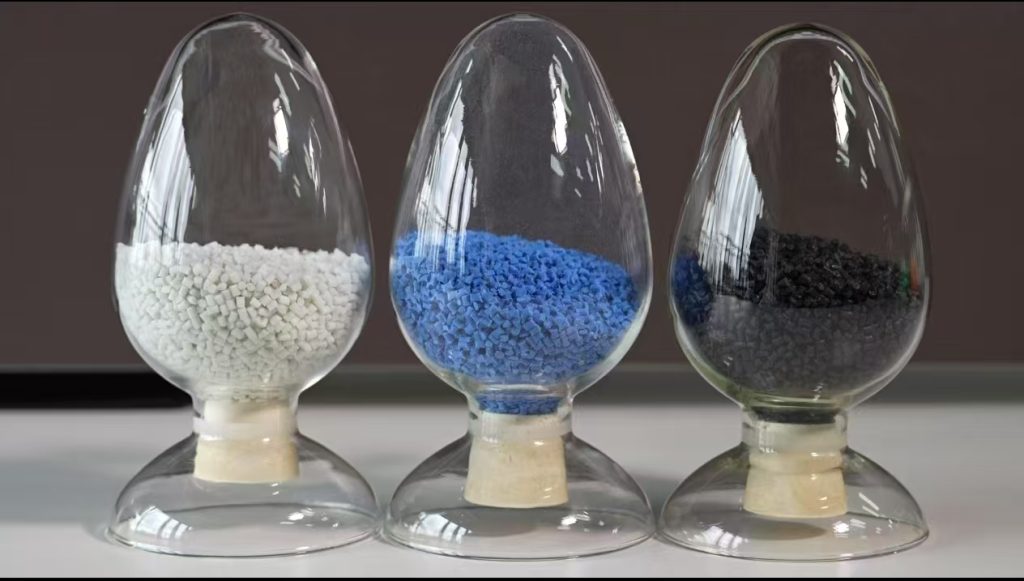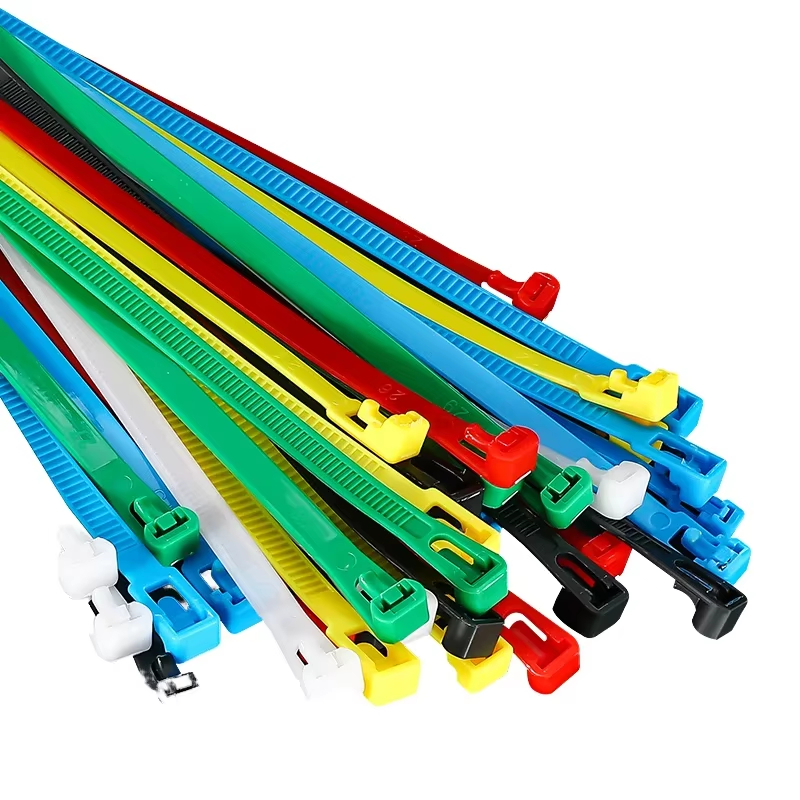
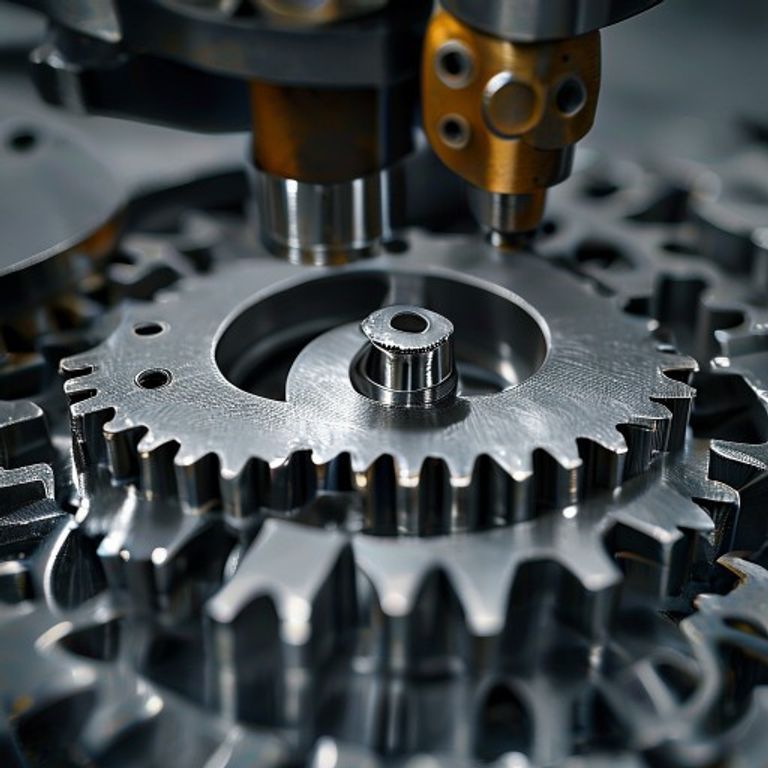
Gear manufacturing is a specialized branch of precision machining that produces toothed mechanical components for power transmission, motion control, and speed regulation. From tiny instrument gears under 10mm diameter to large industrial gears exceeding 500mm, gear manufacturing requires dedicated processes (hobbing, shaping, milling, grinding) and strict quality control to meet gear accuracy standards (ISO 1328, AGMA 2000). Engineering plastics like nylon and POM have become dominant materials for lightweight, self-lubricating, and corrosion-resistant gear applications across automotive, appliance, medical, and industrial sectors.
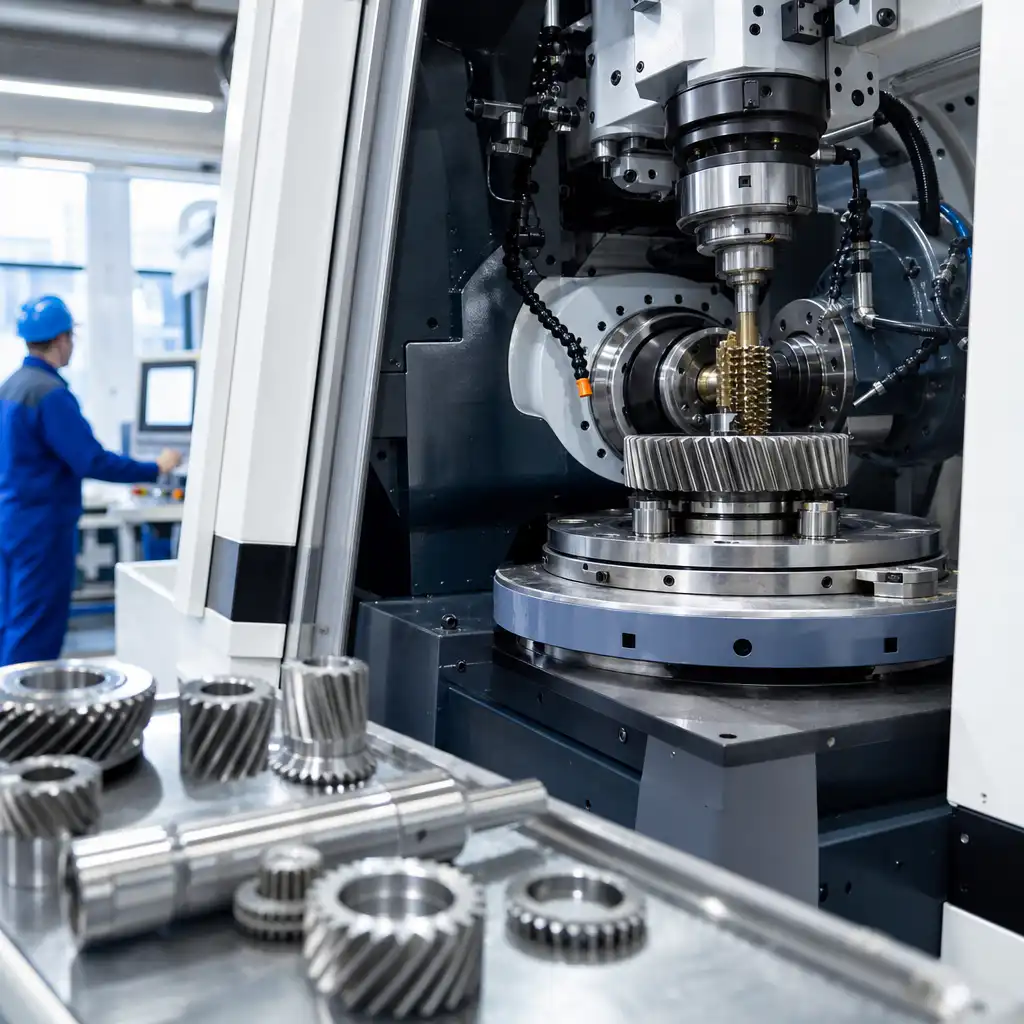
How CNC Gear Hobbing Works
Gear hobbing is the most productive method for manufacturing spur and helical gears. A hob (a worm-shaped cutting tool with gashes forming cutting teeth) rotates in synchronized motion with the gear blank on the hobbing machine. As the hob feeds axially along the blank, each revolution of the hob generates one tooth space. The CNC controller manages the precise rotational synchronization between hob and blank, feed rate, and cutting depth to produce accurate involute tooth profiles. A single hob can cut gears of any tooth count within its module range, making hobbing highly efficient for medium-to-high volume production.
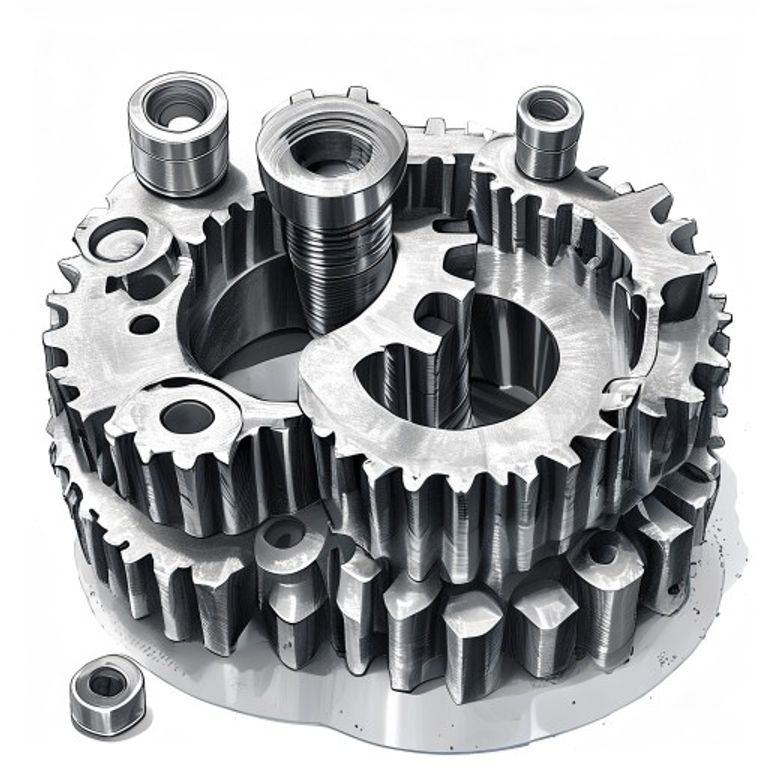
Gear Types and Manufacturing Methods
| Gear Type | Manufacturing Method | Precisión típica | Aplicaciones comunes |
|---|---|---|---|
| Spur Gear | Hobbing, milling | ISO Class 6-8 | Speed reducers, conveyors, pumps, appliances |
| Helical Gear | Hobbing (angled setup) | ISO Class 5-7 | Automotive transmissions, industrial reducers, compressors |
| Worm Gear | Hobbing (worm) + milling/turning (wheel) | ISO Class 7-9 | Elevator drives, tuning mechanisms, right-angle drives |
| Bevel Gear | CNC milling, Gleason cutting | ISO Class 6-8 | Differential drives, power tools, right-angle gearboxes |
| Internal Gear | Gear shaping | ISO Class 7-9 | Planetary gearboxes, ring gears, pump internals |
| Custom Profile | CNC milling (5-axis), Wire EDM | Per specification | Specialty mechanisms, cam profiles, non-standard ratios |
Key Advantages of Professional Gear Manufacturing
Involute Profile Accuracy
Professional gear manufacturing produces true involute tooth profiles that conform to ISO 1328 or AGMA accuracy standards. Profile accuracy directly determines gear mesh quality, noise level, load distribution, and service life. CNC hobbing with precision hobs achieves Class 6-7 accuracy standard, and post-hob grinding reaches Class 4-5 for highest-precision applications.
Engineering Plastics Expertise
Nylon (PA6, PA66) and POM (Delrin) gears offer inherent advantages over metal gears: self-lubrication (no external lubrication required), corrosion resistance, noise reduction, lightweight, and low cost. However, plastics gears require specific design considerations (larger tooth modulus, wider face width, hub design for injection molding or machining) and manufacturing adjustments (sharp cutting tools, controlled heat input, post-machining moisture conditioning for nylon).
Design Optimization Support
Professional gear manufacturers provide design review and optimization services, including gear ratio selection, material recommendation, tooth strength calculation (Lewis formula, ISO 6336), noise and vibration analysis, and manufacturing method selection. This ensures the gear design is manufacturable, cost-effective, and fit for the application’s load, speed, and environment requirements.
Volume Flexibility
From single custom prototypes to 50,000+ production runs, gear manufacturing adapts to volume requirements. Prototypes and low volumes use CNC hobbing or milling; medium volumes use dedicated hobbing setups; high volumes use injection molding for plastic gears or dedicated hobbing lines with automated loading for metal gears. Volume-based process selection keeps per-gear costs competitive at every scale.
Plastics Gear Materials Guide
| Material | Resistencia al desgaste | Noise Level | Lo mejor para |
|---|---|---|---|
| Nylon PA6 | Good (self-lubricating) | Bajo | General-purpose gears, conveyor drives, appliance mechanisms |
| Nylon PA66 + GF30 | Muy bien | Moderado | High-load gears, automotive, industrial reducers |
| POM (Delrin) | Excelente | Muy bajo | Precision instrument gears, valve actuators, timing mechanisms |
| POM + PTFE | Excellent (enhanced) | Muy bajo | High-speed gears, dry-run applications, food processing |
| PEEK | Excelente | Bajo | High-temperature gears, aerospace, semiconductor equipment |
Common Applications of Gear Manufacturing
- Automóvil: Window regulator gears, seat adjustment mechanisms, transmission auxiliary drives, electric motor gearboxes
- Home Appliances: Washing machine transmissions, blender drive gears, dishwasher pump drives, vacuum cleaner mechanisms
- Equipos industriales: Conveyor drive systems, pump gear internals, reducer box gear sets, valve actuator drives
- Productos sanitarios: Surgical instrument mechanisms, infusion pump drives, dental handpiece gears, prosthetic joint actuators
- Electrónica: Printer paper feed gears, camera lens focus mechanisms, servo drive gears, robotic joint drives
- Sector aeroespacial: Actuator gearboxes, flap drive mechanisms, satellite positioning gears (PEEK for weight savings)
PREGUNTAS FRECUENTES
When is Gear Manufacturing Services: Precision Gear Hobbing for Spur, Helical and Custom Profiles the right choice?
Gear Manufacturing Services: Precision Gear Hobbing for Spur, Helical and Custom Profiles is the right choice when the part requires machined accuracy, controlled surfaces, repeatable features, and a material that can be cut reliably.
What should be confirmed before ordering Gear Manufacturing Services: Precision Gear Hobbing for Spur, Helical and Custom Profiles?
Confirme la versión del dibujo, el grado del material, las tolerancias, la cantidad, las dimensiones críticas, el acabado superficial y los requisitos de inspección antes de iniciar la producción.
What usually drives cost in Gear Manufacturing Services: Precision Gear Hobbing for Spur, Helical and Custom Profiles?
El coste suele venir determinado por el material, el tiempo de preparación, el tiempo de máquina, la dificultad de la tolerancia, la fijación, el acceso a las herramientas, el acabado, la inspección y la cantidad del pedido.
How can quality risk be reduced in Gear Manufacturing Services: Precision Gear Hobbing for Spur, Helical and Custom Profiles?
El riesgo para la calidad se reduce marcando claramente las características críticas, evitando tolerancias innecesariamente estrictas, confirmando la fabricabilidad en una fase temprana y utilizando datos de inspección para las dimensiones importantes.