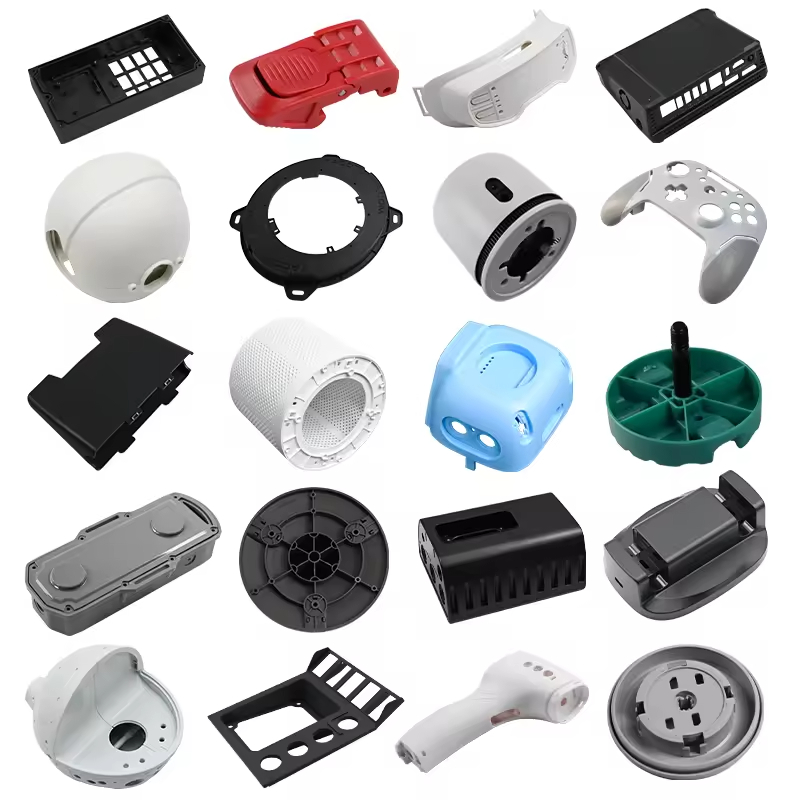


Design for Manufacturing (DFM) Overview
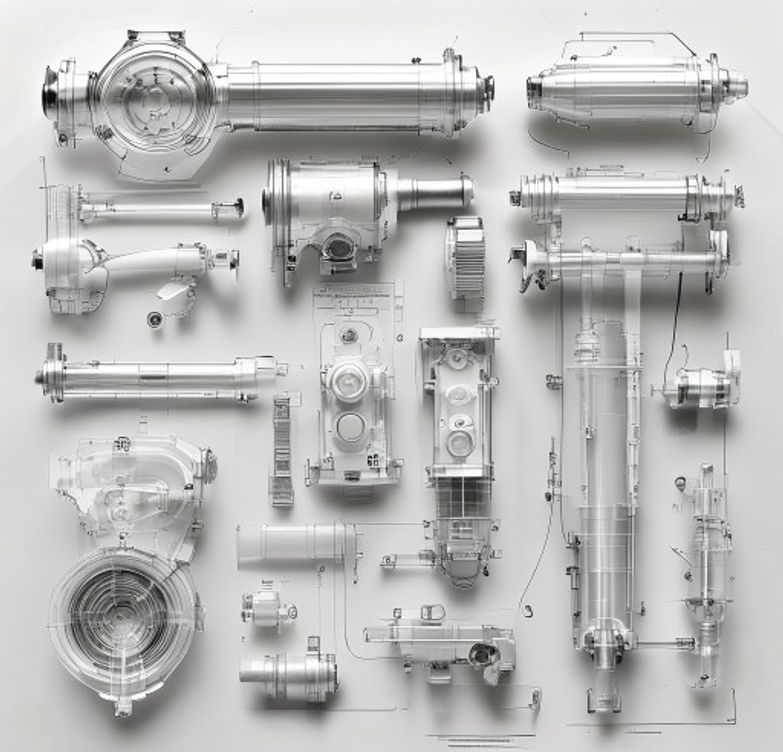
Design for Manufacturing considers production requirements early in the design phase. For injection molding, DFM prevents costly mold modifications, improves part quality, and reduces production costs.
Wall Thickness Design
Uniform Walls
- Consistent thickness prevents warpage and sink marks
- Target 2-3mm for typical parts
- Transitions should be gradual (3:1 ratio)
Material-Specific Guidelines
| Material | Min (mm) | Recommended (mm) | Max (mm) |
|---|---|---|---|
| ABS | 1.0 | 2.0-2.5 | 4.0 |
| PP | 0.8 | 2.0 | 5.0 |
| PC | 1.0 | 2.0-3.0 | 4.5 |
| PA (Nylon) | 0.8 | 1.5-2.5 | 3.5 |
| POM | 1.0 | 2.0 | 3.5 |
Ribs and Bosses
Rib Design
- Thickness: 50-70% of adjacent wall
- Height: Maximum 3× wall thickness
- Draft: 0.5-1° minimum
- Spacing: 2× wall thickness minimum
Boss Design
- Wall thickness: 60-70% of nominal wall
- Core hole depth: 2-3× diameter
- Include radii at base
- Consider draft for ejection
Corners and Radii
Ángulos de selección
- Standard surfaces: 0.5-1° minimum
- Superficies con textura: 2-5° depending on texture
- Características profundas: Increase draft proportionally
- Encogimiento: Account for material shrinkage in draft
Undercuts and Side Actions
Designing Without Undercuts
- Reduces mold complexity
- Lower tooling cost
- Simpler maintenance
When Undercuts Are Necessary
- Use side actions (slides)
- Consider lifters for internal undercuts
- Design for proper release angles
Gating Considerations
- Position gates in non-visible areas
- Consider gate vestige requirements
- Account for weld line locations
- Design for automated degating when possible
Common Design Errors
- Sharp internal corners causing stress
- Insufficient draft causing ejection issues
- Thick sections causing sink marks
- Undercuts without proper mechanisms
- Ignoring shrinkage tolerances
DFM Checklist
- ☐ Uniform wall thickness throughout
- ☐ Adequate draft angles specified
- ☐ Radii on all internal corners
- ☐ Ribs properly proportioned
- ☐ Bosses designed for function
- ☐ Undercuts identified and addressed
- ☐ Gate locations proposed
- ☐ Material shrinkage accounted
Conclusión
DFM for injection molding prevents costly iterations and ensures manufacturable designs. Involve manufacturing engineers early in the design process.
Recursos relacionados
- Comparación PEEK vs PEI
- Plásticos ignífugos
- Guía sobre plásticos aptos para uso alimentario
- Tratamiento de humedad para el nailon
- Efectos de la humedad sobre el nailon
PREGUNTAS FRECUENTES
When does Plastic Part Design for Manufacturing — DFM Guidelines for Injection Molding make sense?
Plastic Part Design for Manufacturing — DFM Guidelines for Injection Molding makes sense when the part volume, material choice, geometry, and repeatability needs justify mold design and tooling investment.
What design factors matter most for Plastic Part Design for Manufacturing — DFM Guidelines for Injection Molding?
El espesor de las paredes, las nervaduras, las salientes, el ángulo de desmoldeo, la ubicación de la entrada de material, la contracción, la línea de separación y la expulsión influyen en la calidad de la pieza moldeada.
¿Qué información se necesita antes de la fabricación del molde?
El proveedor deberá confirmar el modelo 3D, el material, el volumen anual previsto, los requisitos de aspecto, las tolerancias requeridas y cualquier requisito relativo al montaje o a las pruebas funcionales.
What is the biggest risk in Plastic Part Design for Manufacturing — DFM Guidelines for Injection Molding?
El mayor riesgo es aprobar el utillaje antes de haber comprobado exhaustivamente el comportamiento del material, la contracción, el flujo y el funcionamiento de la pieza en relación con la aplicación real.