Plastic sprocket manufacturer selection starts with the exact chain specification. Pitch alone is not enough: roller diameter, inner width, tooth count, strand arrangement and chain standard determine whether the tooth profile will engage correctly. The supplier also needs torque, speed, bore retention and environmental data before choosing nylon, acetal or another engineering plastic.
A plastic sprocket can reduce noise, corrosion risk and rotating mass in suitable conveyor and packaging systems, but it is not a universal drop-in replacement for metal. A sound RFQ connects the chain, sprocket, shaft and duty cycle so the quoted component can be checked as part of the drive system.
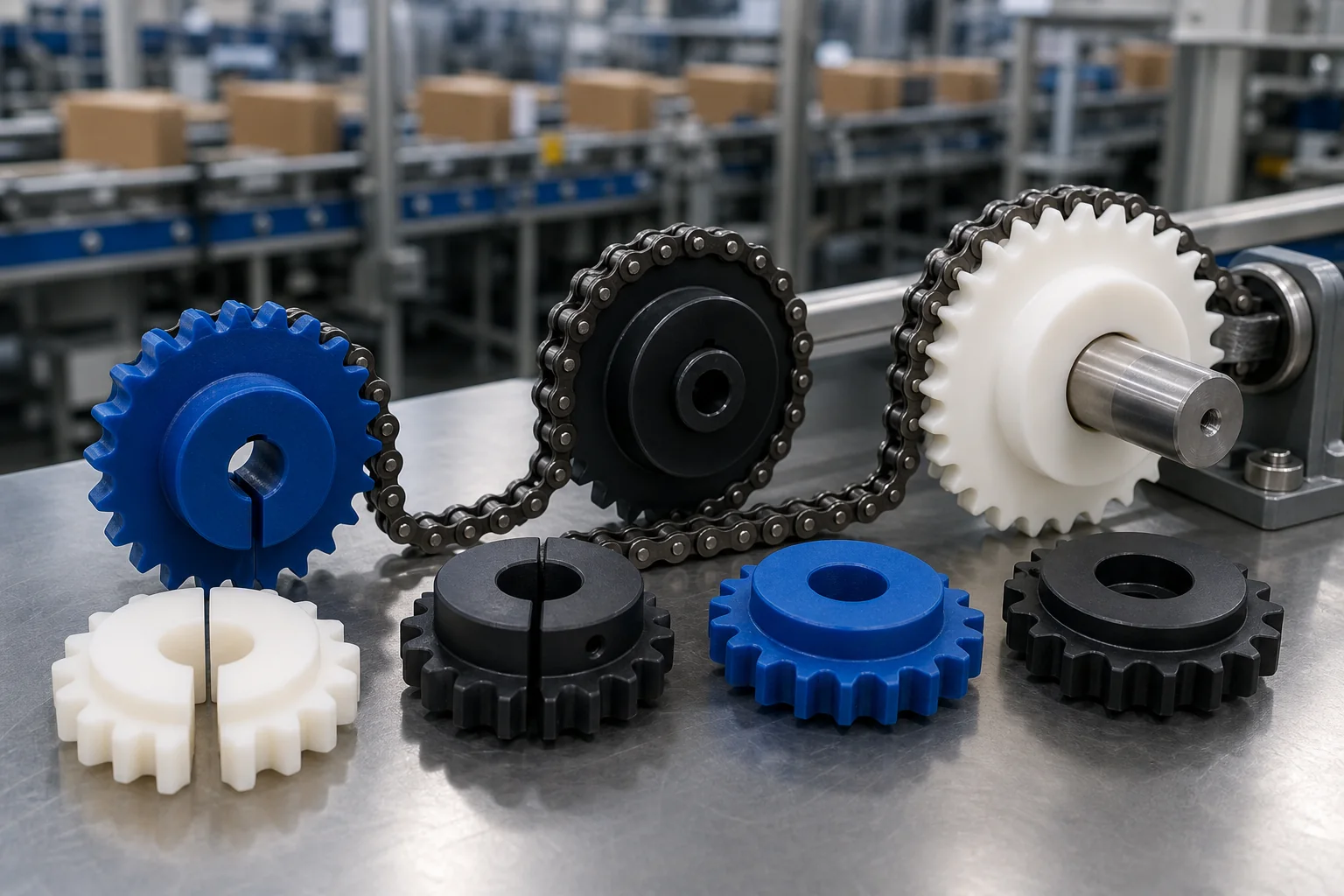
Purchase decision map
Lock These Four Inputs Before Material Selection
- Chain identity: manufacturer, chain number or standard, pitch, roller and width.
- Function: driven, idler, tensioning or product-handling duty.
- Shaft connection: bore, key, clamp, set screw, bearing or insert.
- Service case: torque, speed, shock, temperature, moisture, chemicals and cleaning.
A Sprocket Is Not a Gear
A gear transmits motion by meshing with another toothed part. A sprocket engages the rollers or pins of a chain, so its tooth space, root form and working diameter must match that chain system. Reusing a gear drawing or estimating a tooth profile from outside diameter can cause climbing, impact and accelerated wear even when the nominal pitch appears correct.
The safest input is the chain manufacturer’s part number and current dimensional standard. If only a worn sample is available, include the mating chain and identify whether either component has stretched or worn. Reverse engineering a damaged sprocket without the chain data can reproduce the failure rather than the original geometry.
Match Sprocket Configuration to Maintenance and Torque
| Configuration | Best-Fit Situation | RFQ Decision |
|---|---|---|
| Solid sprocket | New shaft assembly or easy shaft access | Bore, keyway, set screw, clamp or press fit |
| Split sprocket | Retrofit where shaft removal causes downtime | Split-joint strength, fastener access, hub size and alignment |
| Idler sprocket | Guides or tensions chain without transmitting main torque | Bearing, bushing, axial retention, speed and wrap angle |
| Driven sprocket | Transmits torque from shaft to chain | Torque, starts per hour, shock, key stress and hub geometry |
| Double or multi-strand | Supports parallel chain strands | Strand spacing, tooth timing, shaft stiffness and alignment |
Split sprockets are valuable when replacing a solid part would require dismantling a long shaft or conveyor section. That maintenance benefit does not remove structural requirements. The split location, bolt access, hub diameter and positive alignment features must hold the two halves as one functional sprocket.
Material Direction by Chain Drive Duty
| Material Direction | Where It May Fit | Critical Review |
|---|---|---|
| Nylon / cast nylon | General conveyor and industrial duty requiring toughness and quieter operation | Account for moisture, temperature, creep and tooth-root stress |
| POM / acetal | Precision, low-moisture packaging and mechanism applications | Review shock loading, tooth thickness and chemical exposure |
| UHMW-PE | Low-friction guides and selected low-load conveyor duties | Lower stiffness can permit tooth deformation; do not assume drive-sprocket suitability |
| PEEK | High-temperature or aggressive chemical service with a justified cost case | Confirm exact grade, load, chain material and documentation |
Material choice cannot compensate for incorrect chain geometry or machine alignment. Nylon can offer toughness and useful wear behavior, while acetal often offers lower moisture uptake and stable precision. UHMW has valuable low-friction properties but lower stiffness; it should not be assigned to a torque-transmitting sprocket without calculation and testing. PEEK may support harsher temperature or chemical environments, but the application must justify its cost.
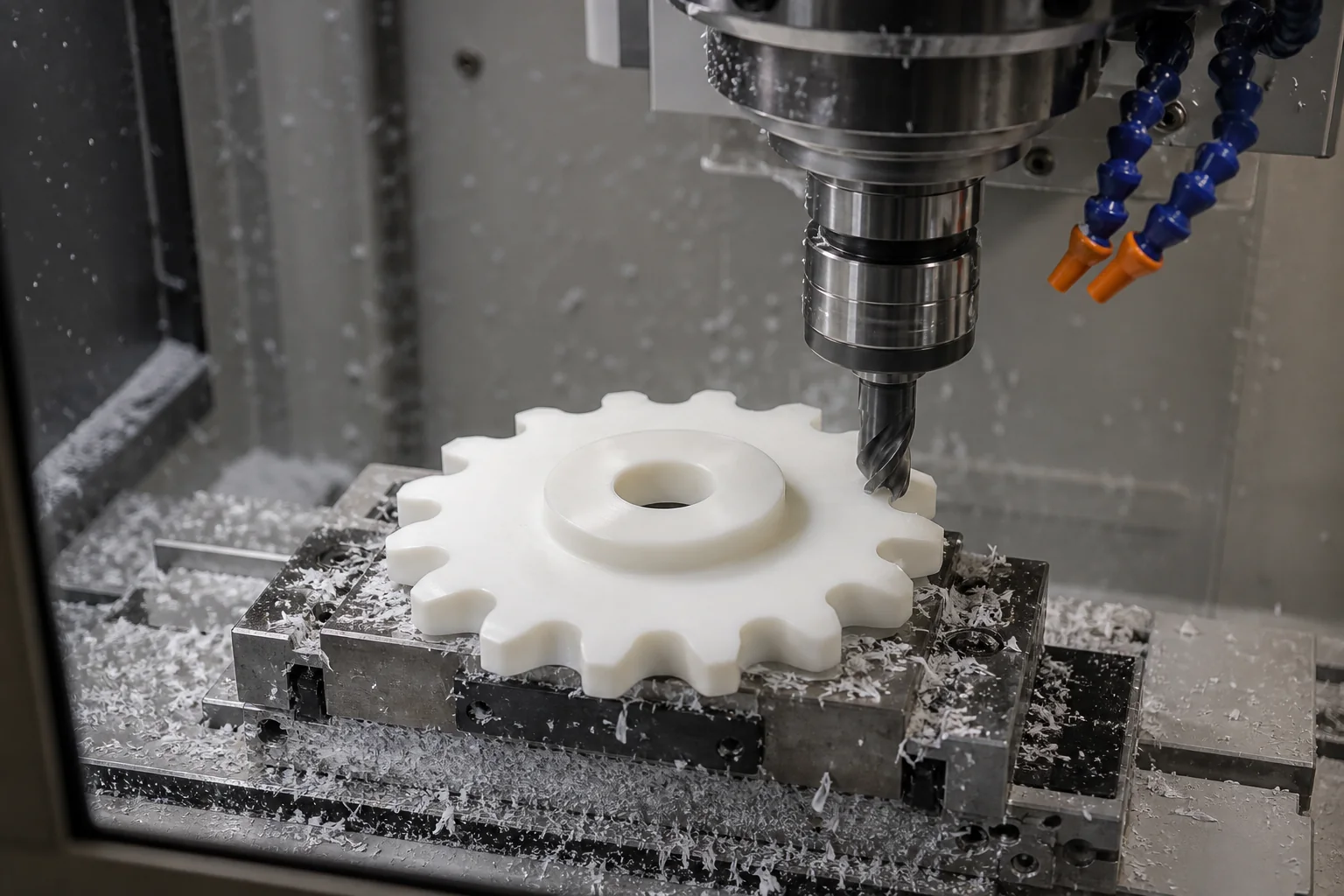
Tooth Profile, Bore and Hub Inspection
- Tooth engagement: verify the chain roller seats in the tooth space without bottoming, climbing or side interference.
- Pitch relationship: confirm tooth count and working geometry from the specified chain rather than outside diameter alone.
- Face alignment: relate the tooth plane to the bore, hub shoulder and mating sprocket position.
- Torque transfer: review keyway, clamp, set screw, insert or interference fit against peak and reversing torque.
- Tooth-root strength: avoid sharp corners, inadequate rim thickness and sudden hub transitions.
- Installed clearance: account for temperature, moisture and debris around chain side plates and guards.
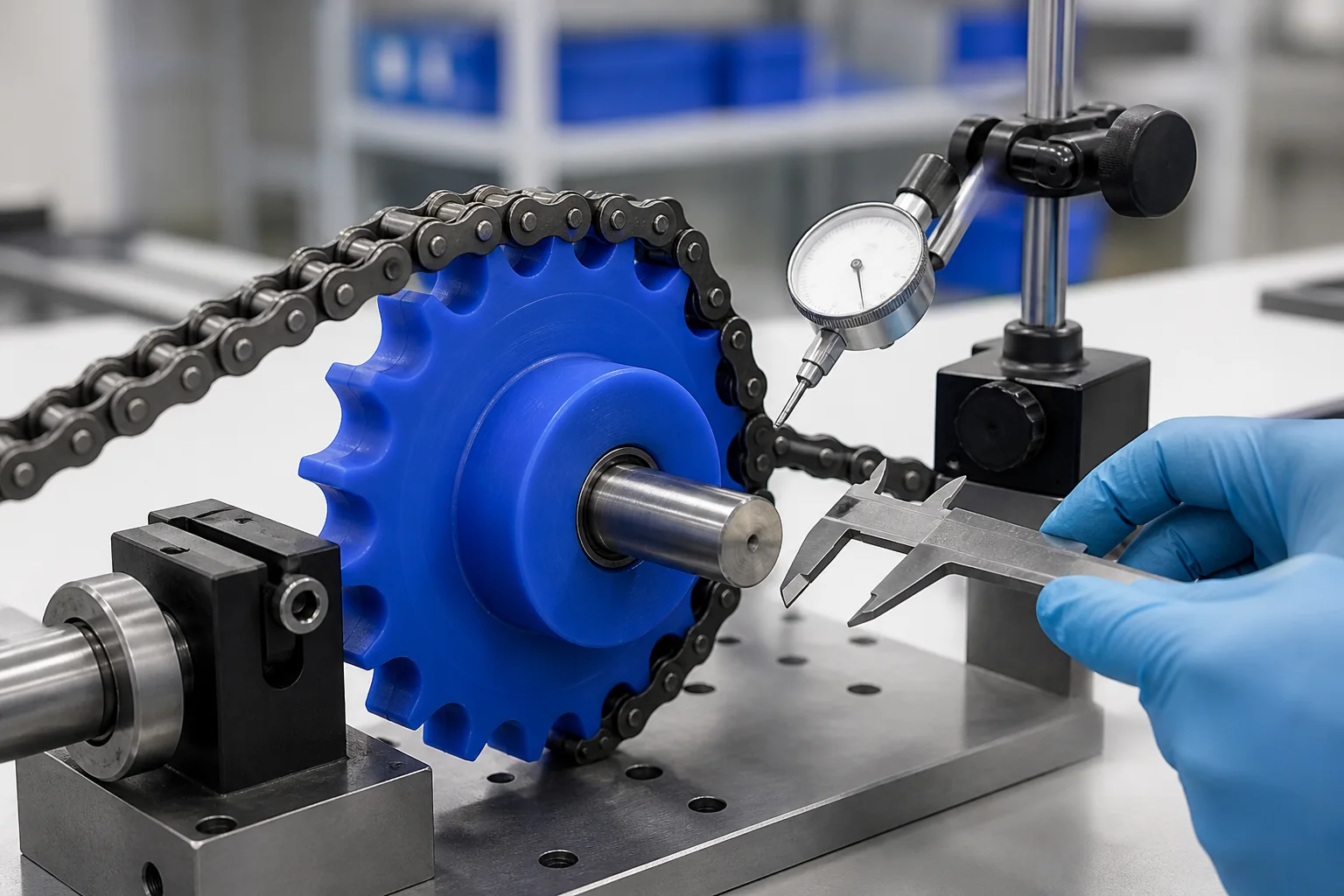
Inspection should reproduce the functional setup where practical. Bore size alone does not confirm concentric engagement, and an outside-diameter reading does not prove the chain tooth form. For replacement components, a chain-wrap or profile check can be more informative than adding close tolerance to nonfunctional surfaces.
Failure Modes to Prevent Before Production
| Failure Mode | Probable Cause | Prevención |
|---|---|---|
| Chain climbs or skips | Pitch, roller diameter, tooth form or tooth count does not match the chain | Identify the chain standard and verify engagement before production |
| Teeth wear on one side | Shafts, chain line or sprocket faces are misaligned | Correct machine alignment and define the sprocket face datum |
| Hub cracks at keyway | Key stress, interference, thin wall or shock torque is too high | Review torque transfer, hub section, corner radii and clamp-style alternatives |
| Bore loosens in service | Creep, heat or repeated reversing load was ignored | Increase support, revise retention or use an insert where the system requires it |
| Split halves move | Joint, fasteners or shaft clamping cannot resist duty | Design the split assembly around torque, access and positive alignment features |
| Sprocket grows or binds | Moisture and service temperature were absent from the tolerance plan | Set installed clearances from the selected grade and environment |
Machined, Molded or Hybrid Sprocket?
CNC machining avoids dedicated tooling and is well suited to replacement sprockets, low-to-medium volumes, split designs and applications that are still being validated. It also allows controlled bore, keyway and hub features after the chain geometry is established. Stock form and blank layout should be reviewed because a large solid plate can waste material compared with tube or a near-net blank.
Injection molding can become economical for stable high-volume designs, but the project must account for shrinkage, gate location, weld lines, inserts, tooth ejection and validation. A hybrid solution can use an engineering-plastic tooth body with a qualified metal hub or insert where the shaft interface requires more stiffness. The interface must be designed, not added as an afterthought.
Related Engineering Resources
- Nylatron Machining Services for Wear Components
- Piezas de plástico mecanizadas a medida
- CNC Machining Materials Selection Guide
- Guía de diseño de engranajes de plástico
Preguntas frecuentes
What should I send to a plastic sprocket manufacturer?
Send the chain manufacturer and part number or chain standard, pitch, roller diameter, inner width, tooth count, bore and hub details, load, speed, torque, environment, quantity and a drawing or sample.
Is a plastic sprocket the same as a plastic gear?
No. A sprocket engages a chain, while a gear meshes directly with another gear or toothed component. Their tooth geometry and purchasing specifications are not interchangeable.
When should I choose a split plastic sprocket?
A split design can reduce downtime when the shaft is difficult to remove. Its joint, fasteners, hub and alignment features must still be checked against torque and load.
Which plastic is best for conveyor sprockets?
Nylon and acetal are common starting points, with UHMW or PEEK useful in selected duties. Chain geometry, load, speed, moisture, temperature, chemicals and documentation determine the grade.
Can a plastic sprocket replace a metal sprocket?
Sometimes, especially where noise, corrosion, weight or lubrication are concerns. Replacement requires a review of torque, shock, temperature, shaft fit, tooth stress and chain alignment rather than a size-only substitution.
Request a Custom Plastic Sprocket Review
For a driven, idler or split plastic sprocket, send the matching chain designation and sprocket and shaft drawings. Nylon Plastic has supported material selection and custom manufacturing since 2005; the review connects tooth engagement, torque transfer, material and inspection before quotation.
What to include in your request
- Chain data: manufacturer and part number or governing standard, pitch, roller diameter, inner width and strand count.
- Sprocket data: tooth count, face width, solid or split construction, hub direction and any timing relationship.
- Shaft interface: bore tolerance, keyway, flat, clamp, set screw, bearing, insert and axial retention.
- Operating data: transmitted torque, peak load, RPM, starts per hour, shock, reversing and chain wrap.
- Environment: temperature, moisture, washdown, cleaners, oils, chemicals, dust and UV exposure.
- Quantity and timing: prototype and annual quantities, target life, shutdown window and required delivery date.
- Material and acceptance: exact grade or permitted alternative, functional datums, tooth-profile and chain-wrap checks, bore or hub runout, split-joint assembly, required records, destination and packaging. For material-only selection, identify the current grade and load case.
Ask the quote to separate the sprocket body from any hub, bearing, insert, split-joint fasteners or supplied assembly. Confirm tooling or CNC machining, sample approval, inspection and packaging scope. Establish chain engagement and shaft retention against the specified chain and installed datum; outside diameter and tooth count alone do not approve a replacement. Required torque or operating tests should be agreed before production release.