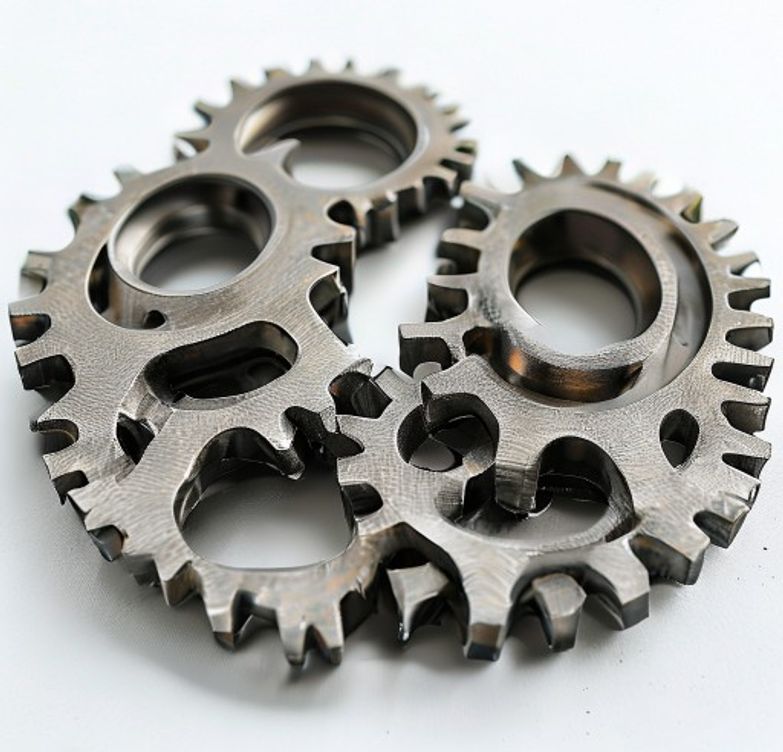
Nylon vs POM (Acetal): Engineering Selection Guide

Nylon vs POM acetal engineering plastics
Nylon vs POM comparison — Nylon Plastic

Comparación directa entre el nailon y el POM (acetal/delrin) para aplicaciones de ingeniería: diferencias mecánicas, térmicas, químicas, de desgaste y de procesamiento.

Para los equipos de ingeniería y de aprovisionamiento

Nylon or POM for a Production Part?

Choose POM when low friction and humidity-driven dimensional stability lead the decision. Choose nylon when toughness, fatigue resistance and broader structural use matter more.

  • POM for gears, bushings and precision sliding parts
  • Nylon for tougher structural parts and repeated load cycles
  • Confirm moisture condition, tolerance and operating temperature before release

Request a nylon vs POM drawing review →   View custom machined plastic parts

Nailon frente a POM: dos gigantes de los plásticos técnicos

El nailon (poliamida) y el POM (polioximetileno, también denominado acetal o Delrin) son los dos termoplásticos de ingeniería más utilizados para componentes mecánicos. Ambos ofrecen una excelente resistencia al desgaste, baja fricción y buena estabilidad dimensional, pero sus diferentes estructuras moleculares dan lugar a distintas compensaciones en cuanto al rendimiento, lo cual reviste una enorme importancia en aplicaciones de precisión.

Elegir entre el nailon y el POM no es una decisión trivial. Un rodamiento que aguanta 50 000 ciclos con POM puede fallar a los 8 000 ciclos si se fabrica en nailon bajo la misma carga. Por el contrario, una carcasa de engranajes expuesta a líquidos de automoción se agrietará si es de POM, pero resistirá si es de PA66. Esta guía ofrece la comparación basada en datos que los ingenieros necesitan para tomar la decisión correcta.

Comparación de propiedades mecánicas

Tensile and Flexural Properties:

Propiedad PA6 PA66 POM (Homopolymer) POM (Copolymer)
Resistencia a la tracción (MPa) 80 82 70 62
Módulo de tracción (GPa) 2.8 3.0 2.8 2.5
Resistencia a la flexión (MPa) 100 110 98 90
Módulo de flexión (GPa) 2.6 2.8 2.6 2.3
Alargamiento a la rotura (%) 150 60 40 35
Izod con muesca (J/m) 55 45 75 65
Módulo de fluencia (1000 h, 20 MPa) 1,2 GPa 1,4 GPa 2,3 GPa 2,0 GPa

Conclusión clave: Resistencia a la fluencia — El POM presenta una resistencia a la fluencia significativamente superior a la del nailon. Bajo una carga sostenida, el POM conserva mejor su rigidez con el paso del tiempo. En el caso de componentes sometidos a una carga constante (clips de resorte, anillos de retención, casquillos de fijación), la superior resistencia a la fluencia del POM suele convertirlo en la mejor opción, a pesar de que su resistencia inicial sea similar.

Resistencia a los impactos — El nailon presenta una mayor resistencia al impacto sin muesca. Sin embargo, el POM suele superar al nailon en los ensayos de impacto con muesca, ya que su modo de rotura dúctil absorbe más energía en la punta de la grieta. En el caso de piezas con concentraciones de tensión (ranuras, orificios, roscas), la tenacidad del POM ante muescas afiladas supone una ventaja.

Resistencia a la fatiga — El nailon presenta una resistencia a la fatiga superior ante cargas repetidas. En ensayos de carga cíclica, los componentes de nailon resisten entre 3 y 5 veces más ciclos antes de fallar que las piezas equivalentes de POM. Esto resulta fundamental para componentes como las guías de cintas transportadoras, los impulsores de bombas y los mecanismos de bisagra.

Rendimiento térmico y medioambiental

Propiedades térmicas:

Propiedad PA6 PA66 POM
Punto de fusión (°C) 225 265 175
Temperatura de funcionamiento continuo (°C) 100-115 130-150 90-100
HDT @ 1,82 MPa (°C) 65 90 95
HDT a 0,45 MPa (°C) 170 250 160
Expansión térmica (×10⁻⁵/°C) 8-9 8-9 11-12

La fragilidad térmica del POM — El punto de fusión del POM, situado en 175 °C, constituye su límite térmico. A temperaturas superiores a 100 °C, el POM pierde resistencia mecánica rápidamente. El PA66-GF30 (HDT 250 °C) funciona a temperaturas a las que el POM se fundiría.

Moisture Absorption Comparison:

Propiedad PA6 PA66 POM
Saturation Moisture (%) 9.5% 8.5% 0.8%
Cambio dimensional (saturación) 1.5-2.0% 1.3-1.8% 0.2%

El POM se impone de forma contundente en cuanto a la humedad — Con una absorción máxima de humedad de 0,81 TP3T, el POM se mantiene prácticamente dimensionalmente estable en entornos húmedos. La absorción del nailon, de entre 8 y 91 TP3T, provoca un hinchamiento apreciable y cambios en sus propiedades. Para aplicaciones sumergidas o expuestas al aire libre sin encapsulación, el POM suele ser la única opción viable.

Resistencia química: en qué destaca cada material

Chemical Resistance Comparison:

Chemical Nylon (PA66) POM
Gasolina/Combustibles Excelente Excelente
Aceite de motor Excelente Excelente
Líquido de frenos Bien Pobre (oleaje)
Alcohol Excelente Bien
Cetonas (acetona) Bien Pobre (fundido)
Ácidos débiles Feria Bien
Ácidos fuertes Pobre Pobre
Ésteres/plastificantes Excelente Pobre
Hot Water (>60°C) Pobre Bien
Steam Pobre Pobre

Puntos críticos de decisión: – Líquido de frenos o refrigerantes a base de glicol: POM swells and cracks — use PA66 or PA12 – Agua caliente (>60 °C): Nylon hydrolyzes — use POM or PVDF – Migración de plastificantes (flexible cables, wire insulation): POM absorbs plasticizers — use PA12 – Bajo el capó de un vehículo: PA66-GF30 for its heat resistance (180°C+) and fluid resistance – Electrodomésticos: POM, por su estabilidad dimensional y su acabado superficial

Comportamiento frente al desgaste y la fricción

Ambos materiales ofrecen una baja fricción y una buena resistencia al desgaste, aunque con diferencias importantes:

Propiedad PA6 PA66 POM
Coeficiente de fricción (respecto al acero, en seco) 0.25-0.40 0.20-0.35 0.15-0.35
Límite de PV (MPa·m/min) 80-120 90-130 80-100
Wear Factor (vs. steel, dry) 15-40 10-30 1-3
Mecanizabilidad Bien Excelente Excelente

La diferencia fundamental: el factor de desgaste — El factor de desgaste del POM (1-3) es entre 10 y 20 veces inferior al del nailon (10-40). Esto significa que las piezas de POM generan menos calor y se desgastan más lentamente en contacto deslizante. Para aplicaciones con un PV elevado (rodamientos, bandas de desgaste, insertos deslizantes), el POM es la mejor opción.

Versiones autolubricantes: – POM + PTFE: Wear factor drops to 0.5-1.0 — excellent for boundary lubrication – PA6/66 + PTFE o silicona: Significantly reduces friction, but PTFE can migrate to surface and affect bonding – Reforzado con fibra de carbono: Mejora la resistencia al desgaste en ambos materiales, especialmente a temperaturas elevadas

Consideraciones sobre la velocidad superficial: A velocidades superficiales superiores a 1 m/s en deslizamiento en seco, ambos materiales generan suficiente calor como para provocar un ablandamiento térmico. Para aplicaciones de alta velocidad, se recomienda considerar grados con lubricación interna o soportes de bronce sinterizado impregnados de aceite.

Injection molding nylon processing parameters
Nylon injection molding guide — Nylon Plastic

Cómo elegir: Marco de toma de decisiones

Elige el nailon (PA66-GF30) cuando: – Operating temperature exceeds 100°C – Repeated impact or cyclic loading is expected – Exposure to brake fluid, coolants, or plasticizers – You need higher fatigue life in dynamic loading – Cost is the primary driver (PA66 is generally less expensive than POM)

Elige POM cuando: – Dimensional stability in humid environments is critical – Low friction and low wear factor are priorities (sliding/rotating contact) – Parts will be exposed to hot water or steam – Acetone, esters, or plasticizers are present – You need excellent surface finish and tight tolerances

Solución híbrida — Sustitución de metales: For many metal-replacement applications, the choice is not between nylon and POM, but between them and aluminum. Nylon-GF and POM are both excellent metal substitutes for housings, brackets, and structural components, offering 70-85% weight reduction vs. aluminum with adequate strength. For these applications, PA66-GF30 is the default choice due to its superior thermal and fluid resistance.

Related Products

Nylon Rods & Sheets

Semi-finished shapes for CNC machining

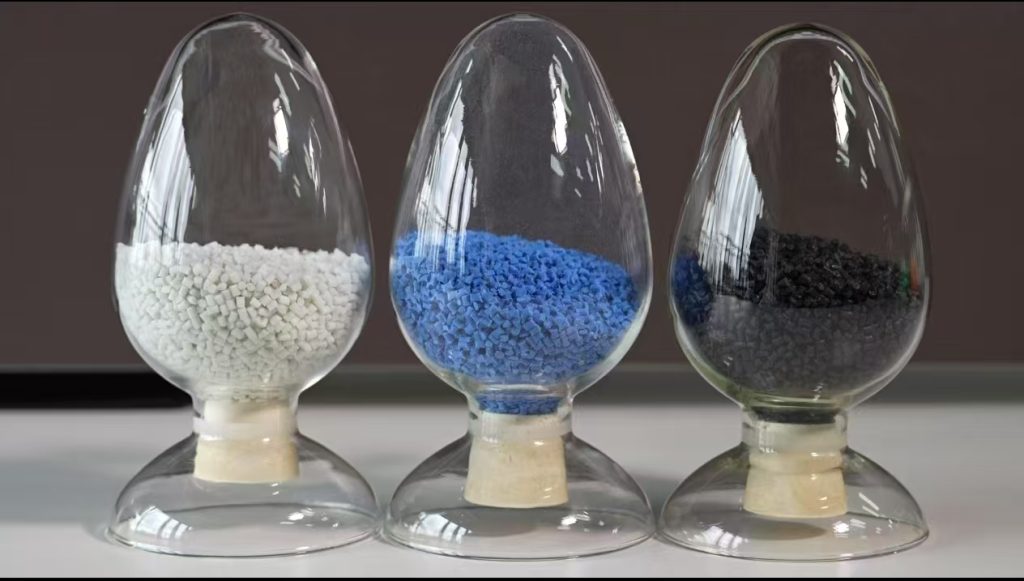
Nylon Granules (PA6/PA66/PA12)

Engineering-grade nylon raw materials for injection molding

PREGUNTAS FRECUENTES

Nylon frente a POM (acetal): Guía comparativa de plásticos técnicos
¿Cuándo es recomendable utilizar la guía comparativa de plásticos técnicos «Nailon frente a POM (acetal)»?

«Nylon frente a POM (acetal): Guía comparativa de plásticos de ingeniería» es una buena opción cuando la rapidez en las iteraciones, la geometría compleja, el bajo coste de utillaje o la producción en pequeños volúmenes son más importantes que el coste unitario de las piezas moldeadas.

¿Qué hay que tener en cuenta antes de elegir entre el nailon y el POM (acetal): guía comparativa de plásticos técnicos?

Compruebe el tamaño de la pieza, las propiedades del material, el acabado superficial, la tolerancia dimensional, la exposición al calor, la dirección de la carga y si es necesario un tratamiento posterior.

¿En qué se diferencia la «Guía comparativa de plásticos de ingeniería: nailon frente a POM (acetal)» del mecanizado CNC?

La impresión 3D puede crear formas complejas con rapidez, mientras que el mecanizado CNC suele ser más potente para superficies precisas, tolerancias más ajustadas y materiales de calidad de producción.

¿Qué factores influyen en el coste del nailon frente al POM (acetal)?: Guía comparativa de plásticos de ingeniería.

El coste depende del material, el volumen de fabricación, el tiempo de impresión, la altura de capa, la eliminación de soportes, el acabado, la inspección y el número de piezas de la fabricación.

Nylon vs POM: Choose Around Motion, Moisture and Load

Nylon and POM acetal can both be used for gears, bushings, guides, rollers and precision plastic components, but they solve different problems. Nylon is often selected for toughness, fatigue resistance and load-bearing capability. POM is often selected for low moisture uptake, low friction, wear behavior and dimensional consistency. The correct choice depends on the mating material, motion, load, humidity, temperature, chemical exposure, tolerance and manufacturing route.

Do not compare only nominal tensile strength. A moving bushing may be limited by friction and wear, while a structural clip may be limited by fatigue and impact. A precision housing may be limited by moisture-driven dimensional change. State the failure mode your team must avoid before choosing the resin family.

Decision factor Nylon tendency POM tendency What to validate
Humedad Absorbs moisture and changes stiffness and dimensions Lower moisture uptake and generally more stable fit Conditioned dimensions and service humidity
Friction and wear Good in suitable grades; moisture and load affect behavior Often favorable for low-friction sliding and gears PV load, speed, counterface, lubrication and life
Impact and fatigue Often strong toughness and fatigue performance Good fatigue behavior but can be less forgiving in impact Notched impact, cycle life and temperature
Creep Can be significant with heat and moisture Must still be checked under continuous load Stress, time, temperature and dimensional drift
Processing Requires moisture control and grade-specific drying Requires controlled melt history and venting Drying, mold temperature, cycle and defect record

Gears, Bearings and Sliding Parts

For gears and bearings, calculate load, speed, contact pressure, duty cycle, lubrication, counterface and allowable temperature. A POM gear may provide a stable tooth profile in humid service, while a nylon gear may offer toughness and quieter operation. Reinforcement, internal lubricant and fiber orientation can change wear and noise. The part should be tested in the actual mating pair, not only as a resin coupon.

For a bushing, define shaft material and finish, radial load, speed, clearance, lubrication and expected life. A material that performs well against steel may behave differently against aluminum, glass-filled polymer or a rough counterface. Include thermal expansion and moisture conditioning in the clearance calculation.

Strength, Creep and Dimensional Control

Nylon’s moisture response can be useful when toughness is important but challenging when the assembly needs a stable tolerance. POM usually offers lower moisture sensitivity, but the selected grade still needs temperature, creep and chemical validation. Glass or mineral reinforcement can change stiffness and shrinkage in either material family. A reinforced grade may solve deflection while creating anisotropy, surface change or counterface wear.

Solicitud Likely starting point Critical validation
Humid precision guide POM may be a useful starting point Clearance after humidity conditioning and thermal cycling
Impact-loaded clip Nylon may offer a useful toughness balance Assembly cycles, impact and stress concentration
Low-speed bushing Compare nylon and POM against load and counterface Wear, friction, temperature and dimensional change
Injection-molded gear Choose by noise, wear, moisture and torque Tooth accuracy, torque, speed and life testing

Molding, CNC Machining and Sourcing

Both nylon and POM can be injection molded or CNC machined, but the process details differ. Nylon needs moisture control before molding and may require conditioning before final inspection. POM needs a controlled thermal history, correct venting and attention to degradation risk. During CNC machining, workholding, heat, tool sharpness, stock condition and stress relief influence the final tolerance. Request the process route before accepting a material comparison as complete.

For procurement, compare grade availability, color, reinforcement, internal lubricant, regulatory needs, lot traceability and supplier change control. “POM” can describe several grades, just as “nylon” can cover PA6, PA66, PA12 and reinforced variants. A usable quotation names the grade, tolerance, inspection condition, annual volume and expected service environment.

Nylon vs POM RFQ Checklist

  • Load, motion, speed, counterface, lubrication and expected life.
  • Humidity, temperature, chemicals, cleaning and outdoor exposure.
  • Critical tolerance, datum, clearance, surface finish and conditioning state.
  • Material family, exact grade, filler, lubricant, color and approval list.
  • Injection molding, CNC machining or prototype route and quantity.
  • Wear, friction, torque, dimensional, leak or assembly test requirements.

Send the load, motion, environment, tolerance, process and volume with the drawing. We can compare nylon and POM against the failure mode that matters to your assembly and recommend a production validation plan.

Cuéntanos sobre tu pieza

Este campo es obligatorio.

Lecturas relacionadas

De un vistazo

Punto de decisión Nylon POM / Acetal Nota para el comprador
Fricción Buena selección de calidades Muy bajo POM is often the easier sliding-material choice
Humedad Mayor absorción Menor absorción Use POM when humidity makes fit unstable
Desgaste Resistente y duradero Excelente Comprueba la lubricación y la carga por ciclo antes de elegir
Uso recomendado Piezas de ingeniería general Gears, bushings and precision motion parts Match the material to motion and stability need

¿Por qué elegir el plástico de nailon?

Nylon Plastic supports nylon-versus-acetal decisions when the part must balance wear, motion and moisture rather than rely on a generic plastic chart.

Ir arriba