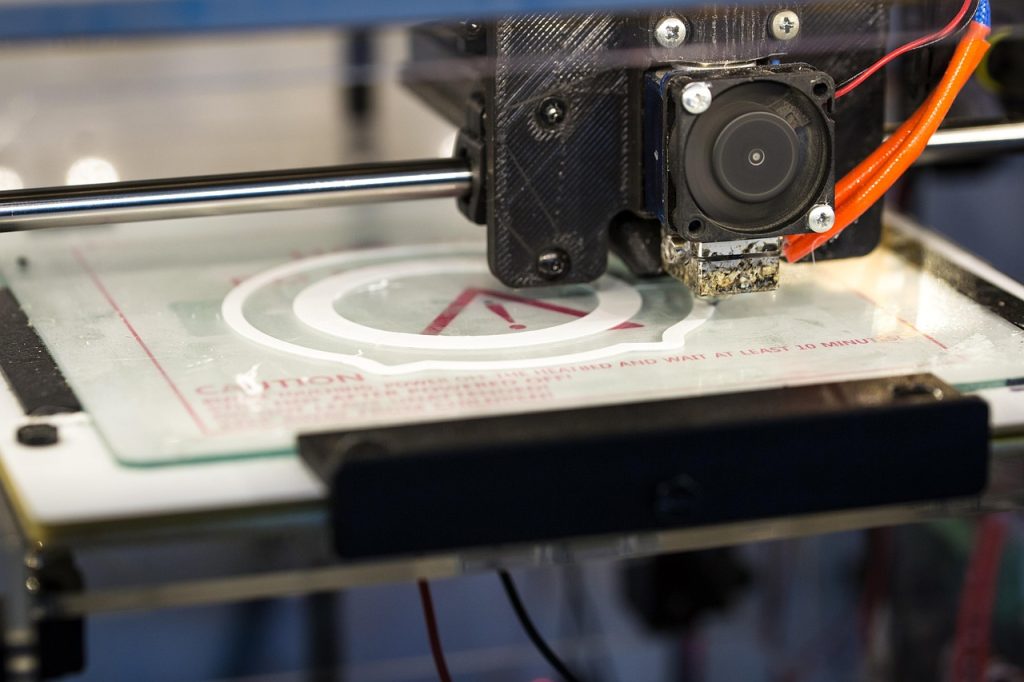
Digital Light Synthesis (DLS) represents the cutting edge of vat photopolymerization 3D printing, offering unmatched surface quality and resolution for high-performance plastic parts. At NylonPlastic, our DLS service delivers precision components with smooth finishes, tight tolerances, and rapid turnaround — ideal for functional prototypes, end-use parts, and production runs in engineering-grade resins.
What Is Digital Light Synthesis (DLS)?
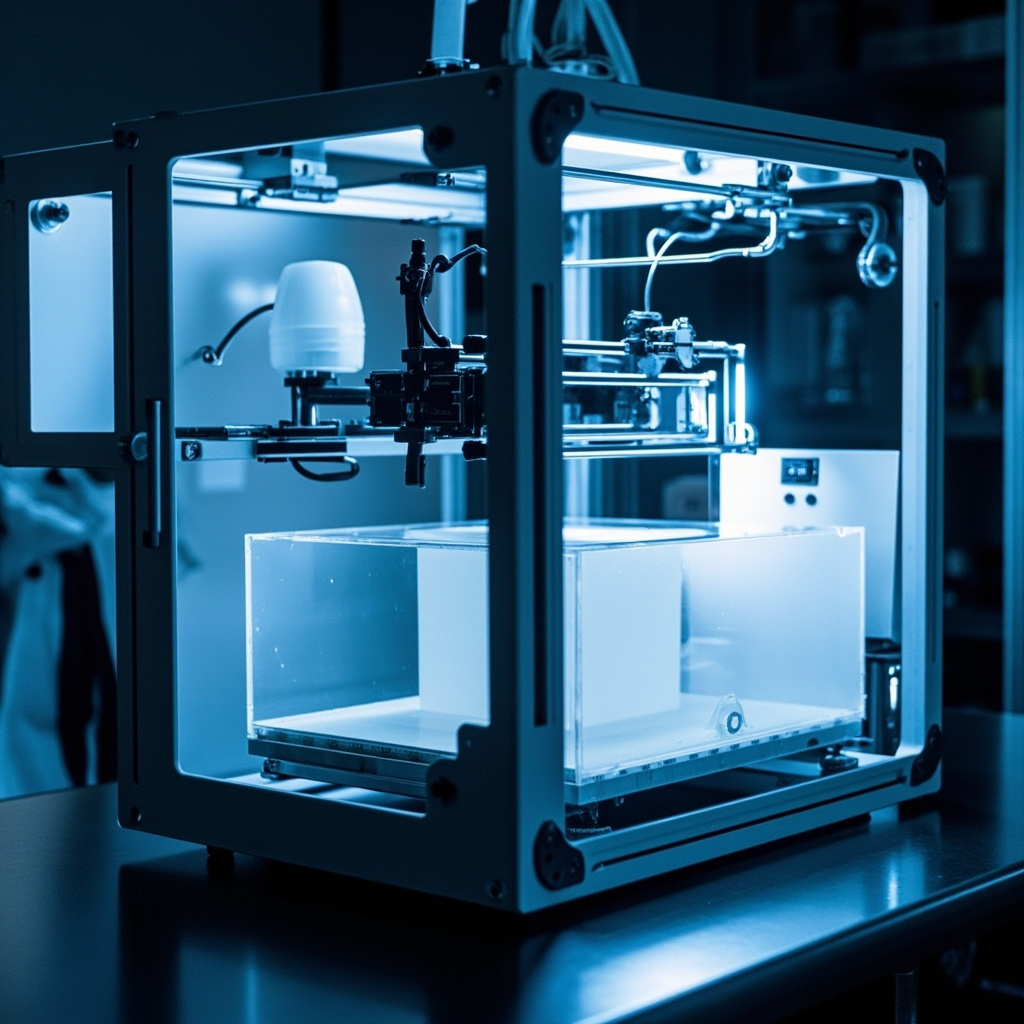
DLS is a photopolymerization process that uses a digital light projector to cure liquid resin layer by layer. Unlike traditional SLA that uses a laser to trace each layer, DLS projects an entire cross-section at once, significantly reducing build times while maintaining exceptional detail. The process takes place in a photopolymer resin tank, where a light source solidifies the material according to the 3D model data.
How DLS Works: Step by Step
The DLS process follows a precise sequence that enables high-speed production of detailed parts. First, a thin layer of liquid photopolymer resin is spread across the build platform. The digital light projector then illuminates the entire cross-section of the current layer, causing the resin to polymerize and solidify. The build platform moves upward, and a new layer of resin flows beneath the previous one. This cycle repeats until the complete part is formed.
Parámetros clave del proceso
DLS part quality depends on several critical parameters that must be precisely controlled. The light intensity and exposure time determine the degree of cure and mechanical properties of the final part. The layer thickness, typically ranging from 25 to 100 microns, directly affects surface finish and build speed. Resin temperature also plays a vital role, as viscosity changes can impact flow and leveling behavior.
| Parámetro | Typical Range | Impact on Quality |
|---|---|---|
| Layer Thickness | 25 – 100 microns | Finer layers = smoother surface, longer build |
| Light Intensity | 3 – 8 mW/cm² | Affects cure depth and mechanical strength |
| Build Speed | Up to 1000 mm/hour | Faster than SLA for large parts |
| XY Resolution | 25 – 75 microns | Determines surface detail fidelity |
| Build Volume | Up to 300 x 200 x 400 mm | Depends on DLS system model |
DLS Materials: Engineering Resins
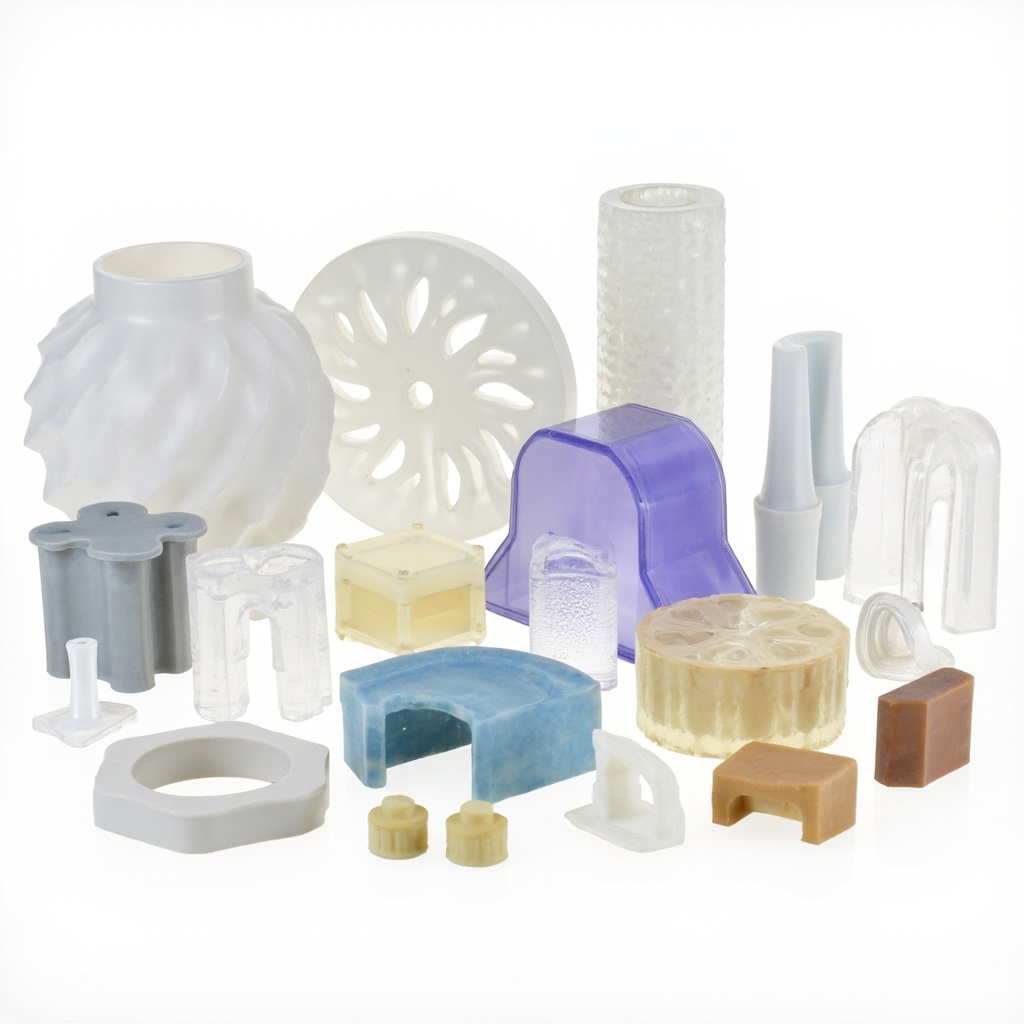
DLS technology works exclusively with photopolymer resins, each formulated for specific performance requirements. Standard clear resins provide optical clarity for transparent parts. Engineering resins offer enhanced mechanical properties including higher impact resistance, temperature resistance, and stiffness. Flexible resins simulate rubber-like materials for gaskets, seals, and overmolded components.
Available DLS Resin Options
At NylonPlastic, we offer a comprehensive range of DLS-compatible resins to meet diverse application requirements. Our standard clear resin provides excellent transparency and surface finish for visual prototypes and optical components. High-temperature resins withstand thermal loads up to 238°C (HDT), making them suitable for hot air and fluid flow testing. Flexible resins with Shore A hardness ranging from 50 to 90 enable the production of elastomeric components without tooling investment.
DLS vs Other 3D Printing Technologies
When selecting a 3D printing process, understanding the differences between DLS and alternative technologies helps optimize part quality and cost-effectiveness. DLS offers significant advantages in surface finish and build speed compared to powder bed fusion methods, while providing better isotropic mechanical properties than fused deposition modeling.
| Tecnología | Calidad de la superficie | Resistencia mecánica | Build Speed | Material Range |
|---|---|---|---|---|
| DLS | Excelente | High (anisotropic) | Rápido | Photopolymers only |
| SLA | Excelente | Moderate (anisotropic) | Moderado | Photopolymers only |
| SLS (Nylon) | Good (grainy) | High (isotropic) | Moderado | Nylon powders |
| MJF | Good (matte) | High (isotropic) | Rápido | PA12, PA11 |
| FDM | Fair (layer lines) | Moderate (anisotropic) | Slow to Moderate | Thermoplastics |
Applications of DLS 3D Printing
DLS technology serves a wide range of industries where surface quality and precision are paramount. The dental industry uses DLS for crown models, surgical guides, and orthodontic aligners, benefiting from the smooth surfaces that minimize bacterial adhesion. The hearing aid industry produces custom shells with complex geometries directly from digital scans. Consumer electronics manufacturers create transparent covers, light pipes, and optical components with tight dimensional tolerances.
Ideal Use Cases for DLS
DLS excels in applications where surface quality cannot be compromised. Optical components requiring clarity and light transmission benefit from DLS’s smooth, transparent parts. Functional prototypes that undergo fit testing require the precision DLS delivers, reducing the need for secondary machining. Small-batch production of complex parts becomes economically viable without injection molding tooling costs when DLS is employed.

Post-Processing for DLS Parts
Post-processing transforms as-built DLS parts into finished components ready for use. The primary post-processing step involves removing uncured resin from the part surface using isopropyl alcohol (IPA) or similar solvent washing. A UV post-cure step ensures complete polymerization and achieves optimal mechanical properties. Support removal, sanding, and polishing may be necessary depending on surface requirements.
Post-Processing Steps
After printing, parts undergo a thorough cleaning process to remove all traces of uncured resin from internal channels and fine features. Cleaning methods include manual washing, ultrasonic agitation, or specialized wash-and-cure machines. The curing chamber applies additional UV exposure to achieve the target material properties, particularly important for parts requiring thermal resistance or structural strength. Surface finishing options range from as-built with minimal intervention to fine polishing for optical applications.
Why Choose NylonPlastic for DLS Services?
PREGUNTAS FRECUENTES
When is Digital Light Synthesis (DLS) 3D Printing Services a good option?
Digital Light Synthesis (DLS) 3D Printing Services is a good option when fast iteration, complex geometry, low tooling cost, or low-volume production is more important than molded-part unit cost.
What should be checked before choosing Digital Light Synthesis (DLS) 3D Printing Services?
Compruebe el tamaño de la pieza, las propiedades del material, el acabado superficial, la tolerancia dimensional, la exposición al calor, la dirección de la carga y si es necesario un tratamiento posterior.
How does Digital Light Synthesis (DLS) 3D Printing Services compare with CNC machining?
La impresión 3D puede crear formas complejas con rapidez, mientras que el mecanizado CNC suele ser más potente para superficies precisas, tolerancias más ajustadas y materiales de calidad de producción.
What affects the cost of Digital Light Synthesis (DLS) 3D Printing Services?
El coste depende del material, el volumen de fabricación, el tiempo de impresión, la altura de capa, la eliminación de soportes, el acabado, la inspección y el número de piezas de la fabricación.