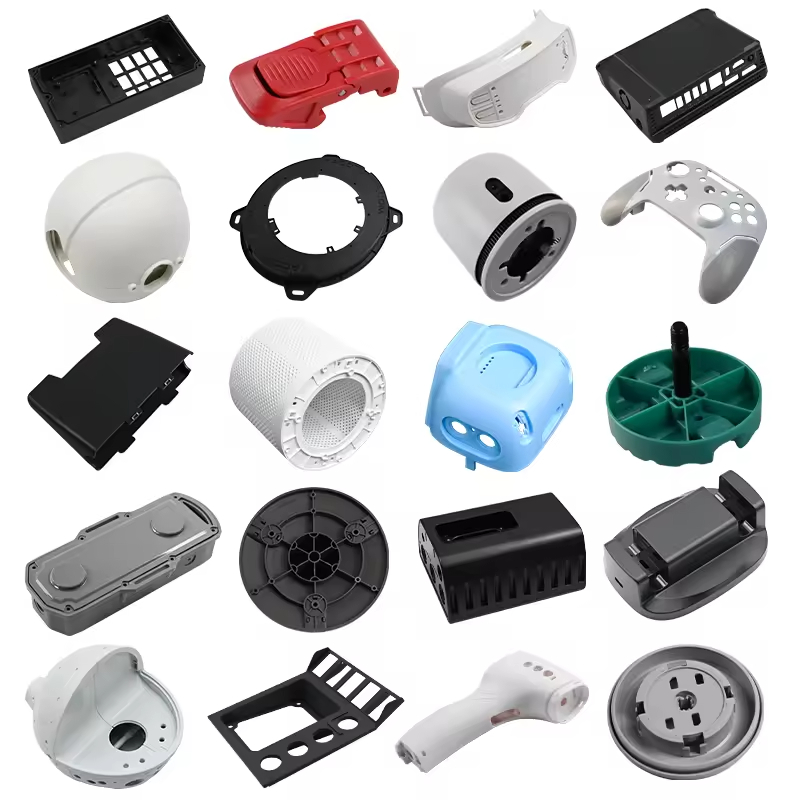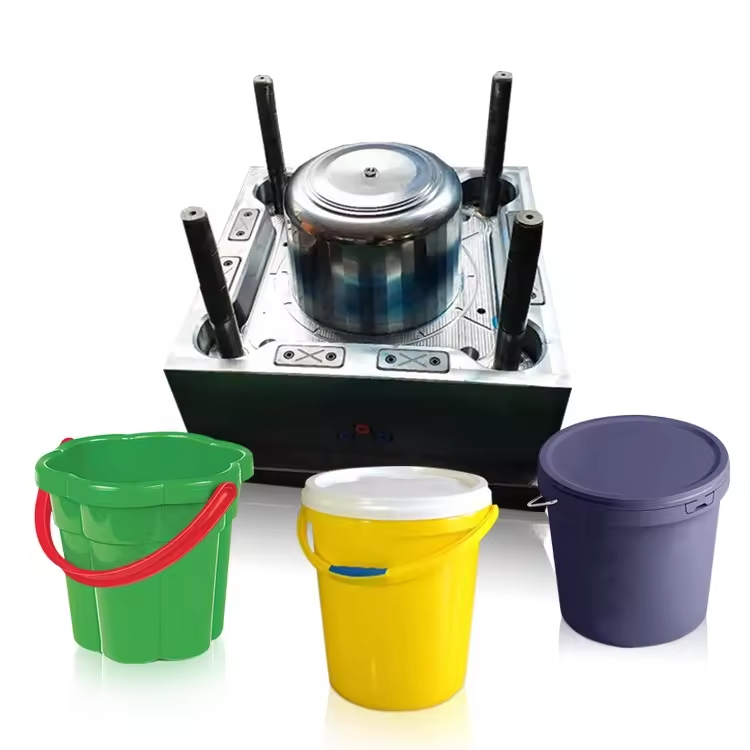
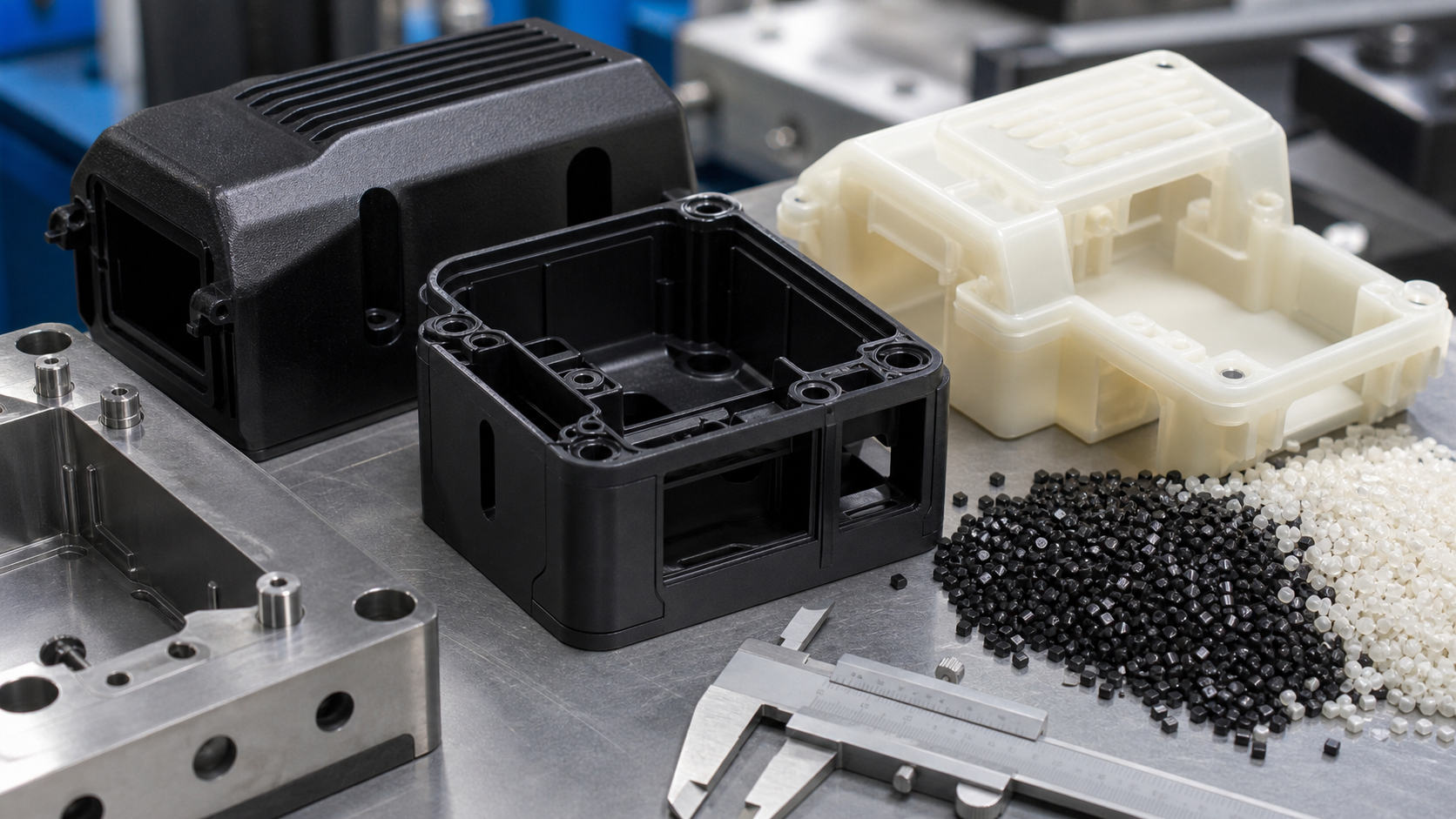
El moldeo por inyección de plástico ABS se utiliza ampliamente para la fabricación de carcasas, cubiertas y componentes interiores a medida, ya que el ABS es fácil de procesar, admite bien las texturas y los colores, y ofrece un buen equilibrio entre resistencia al impacto, coste y calidad de la superficie.
El ABS suele elegirse cuando los compradores necesitan una pieza de plástico moldeada con buen aspecto y una resistencia moderada. No es la mejor opción para todas las aplicaciones en las que haya altas temperaturas, uso en exteriores o exposición a productos químicos, por lo que la revisión del diseño debe tener en cuenta el entorno de uso y los requisitos de acabado.
Itinerario de moldeo por inyección de ABS
ABS molding is generally forgiving, but gate location, cooling, wall thickness and surface texture still affect part quality.
| Ruta | Uso recomendado | Nota para el comprador |
|---|---|---|
| Moldeado ABS estándar | Carcasas, tapas y soportes | Buen equilibrio entre precio y estética |
| ABS ignífugo | Componentes eléctricos o de electrodomésticos | Confirmar la clasificación UL y los requisitos de color |
| Alternativa al PC-ABS | Mayor impacto o mayores necesidades térmicas | Hay que tener en cuenta cuándo el ABS por sí solo no es lo suficientemente resistente |
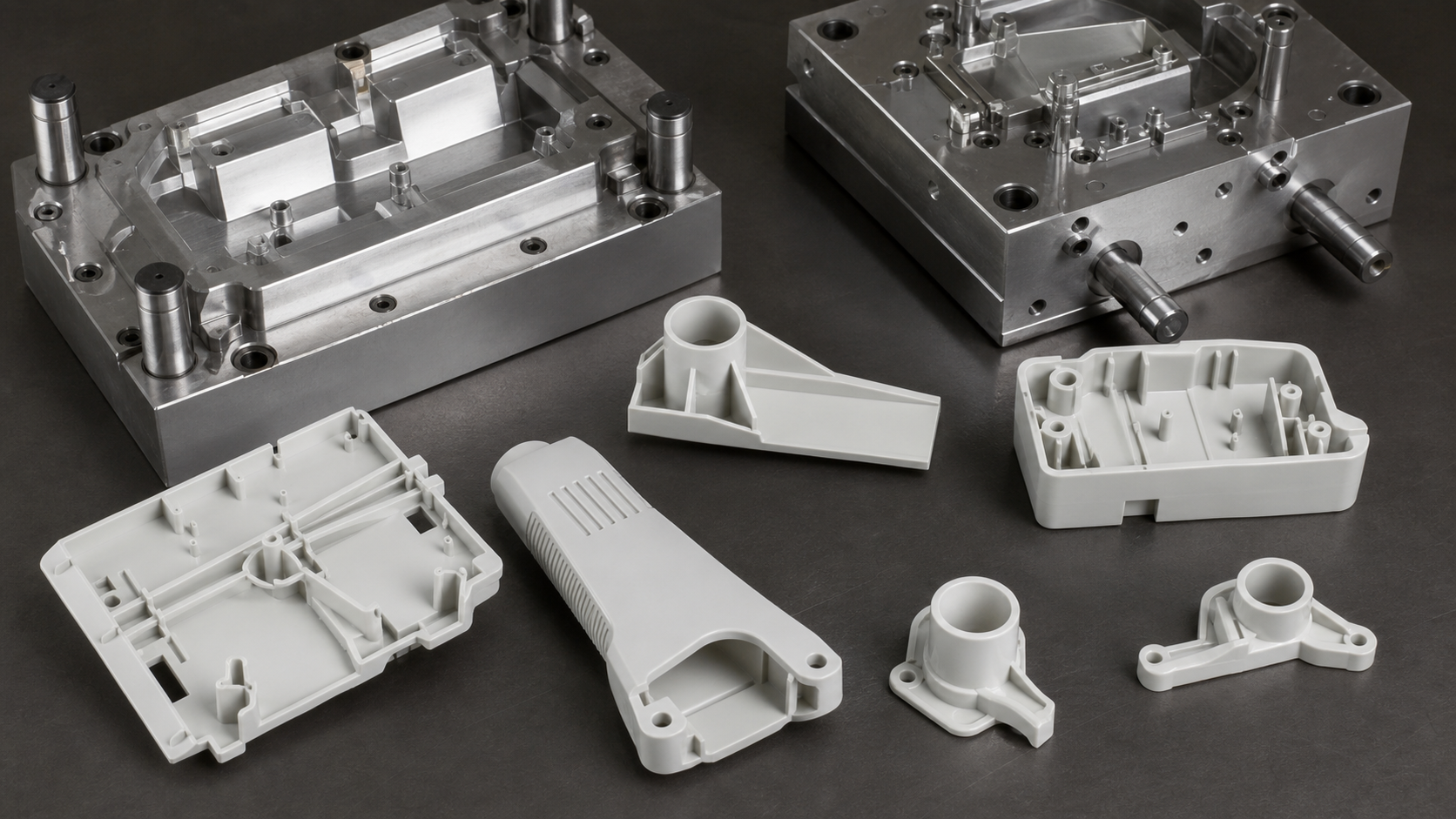
Calidades del ABS y alternativas
Los tipos de ABS varían en función de la resistencia al impacto, la resistencia al calor, la clasificación de resistencia al fuego, el color y el acabado.
| Material | Ideal para | Nota sobre la selección |
|---|---|---|
| ABS general | Carcasas para uso doméstico e industrial | Buen acabado superficial y facilidad de procesamiento |
| ABS de alta resistencia a los impactos | Piezas que requieren una mayor tenacidad | Útil para fundas y carcasas protectoras |
| ABS resistente al calor | Aplicaciones con calor moderado | Aún así, compárese con el PC-ABS o el PC |
| FR ABS | Cajas eléctricas | Confirmar la clasificación de resistencia al fuego y el cumplimiento de la normativa |
Utiliza el injection molding material selection guide when comparing the resin family and exact grade for the application.
Comprobaciones de diseño de piezas de ABS
Un buen diseño de las piezas moldeadas en ABS evita las marcas de hundimiento, el blanqueamiento por tensión, la deformación y los defectos visibles en la entrada de material.
- Evita los salientes gruesos y las nervaduras marcadas que provocan marcas de hundimiento.
- Utiliza un ángulo de desmoldeo adecuado para la profundidad de la textura.
- Siempre que sea posible, coloca las compuertas lejos de las superficies estéticas más importantes.
- Comprueba si los salientes de los tornillos y los insertos presentan riesgo de agrietamiento.
- Comprueba el masterbatch de color y la textura de la superficie antes de tomar muestras.
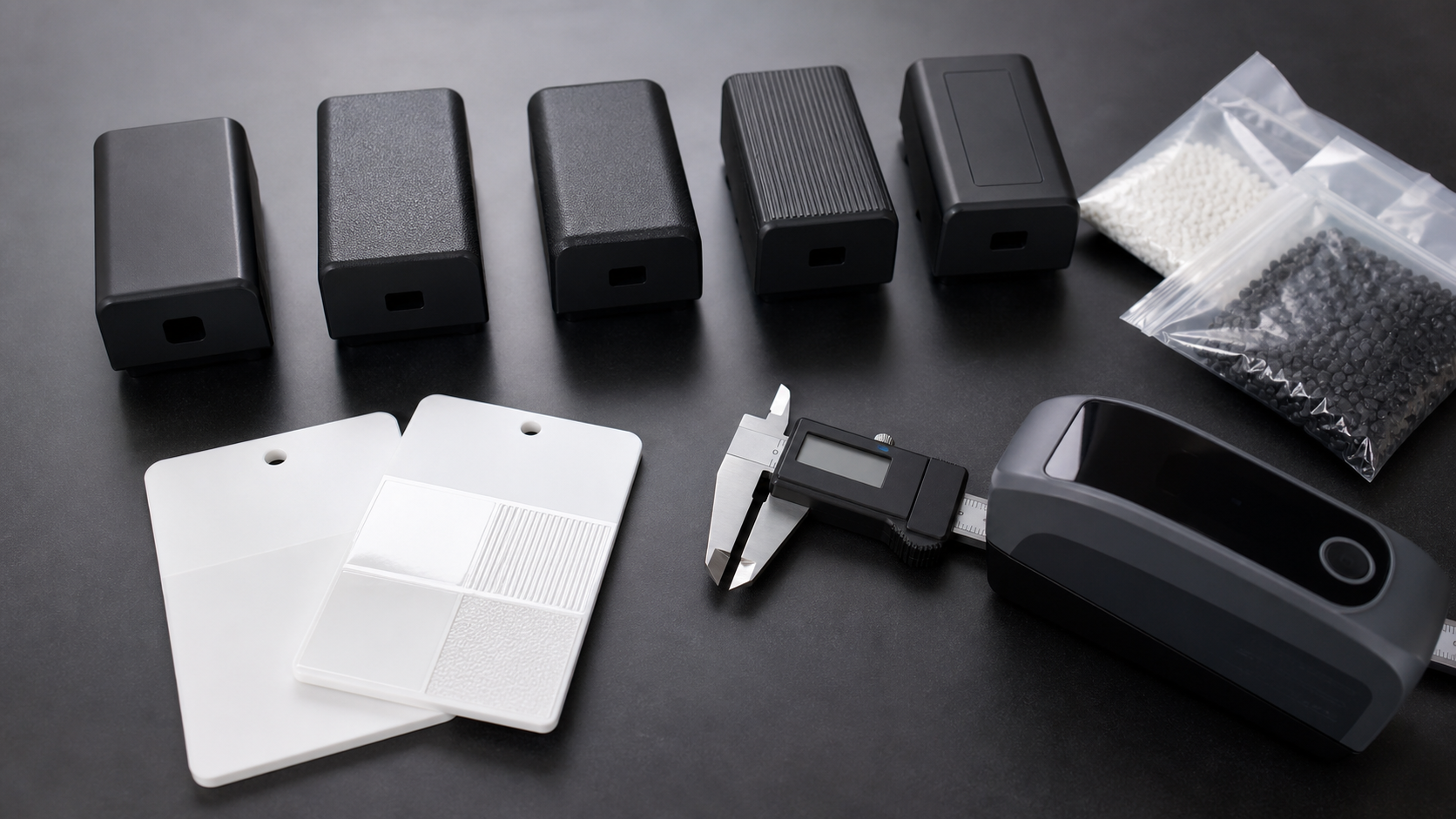
Use the ABS design and material checks below with our servicios de moldeo por inyección de plástico when planning a cosmetic enclosure or functional component.
Factores relacionados con el diseño y el procesamiento del moldeado de ABS
| Factor | Repercusiones en las piezas moldeadas | Nota sobre el DFM |
|---|---|---|
| Espesor de la pared | Las paredes irregulares provocan hundimientos, deformaciones y desequilibrios en la refrigeración. | Mantén la uniformidad de las paredes y retira las protuberancias más gruesas. |
| Contracción | La contracción del ABS es moderada, pero afecta igualmente al ajuste y a las tolerancias. | Comprueba el grado y la contracción de las herramientas antes de cortar el acero. |
| Acabado superficial | El ABS admite texturas, pintura, chapado y acabados decorativos. | Separa las superficies estéticas A de las zonas ocultas de las entradas de fundición o de los expulsores. |
| Líneas de soldadura | Las aberturas, las nervaduras y el flujo por múltiples entradas pueden provocar líneas de soldadura visibles o débiles. | Coloca las líneas de soldadura lejos de los clips, los salientes y las superficies visibles. |
ABS frente a PC/ABS frente a PC
| Material | El más adecuado | Compensación |
|---|---|---|
| ABS | Carcasas generales, tapas y piezas moldeadas de acabado estético. | Menor resistencia al calor y a los impactos que el PC o el PC/ABS. |
| PC/ABS | Carcasas, componentes electrónicos y piezas para el interior de los vehículos más resistentes. | El aumento del coste de los materiales y la elección de la calidad son factores importantes. |
| PC | Piezas resistentes a los impactos y al calor, incluidas las de transparencia. | Es necesario mejorar el secado, el control del estrés y el procesamiento. |
Lista de comprobación para el moldeo por inyección de ABS
- Comprueba el aspecto estético, la textura y el color antes de diseñar el molde.
- Comprueba si hay marcas de hundimiento detrás de las paredes visibles en las nervaduras y los salientes.
- Añade relieve a las superficies texturizadas y a las nervaduras profundas.
- Coloca vallas para facilitar el embalaje y ocultar los restos siempre que sea posible.
- Comprueba que no haya concentraciones de tensión en los clips de montaje, los salientes de los tornillos y los encajes a presión.
- Compara el ABS con el PC/ABS cuando el impacto, el calor o el uso en el sector de la automoción sean factores importantes.
For visible or dimensional defects, use the injection molding defects guide alongside the grade, geometry and process review.
Preguntas frecuentes
¿Es el ABS adecuado para el moldeo por inyección?
El ABS se utiliza ampliamente para la fabricación de carcasas, tapas y componentes moldeados por inyección, ya que se procesa fácilmente, ofrece una buena resistencia y admite numerosos acabados superficiales decorativos.
¿Es necesario secar el ABS antes del moldeo por inyección?
El ABS suele beneficiarse de un proceso de secado previo al moldeo, especialmente cuando son importantes el aspecto estético de las superficies, el control dimensional o un rendimiento mecánico constante.
¿Qué provoca los defectos en el moldeo por inyección de ABS?
Los defectos en el moldeo de ABS pueden deberse a la humedad, el sobrecalentamiento, una ventilación deficiente, paredes propensas a hundirse, marcas de entrada, un compactado insuficiente o unos parámetros de proceso inestables.
¿Qué deben especificar los compradores en el caso de las piezas moldeadas de ABS?
Los compradores deben especificar el tipo de ABS, el color, el acabado superficial, la tolerancia, los requisitos estéticos, la cantidad prevista, el entorno de aplicación y las necesidades de inspección.
Lecturas relacionadas
Request an ABS Molded-Part Review
For ABS housings, covers or functional components, send the assembly and cosmetic requirements. Nylon Plastic can review the ABS grade, mold design, texture, color, fit, sampling and production scope before quotation.
What should an ABS injection molding RFQ include for a cosmetic enclosure?
Provide the enclosure assembly, cosmetic zones, color reference, texture, screw or clip interfaces and the heat and impact requirement. Ask for resin, gate and rib review before committing to ABS rather than PC/ABS. Compare tooling, sample approval, molded parts and any painting or assembly as separate quoted items so the appearance requirement survives the price comparison.
- Include CAD, drawing revision, exact grade or permitted alternative, color reference, initial and annual quantity, destination and timing.
- Identify visible surfaces, texture, gate and ejector marks, screw bosses, clips, inserts and critical mating features.
- State heat, impact, outdoor or chemical exposure; define the sample test, appearance reference, dimensional report and required grade documents.
- Separate molded parts from paint, plating, printing, assembly or packaging. Match any flame requirement to the exact grade and part thickness.
Compare tooling, samples, molded parts and secondary finishing on the same specification. Agree cosmetic and fit approval together; an acceptable molded surface can change after painting, plating or assembly.