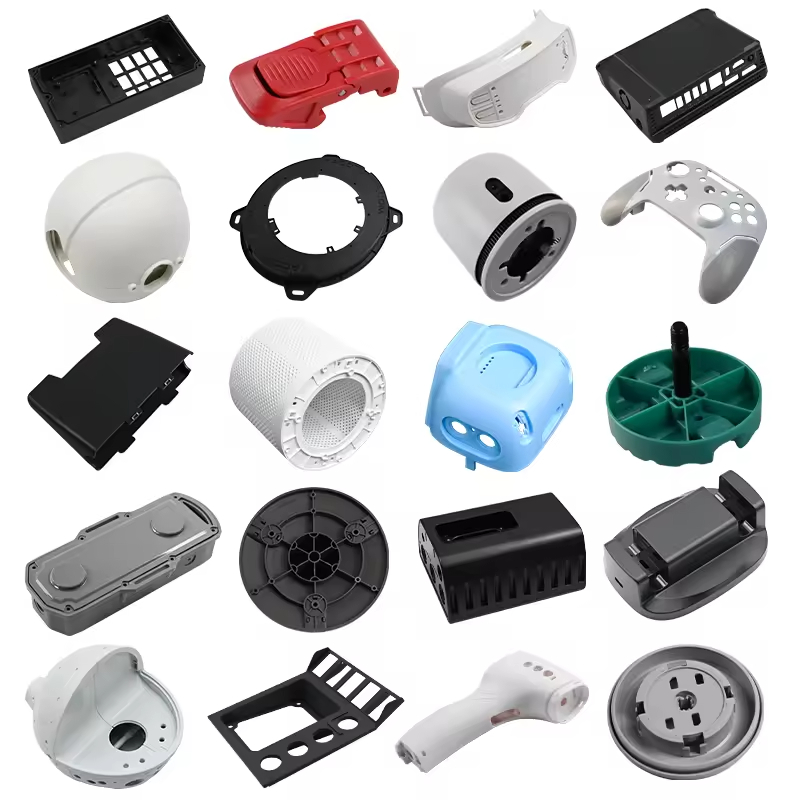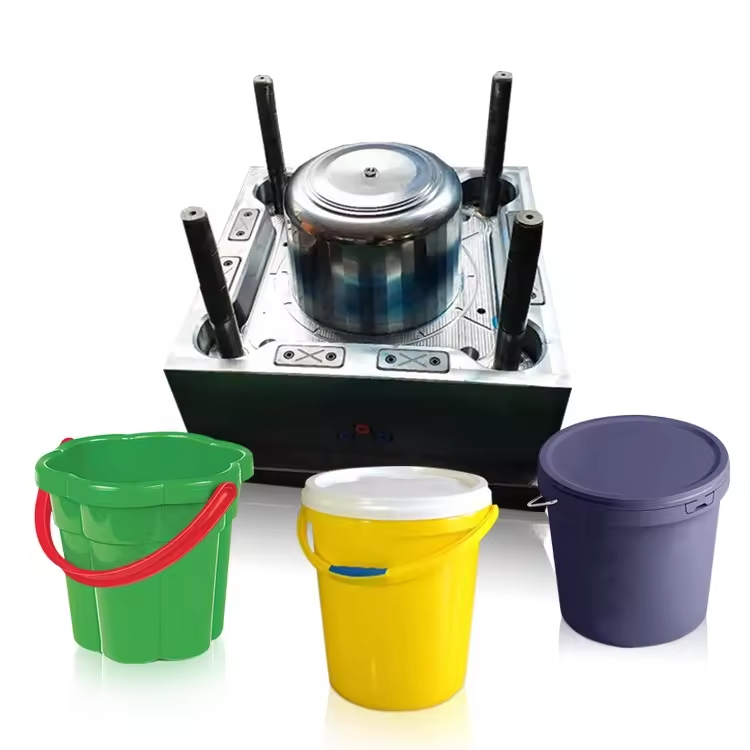
Esta guía de soluciones de diseño con rebajes explica aspectos prácticos que hay que tener en cuenta a la hora de seleccionar materiales, revisar el diseño, fabricar y tomar decisiones de abastecimiento.
¿Qué es un socavado en el moldeo por inyección?
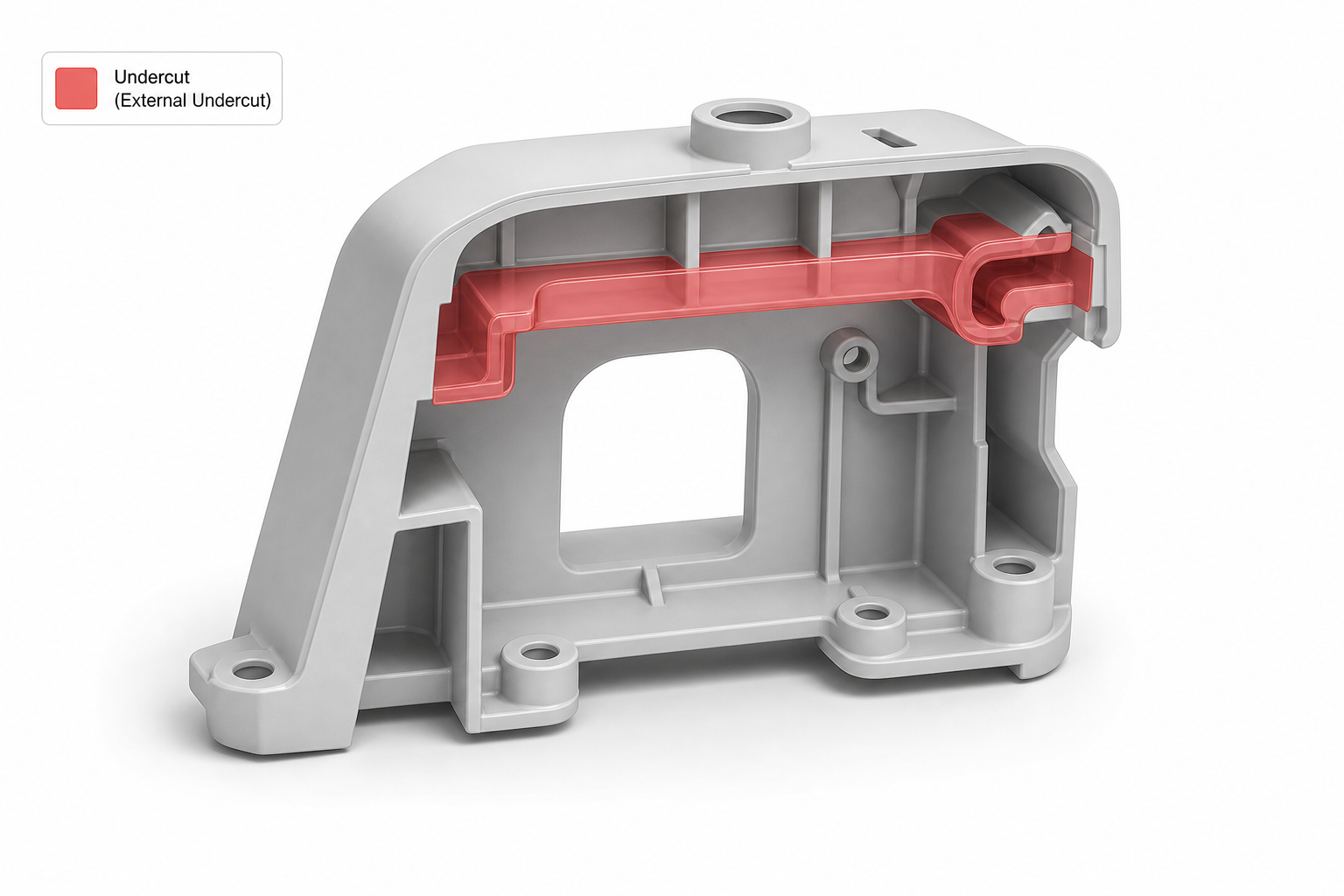
Un recorte inferior Es cualquier hueco, saliente o característica geométrica de una pieza moldeada que impide su expulsión limpia en la dirección de apertura del molde. En un molde sencillo de dos placas, las mitades del núcleo y de la cavidad se separan a lo largo de un único eje. Si la geometría de la pieza se encaja en cualquiera de las dos mitades de tal forma que se opone a ese movimiento lineal —un gancho de encaje a presión, un orificio lateral, una ranura empotrada o una rosca interna—, se produce un socavado que complica el proceso de moldeo y aumenta los costes.
Los «undercuts» se clasifican en dos grandes categorías:
| Tipo | Descripción | Ejemplos habituales |
|---|---|---|
| Mordida externa | Elemento situado en la superficie exterior de la pieza que se encaja perpendicularmente a la línea de separación | Orificios laterales, brazos de cierre a presión, lengüetas de bayoneta, nervaduras exteriores orientadas para el desenfunde cruzado |
| Mordida interna | Elemento situado en la superficie interior o en la cavidad que se encaja en el núcleo | Roscas internas, salientes de encaje, clips con muesca, salientes empotrados |
Abordar correctamente los socavados es una de las decisiones con mayor impacto en el diseño del moldeo por inyección. La elección entre una solución mecánica (corredera, elevador, núcleo plegable) y un rediseño de la pieza puede hacer variar el coste del molde en De $1.000 a $30.000 y repercuten en la duración del ciclo, el mantenimiento de las herramientas y la calidad de las piezas durante toda la vida útil del molde.
Descripción general de las soluciones: Mecanismo de emparejamiento según el tipo de rebaje
La tabla siguiente relaciona cada tipo principal de socavado con su solución de herramientas estándar, incluyendo el coste relativo, la aplicación típica y las limitaciones clave.
| Mecanismo | Lo mejor para | Tipo de corte inferior | Coste relativo | Impacto típico del ciclo | Limitación clave |
|---|---|---|---|---|---|
| Correderas / Acciones laterales | Muescas externas, orificios laterales y elementos de encaje a presión en el exterior de la pieza | Externo | $1.000-$3.000 por diapositiva | Moderado (la activación añade entre 0,5 y 2,0 s) | Requiere espacio libre en la base del molde; puede interferir con la disposición del sistema de refrigeración |
| Elevadores | Socavados internos en las nervaduras, salientes y broches en el interior de la pieza | Interno | $800-$2.500 por elevador | De bajo a moderado | Limitado a un ángulo máximo de unos 15 grados; propenso al desgaste con un número elevado de ciclos |
| Núcleos plegables | Roscas internas, muescas de diámetro completo, cierres | Interno | $3.000-$8.000 por núcleo | Moderado (curso de retracción) | Diámetro mínimo: ~12 mm; no apto para huecos poco profundos |
| Insertos cargados a mano | Producción de bajo volumen (<5.000 piezas), con características externas e internas complejas | Ambos | $500-$1.500 por juego de insertos | Alta (carga y descarga manual: 10-60 s por ciclo) | Depende de la mano de obra; no es viable para volúmenes medios o altos |
| Expulsión / Expulsión forzada | Materiales flexibles (TPE, PP sin relleno, LDPE) con muescas poco profundas y redondeadas | Ambos | Insignificante | Ninguno | El material debe deformarse sin sufrir deformaciones permanentes; profundidad máxima < 1% del diámetro |

Correderas y acciones laterales: un todoterreno para el socavado externo
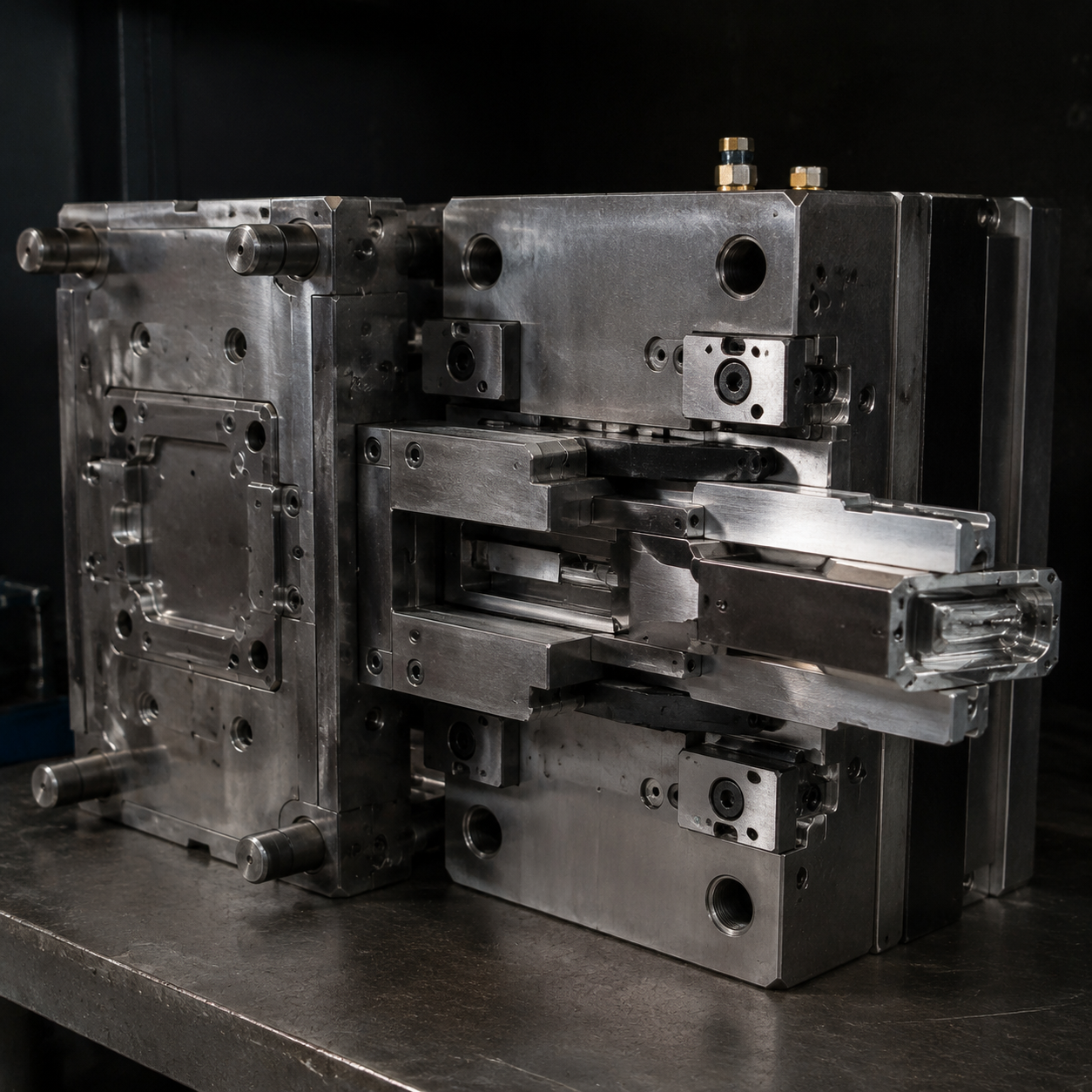
Las correderas —también denominadas «acciones laterales»— son la solución más habitual para los socavados externos. El mecanismo utiliza un pasador de leva o un cilindro hidráulico para desplazar lateralmente un inserto de acero al abrirse el molde, despejando así el socavado antes de la expulsión. Las correderas se desplazan perpendicularmente al eje de apertura del molde y suelen estar alojadas en la mitad de la cavidad (placa A) o en la mitad del expulsor (placa B), dependiendo de la geometría de la pieza.
Normas de diseño para las diapositivas:
- Recorrido mínimo del carro = profundidad del socavado + 1 mm (margen de seguridad). Por ejemplo, un orificio lateral de 3,2 mm de profundidad requiere una carrera de la corredera de al menos 4,2 mm. Añade siempre un margen adicional a la profundidad del elemento para tener en cuenta la expansión térmica y las pequeñas desviaciones de alineación.
- Ángulo de desmoldeo en todas las caras de la corredera: Aplica un ángulo mínimo de 0,5 grados a las superficies paralelas al movimiento de deslizamiento y de 3 grados a las caras que entran en contacto con la pieza. Sin ángulo de desmolde, aparecen marcas de agarrotamiento y de arrastre en los primeros 5.000 ciclos.
- Es obligatorio llevar placas de protección: Las correderas rozan contra la base del molde en cada ciclo. Utiliza placas de desgaste endurecidas (D2 o H13 con una dureza de 52-56 HRC) debajo de cada corredera y especifica que las ranuras para grasa de las placas tengan una anchura superior a 40 mm.
- Ángulo de bloqueo del talón: El bloque del talón debe encajar antes que el pasador de leva para evitar el retroceso del carro durante la inyección. El ángulo del talón debe ser entre 3 y 5 grados más pronunciado que el ángulo del pasador de leva.
Elevadores: socavados internos sin aberturas laterales
Los elevadores resuelven los socavados internos desplazándose en ángulo durante la expulsión. A medida que avanza la placa expulsora, el elevador se desplaza simultáneamente hacia arriba y hacia dentro, separándose del socavado. Este elegante mecanismo elimina la necesidad de divisiones adicionales en el molde y es habitual en elementos como los salientes de encaje internos y los socavados de nervaduras.
Normas de diseño de los elevadores:
- Ángulo máximo de elevación: 15 grados. Los ángulos superiores a 15 grados generan un empuje lateral excesivo que desgasta los casquillos guía y puede provocar la fractura de los cabezales de los elevadores. A 20 grados, la probabilidad de fallo aumenta considerablemente.
- Diámetro de la varilla del elevador: Mínimo de 8 mm para carreras cortas (menos de 25 mm); aumentar a 12 mm o más para carreras superiores a 40 mm. Las varillas demasiado cortas se doblan y se atascan.
- Puede ser necesario realizar una expulsión en dos fases: En el caso de socavados profundos, es posible que la carrera del expulsor por sí sola no proporcione un recorrido angular suficiente. Se recomienda prever un sistema de dos etapas o aumentar la carrera de la placa expulsora.
- Conflictos relacionados con la refrigeración: Los elevadores ocupan espacio en la mitad del expulsor que, de otro modo, se destinaría a los canales de refrigeración. Colabora con tu fabricante de moldes para trazar las líneas de agua entre los huecos de los elevadores o especifica una refrigeración conformada si el presupuesto lo permite.
Núcleos plegables y mecanismos especializados
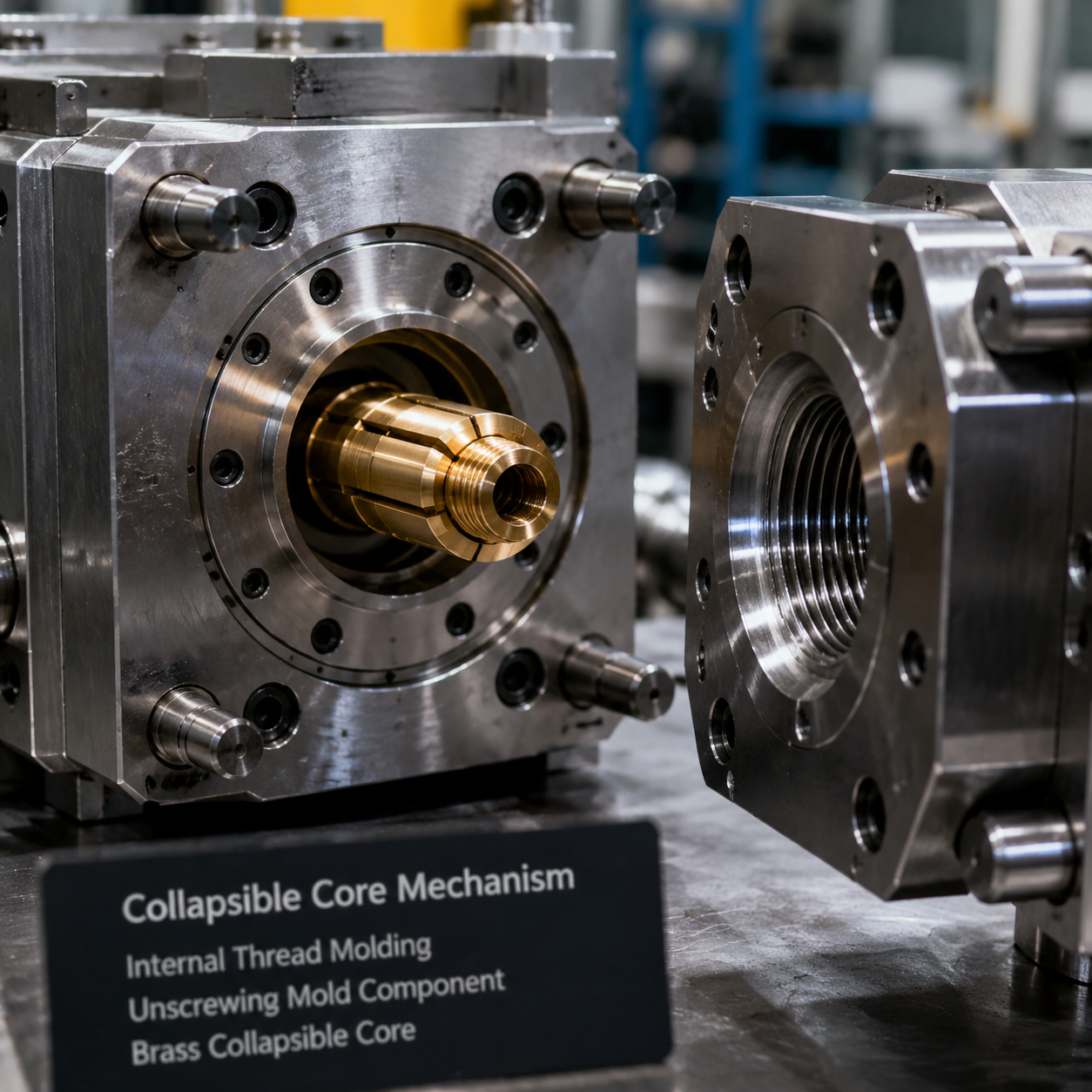
Los mandriles plegables —también denominados mandriles retráctiles— están diseñados específicamente para roscas internas y muescas que abarcan toda la circunferencia. El mandril está formado por varios segmentos que se pliegan hacia dentro al retraerse, lo que reduce el diámetro efectivo lo suficiente como para superar el socavado. Se utilizan ampliamente para tapones de botellas, tapas roscadas y cualquier pieza que requiera una rosca interior continua.
Los núcleos plegables son caros (entre $3.000 y $8.000 por unidad), pero suelen resultar más económicos que la alternativa de un mecanismo giratorio de desenroscado, que puede suponer un coste adicional de entre $10.000-$25 000 al coste del molde si se tienen en cuenta el accionamiento de piñón y cremallera, el motor y los controles. Sin embargo, para roscas de más de dos vueltas completas, resulta necesario utilizar núcleos de desenroscado, ya que los segmentos plegables pierden el registro más allá de ese punto.
Insertos recargados a mano: pragmatismo en la producción a pequeña escala
Cuando los volúmenes anuales son inferiores a 5.000 piezas, los insertos de carga manual pueden ser la solución más rentable. Un operario coloca un inserto de acero moldeado en el molde antes de cada inyección; tras la expulsión, el inserto se retira junto con la pieza y se separa manualmente. El inserto forma la geometría de socavado sin necesidad de componentes móviles en el molde.
La contrapartida es el tiempo de ciclo: la carga y descarga manuales añaden entre 10 y 60 segundos por ciclo, dependiendo de la complejidad de la pieza. En regiones con salarios elevados, el coste de la mano de obra puede superar rápidamente el ahorro que supone un molde más sencillo. Los insertos de carga manual son la opción más adecuada para la creación de prototipos, el utillaje puente y la producción de tiradas cortas, en las que el coste del utillaje de insertos de $500-$1.500 es el factor determinante en la decisión.
«Bump-Offs»: cuando la flexibilidad de los materiales permite ahorrar dinero
La expulsión por impacto —también denominada expulsión forzada o “snap-through”— se basa en aprovechar la deformación elástica del material. Un socavado poco profundo y suavemente redondeado permite que la pieza se flexione y se «desprenda» del núcleo durante la expulsión sin necesidad de elementos móviles en el molde. Se trata de la solución más económica posible, pero solo funciona bajo condiciones estrictas:
- El material debe ser flexible: TPE, PP sin relleno, LDPE o grados similares aptos para elastómeros
- La profundidad del socavado no debe superar aproximadamente 1% del diámetro de la pieza en el punto del socavado.
- El elemento debe tener radios generosos: las esquinas afiladas concentran la tensión y provocan desgarros.
- La temperatura de expulsión es importante: las piezas expulsadas a una temperatura demasiado alta pueden deformarse de forma permanente; si están demasiado frías, pueden agrietarse.
Repercusión en los costes: lo que cada corredera y cada elevador aportan a tu molde
Cada mecanismo móvil de un molde supone un coste adicional, no solo por la inversión inicial en utillaje, sino también por el mantenimiento continuo y el riesgo de paradas. A continuación se presentan las repercusiones económicas reales, basadas en los costes actuales de fabricación de moldes para herramientas de producción de acero:
| Mecanismo | Coste inicial de utillaje (por unidad) | Mantenimiento anual | Riesgo de paradas imprevistas |
|---|---|---|---|
| Corredera (accionada por leva) | $1,000-$3,000 | $200-$500 (placas de desgaste, lubricación, sustitución de pasadores) | Moderado: se doblan los pasadores de las levas; los fallos de lubricación provocan agarrotamiento |
| Corrida (hidráulica) | $2,500-$5,000 | $400-$800 (sustitución de juntas, inspección de mangueras, revisión del cilindro) | Mayor: fugas hidráulicas y fallos en los solenoides |
| Elevador | $800-$2,500 | $150-$400 (desgaste de la cabeza, comprobación de la rectitud de la varilla) | De bajo a moderado: desgaste gradual; los fallos repentinos son poco frecuentes si se realiza un mantenimiento preventivo adecuado |
| Núcleo plegable | $3,000-$8,000 | $500-$1.200 (alineación de segmentos, sustitución de cuñas) | Moderado: los segmentos se atascan si no se limpian con regularidad |
Un molde con cuatro correderas (una por cada lado) y dos elevadores puede añadir fácilmente De $8.000 a $17.000 al coste básico del utillaje. Si multiplicamos esa cifra por un molde de múltiples cavidades, las cifras aumentan rápidamente. Por eso siempre merece la pena valorar la posibilidad de rediseñar la pieza para eliminar los socavados antes de optar por soluciones mecánicas.
Cuándo rediseñar en lugar de mecanizar
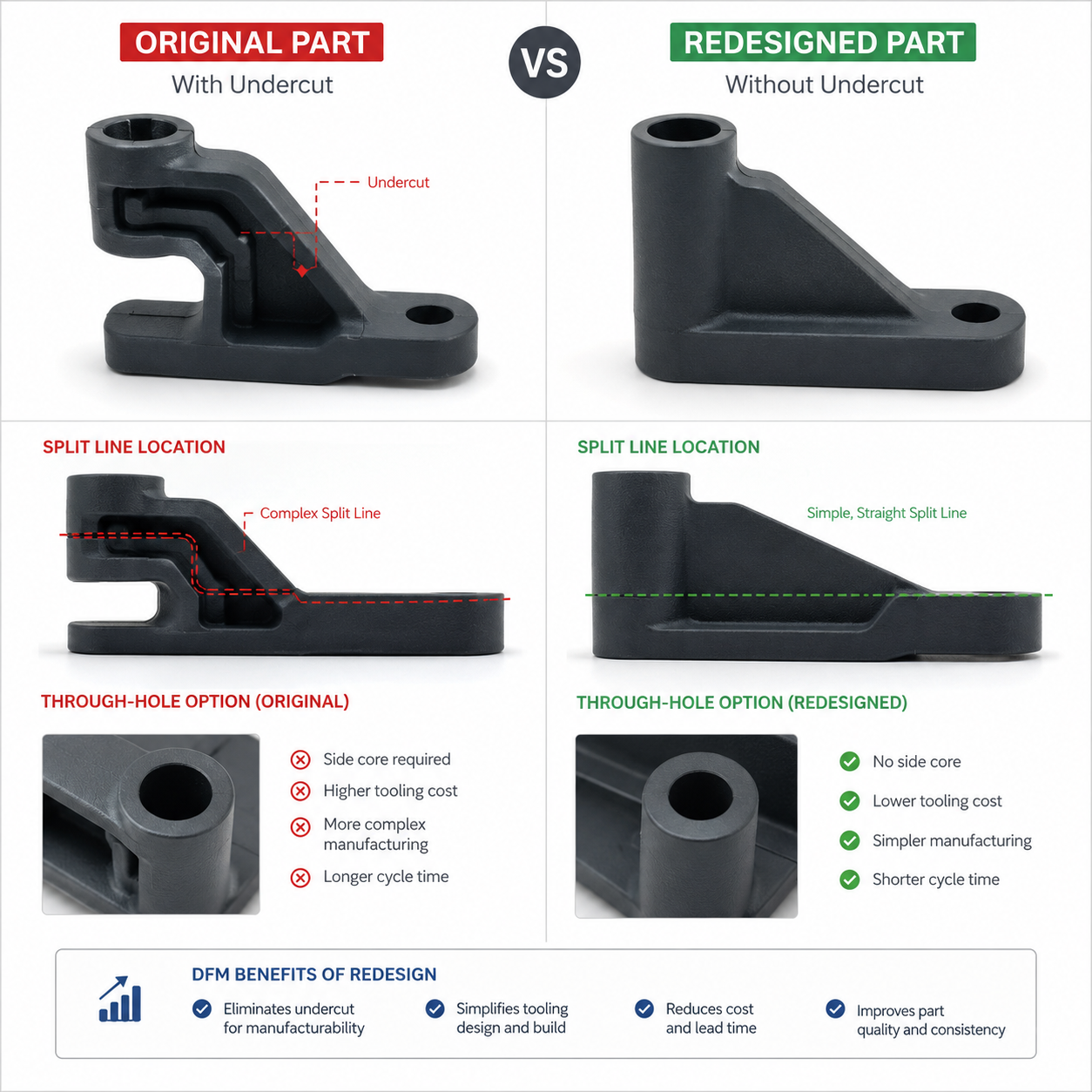
A veces, la mejor solución para un socavado es no realizarlo. Antes de añadir correderas o elevadores, evalúa estas estrategias de rediseño:
Añadir un orificio pasante
Un orificio lateral que requiera una corredera a menudo puede sustituirse por un orificio pasante a lo largo del eje de apertura del molde. Si no es necesario que el orificio sea ciego, hazlo pasante y utiliza un pasador de núcleo en lugar de una corredera. De este modo se elimina por completo un mecanismo móvil. En el caso de los elementos de encaje a presión, valora si una ventana o un recorte pueden dejar al descubierto el encaje desde la dirección de extracción.
Dividir la pieza en dos componentes
Añadir una línea de separación y dividir una pieza con muescas complejas en dos capas más sencillas puede eliminar las costosas acciones laterales. A continuación, las dos mitades se unen —mediante soldadura ultrasónica, encajes a presión o elementos de fijación mecánicos— en una operación secundaria. El coste de la operación secundaria debe sopesarse con el ahorro en utillaje, pero en el caso de piezas con múltiples socavados en distintos planos, la división suele ser la opción más ventajosa.
Cambiar la dirección del tiro
Girar la orientación de la pieza en el molde —lo que a veces se denomina «cambiar la dirección de extracción»— puede convertir un socavado en un elemento de extracción recta. Esto funciona cuando los socavados se concentran en una sola cara. Al reorientar la línea de separación, esos elementos pasan a ser compatibles con la extracción, dejando una geometría limpia en la cara opuesta. El análisis de flujo del molde debe confirmar que la nueva ubicación de la entrada sigue siendo viable.
Sustituir las uniones a presión por otras alternativas
Si el socavado se utiliza únicamente para crear un elemento de ensamblaje por encaje a presión, evalúa si los tornillos, los adhesivos o los encajes a presión pueden cumplir la misma función sin necesidad de recurrir a la geometría del socavado. Un inserto roscado de latón moldeado tras el moldeado suele resultar más económico que añadir dos guías para los brazos de encaje a presión.
Resumen: El marco de decisión
Cuando detectes un socavado en el diseño de tu pieza, sigue estos pasos antes de enviar el diseño al fabricante del molde:
- ¿Se puede eliminar el rebaje? Evalúa primero los orificios pasantes, la división de piezas y los cambios en la dirección del dibujo. Un rediseño que no suponga ningún coste de utillaje es siempre la mejor opción.
- ¿Puede funcionar un «bump-off»? Si el material es flexible y el socavado es poco profundo y redondeado, la expulsión forzada se produce sin problemas. Si es posible, realiza una prueba con un prototipo.
- ¿Es el volumen lo suficientemente bajo como para utilizar insertos cargados a mano? Para cantidades inferiores a unas 5.000 piezas al año, las inserciones manuales resultan más económicas que el utillaje mecánico. Por encima de esa cifra, los costes de mano de obra inclinan la balanza.
- Mecanismo de acoplamiento según el tipo de socavado: Guías para el exterior, elevadores para el interior y núcleos plegables para las roscas. Dimensiona cada mecanismo según las normas de diseño que se indican en este artículo.
- Elabora un presupuesto realista: Hay que tener en cuenta los costes iniciales de utillaje, el mantenimiento anual y el tiempo de inactividad previsto. Una corredera de $1.500 que ahorra $15.000 en esfuerzos de rediseño de piezas es una inversión inteligente. Cuatro correderas que, en conjunto, suman $10 000, cuando el rediseño de una pieza dividida cuesta $2 000 en mano de obra de montaje al año, ya no lo es tanto.
Los socavados no son problemáticos por naturaleza. Son una realidad del diseño en la mayoría de las piezas moldeadas por inyección. La clave está en saber qué socavados mecanizar, cuáles eliminar mediante un rediseño y cómo llevar a cabo cada solución de manera eficiente.
Preguntas frecuentes
¿Cuál es la profundidad máxima de socavado que puede soportar una corredera?
No existe un límite máximo fijo, pero los límites prácticos vienen determinados por la carrera del carro, el tamaño de la base del molde y la longitud del pasador de leva. Los carros externos suelen poder manejar muescas de hasta 50 mm de profundidad en moldes de gran tamaño. Las correderas hidráulicas pueden alcanzar una mayor profundidad, ya que no están limitadas por la geometría del pasador de leva. En el caso de las correderas accionadas por leva, la carrera máxima viene limitada por el seno del ángulo de la leva multiplicado por la carrera de apertura del molde. Un pasador de leva de 20 grados con una apertura del molde de 150 mm proporciona aproximadamente 51 mm de recorrido de la corredera, lo cual es suficiente para un socavado de 50 mm más el juego necesario. Más allá de ese límite, se debe considerar el uso de un núcleo lateral hidráulico o el rediseño de la pieza.
¿Con qué frecuencia hay que realizar el mantenimiento o sustituir los elevadores?
Los intervalos de mantenimiento de los elevadores dependen del material, del número de ciclos y de la lubricación, pero una buena referencia es la siguiente: revisar cada 100 000 ciclos, sustituir los componentes sujetos a desgaste en De 250 000 a 500 000 ciclos. Los elevadores que funcionan con materiales reforzados con fibra de vidrio se desgastan más rápido: el relleno abrasivo acelera el desgaste de la cabeza y la guía, lo que en ocasiones reduce la vida útil entre un 40 y un 50%. Puntos clave de inspección: cabeza del elevador (en busca de rayaduras o redondeo), rectitud de la varilla (la excentricidad debe ser inferior a 0,02 mm) y holgura del casquillo guía. Un elevador bien mantenido, fabricado en ABS o PP sin relleno, puede superar el millón de ciclos antes de tener que ser sustituido.
¿Pueden los insertos impresos en 3D sustituir al acero mecanizado en los socavados?
Sí, para creación de prototipos y producción en series muy reducidas (menos de 500 inyecciones), los insertos impresos en 3D —normalmente en Markforged Onyx, nailon reforzado con fibra de vidrio o resinas SLA reforzadas con metal— pueden utilizarse como insertos de carga manual para formar muescas. No son adecuadas para el utillaje de producción: los insertos impresos se degradan rápidamente bajo presiones de inyección superiores a unos 5.000 psi, tienen una conductividad térmica deficiente (lo que alarga los tiempos de ciclo) y pierden precisión dimensional tras 50-200 ciclos, dependiendo del material. En el caso de los utillajes puente, los insertos impresos pueden ganar tiempo mientras se corta el acero de producción, pero nunca son un sustituto de la producción.
¿Qué resulta más caro a lo largo de la vida útil de la herramienta: las correderas o los elevadores?
Por unidad, Las correderas suponen un mayor gasto inicial, pero los elevadores resultan más caros a lo largo de toda la vida útil de la herramienta.. Una corredera típica accionada por leva supone un coste adicional de entre $1.000 y $3.000 para el utillaje, con un mantenimiento anual inferior a $500. Un elevador supone un coste inicial de entre $800 y $2.500, pero los cabezales de los elevadores son piezas de desgaste que deben sustituirse periódicamente, y acceder a ellos para su sustitución requiere un desmontaje parcial del molde, lo que aumenta los costes de mano de obra. A lo largo de una vida útil del molde de 1 millón de ciclos, una corredera suele acumular entre $3.000 y $8.000 en coste total de propiedad, mientras que un elevador acumula entre $4.000-$12 000 si se tienen en cuenta las piezas de recambio y la mano de obra de mantenimiento. Las correderas son la mejor opción a largo plazo; los elevadores ganan en cuanto a coste inicial y acceso a las características internas.