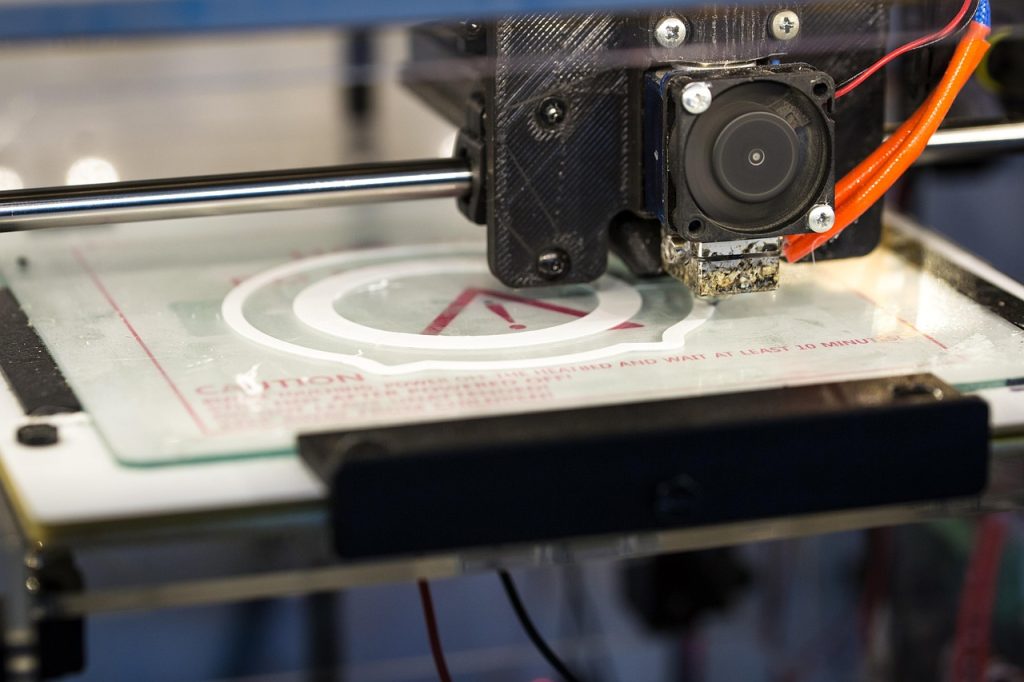
PC vs nylon filament is a practical choice between stiffness and heat resistance on one side, and toughness with moisture-sensitive processing on the other. Buyers comparing the two are usually deciding how to print a functional prototype or a low-volume engineering part that needs more than cosmetic strength.
If moisture control matters, compare this with our absorción de humedad del nailon guide and nylon mechanical properties page before you decide.
The better material depends on whether the part needs heat resistance, impact tolerance, dimensional stability after printing, or better wear performance in real use. The wrong choice often looks acceptable on the printer and fails later in assembly or service.
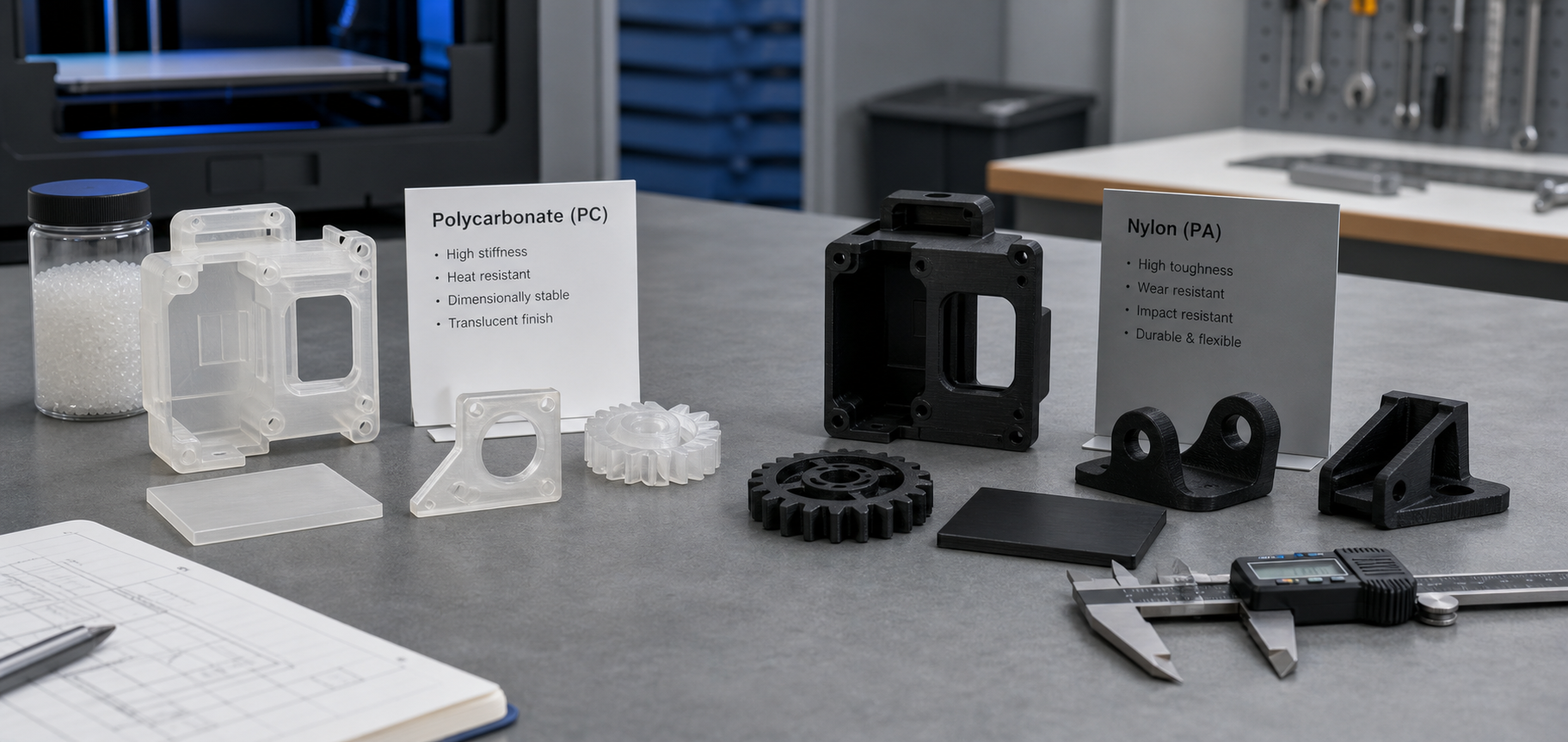
De un vistazo
| Punto de decisión | PC Filament | Nylon Filament | Nota para el comprador |
|---|---|---|---|
| Resistencia al calor | Usually stronger at elevated temperature | Good, but grade dependent | PC is often chosen for hotter enclosure environments |
| Resistencia | Strong and rigid | Usually tougher and more forgiving | Nylon is often safer for impact and flexing parts |
| Sensibilidad a la humedad | Lower than nylon | Alta | Nylon needs stricter drying and storage control |
| Warp risk | Can be high | Also high, especially on larger parts | Printer setup matters more than datasheet claims |
| El más adecuado | Rigid heat-resistant housings | Wear parts, clips and tougher functional builds | Choose by part function, not brand preference |
When PC Filament Is the Better Choice
PC filament is usually chosen for structural housings, transparent or semi-transparent engineering concepts, higher-temperature fixtures and rigid brackets where heat and stiffness matter more than ductile flex. It can also be a better choice when the shop needs a lower-moisture workflow than nylon.
The trade-off is that PC printing can be less forgiving, especially on parts with large flat sections, poor chamber control or weak bed adhesion strategy.
When Nylon Filament Is the Better Choice
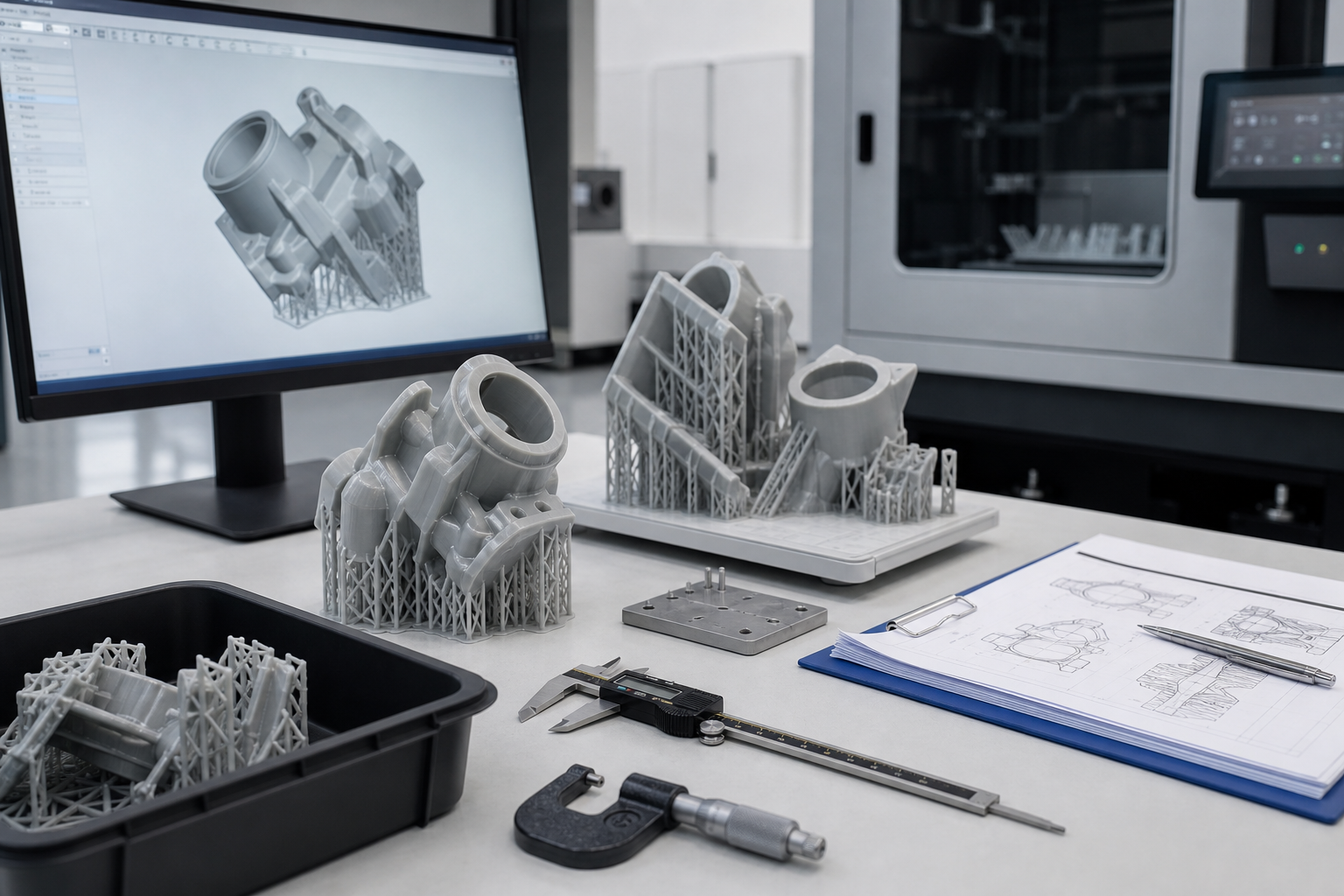
- Impact and wear matter more than rigidity: nylon often handles repeated contact and abuse better.
- Assembly needs a more forgiving part: nylon can be safer for clips, snap details and functional deflection.
- Friction or sliding behavior matters: many nylon grades are preferred for wear-oriented parts.
- Functional prototypes will be stress tested: nylon is often chosen when brittle failure risk must be reduced.
Common Selection Mistakes
| Error | Riesgo | Un enfoque mejor |
|---|---|---|
| Choosing by tensile strength headline only | Wrong material for the real use mode | Review heat, impact, wear and fit together |
| Ignoring nylon drying control | Weak parts and inconsistent print quality | Define pre-dry and storage rules before production |
| Treating PC as universally stronger | Unexpected fracture in flexing parts | Check whether the part needs ductility rather than rigid strength |
| Using desktop print success as final validation | Field failure on engineering parts | Validate against the final load and environment |
PC vs Nylon Filament for B2B Projects
For production-intent prototypes, the real choice is often about which material better predicts the final molded or machined part behavior. PC can be the better bridge when the target part is a rigid enclosure or high-heat plastic. Nylon is often better when the project is moving toward a wear part, a tougher bracket or a flexible functional feature.
¿Por qué elegir el plástico de nailon?
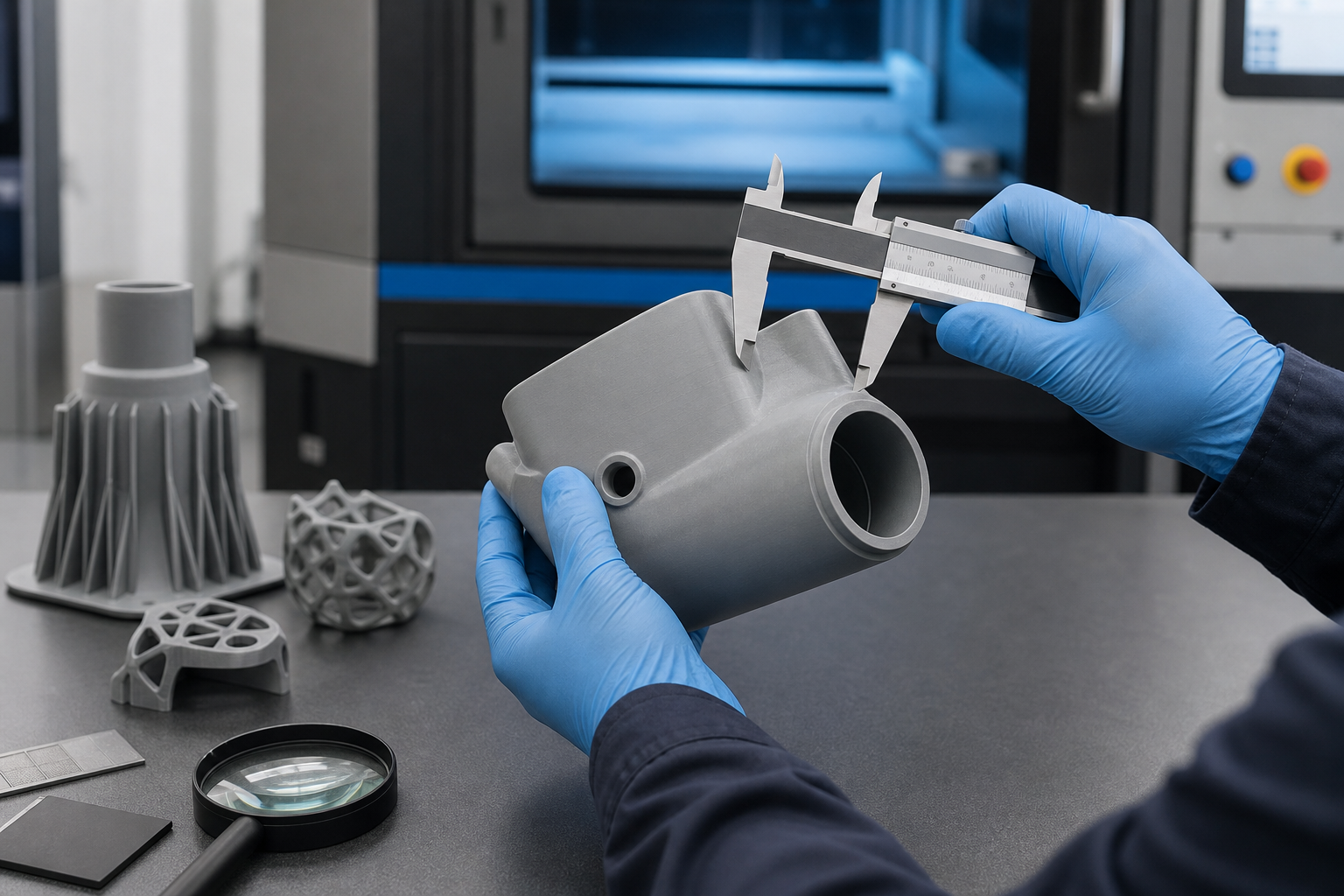
Nylon Plastic helps buyers compare engineering print materials against the downstream manufacturing route, so a prototype does not mislead the team about the final production behavior.
Lecturas relacionadas
- Guía de impresión 3D con filamento de PC
- Guía de impresión 3D con nailon
- Servicios de impresión 3D en plástico para piezas funcionales
- Guía de tolerancias de impresión 3D
- Componentes de plástico a medida
- 3D Printing Services and Material Options
Choose the Filament From the Failure Mode, Then Plan the Next Process
- Elija PC when stiffness, heat retention, dimensional rigidity, or a rigid functional prototype leads the requirement and the printer can control the process.
- Elija nylon when toughness, fatigue, wear, snap-fit behavior, or impact resistance matters, while accepting moisture management and conditioning effects.
- Use fiber-filled nylon only when the gain in stiffness or dimensional control justifies nozzle wear, anisotropy, surface, brittleness, and processing changes.
- Plan the production handoff early: a printed prototype may later move to CNC machining, injection molding, or modified nylon pellets once geometry and volume stabilize.
Material selection is more reliable when the part is tested in its actual build direction and use state. Compare the same load, temperature, humidity, fit, wall, infill or shell strategy, post-processing, and inspection method rather than comparing generic filament names.
Cómo contribuye el plástico de nailon al proyecto
Nylon Plastic has supported material selection and finished plastic-part manufacturing since 2005. For PC and nylon functional 3D printed parts, the useful review connects the drawing, material, tooling or machining route, inspection state, and production plan before a quote is approved.
- Review PA6, PA12, PA-GF20, or PA-CF30 directions when a printed nylon part may transition to a production-grade modified material.
- Connect file review, drying, build orientation, tolerances, inserts, finishing, inspection, and quantity to the quotation route.
- Compare 3D printing with CNC machining or injection molding when the prototype becomes a repeated functional or production part.
Preguntas frecuentes
Comparar nylon vs polycarbonate comparison including strength, heat, cost and application recommendations.
Is PC or nylon filament stronger for functional parts?
Neither is universally stronger. PC is often selected for rigidity and heat retention, while nylon is often selected for toughness, fatigue, wear, and impact. Print direction and exact grade can dominate the result.
Does nylon filament need drying?
Usually yes. Nylon is hygroscopic, and moisture can cause stringing, splay, weak layers, inconsistent dimensions, and poor surface quality. Use the exact filament supplier’s drying and storage requirements.
When is PC a better choice than nylon filament?
PC can be a better starting point when stiffness, heat, and rigid structural behavior are more important than moisture tolerance, ductility, or wear performance, provided the printer controls the material.
What should I send for a PC versus nylon recommendation?
Send the CAD file, load, service temperature, humidity, quantity, wall and feature requirements, build or process constraints, inspection needs, and the expected production route after prototyping.
Request a Functional 3D Printing Material Review
Send the part file, use environment, quantity, critical dimensions, and production plan for a PC, nylon, CNC, or molding route review.